
If you’re deciding between an ADU vs room addition, the choice isn’t as simple as comparing construction costs. Both can add valuable space to your Bay Area home, but they behave very differently as long-term investments.
So which one actually makes more sense for your property? The honest answer is that it depends on how you define “value.” Dollar for dollar at resale, the two can be surprisingly close. Factor in rental income and long-term flexibility, and the picture shifts.
This guide walks through the ADU vs room addition comparison category by category, so you can figure out which one fits your goals.

The Short Answer: Which Adds More Value?
Here is the simplest way to look at the ADU vs. room addition decision:
| Value Category | ADU | Room Addition |
| Adds usable square footage | Yes | Yes |
| Adds resale appeal | Yes | Yes |
| Can generate rental income | Yes | No |
| Creates an independent dwelling | Yes | No |
| Adds flexibility for multigenerational living | Yes | Yes |
| Potential for separate future conveyance | Potentially | No |
| Requires rental/tenant management | Potentially | No |
A traditional addition can be an excellent investment when you need another bedroom, a larger kitchen, a home office, or more family living space. Its value is tied almost entirely to the extra usable space it creates.
An ADU does that too, and adds another layer: the ability to function as an independent dwelling.
California defines an accessory dwelling unit as a secondary dwelling with complete independent living facilities, including provisions for living, sleeping, eating, cooking, and sanitation, according to the California Department of Housing and Community Development.
That single distinction drives most of the differences below.
ADU vs Room Addition: The Core Difference
The biggest difference between an ADU and an addition is surprisingly simple. An addition expands your existing home. An ADU creates another home on your property.
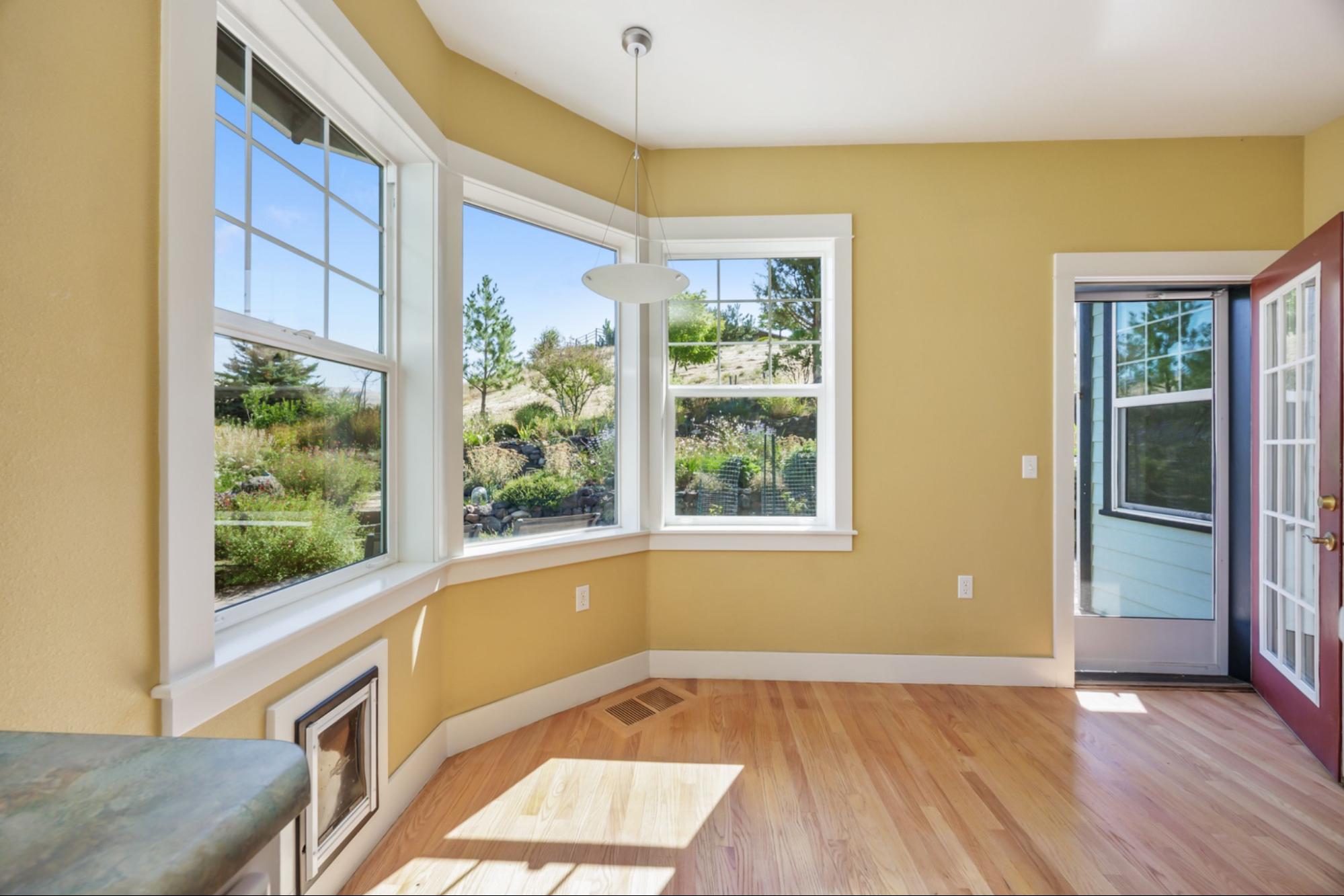
A room addition typically shares the existing house’s kitchen, bathrooms, utilities, entrances, and living systems. You might add 400 square feet for a bedroom and bathroom, but that new space stays part of the primary residence.
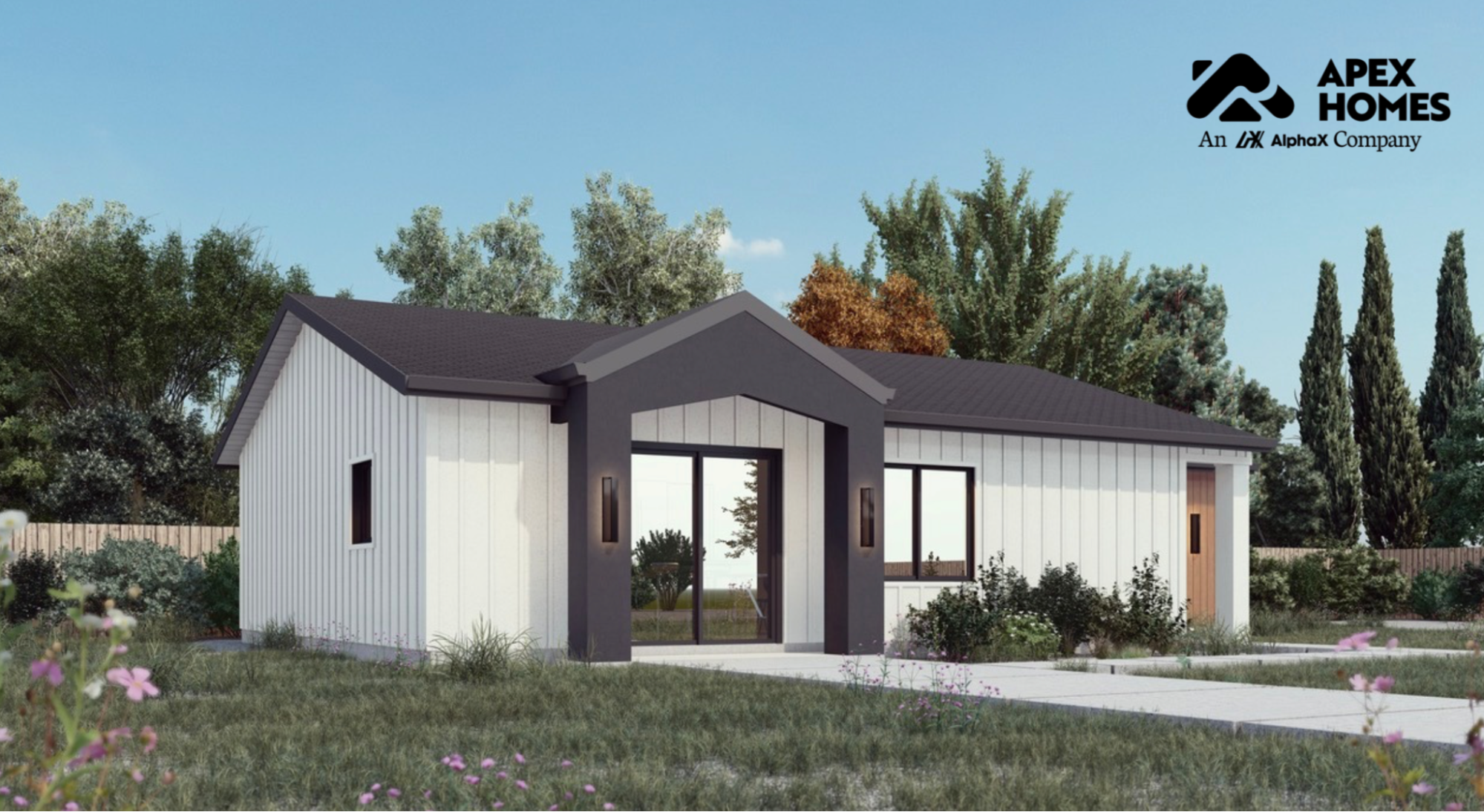
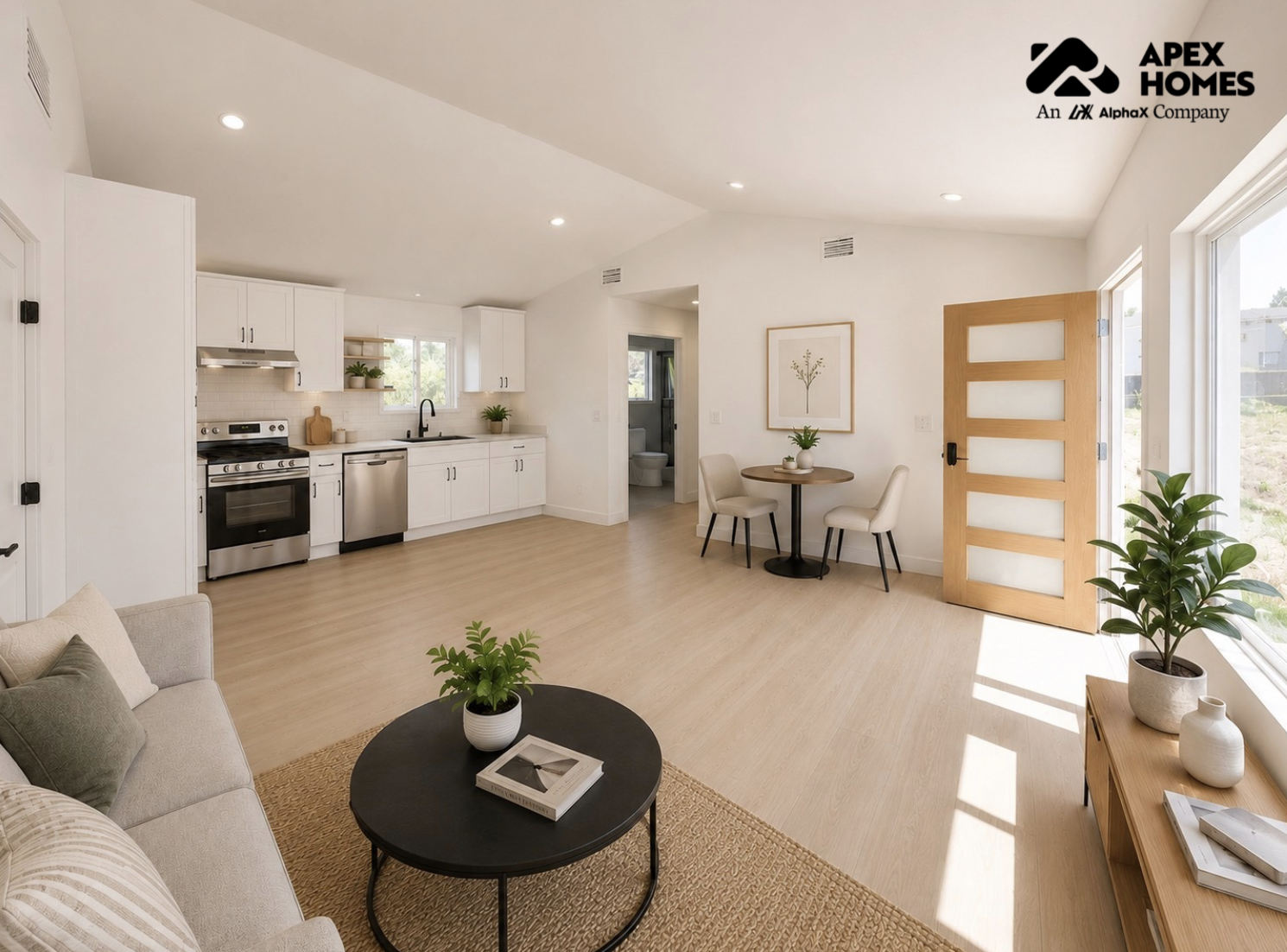
An ADU is a self-contained living unit with its own entrance, kitchen, bathroom, sleeping area, and living space, depending on the project. ADUs can be detached, attached to the main home, or created by converting existing space such as a garage.
This distinction is exactly why the property value ADU vs addition conversation isn’t just about comparing two piles of square footage.
A 600-square-foot addition gives you 600 more square feet of your existing home. A 600-square-foot ADU gives you 600 square feet that can potentially house a tenant, accommodate family, serve as a private guest suite, or otherwise flex to whatever the property needs next.
Comparing Value, Category by Category
The ADU vs room addition decision looks different depending on how you measure value. Here’s how the two compare across resale, income, cost, taxes, and long-term flexibility:
Resale Value
For a traditional home addition, homeowners generally think about value in terms of how much the improvement contributes to the eventual sale price.
A larger, better-designed home tends to be more attractive to buyers, especially when the addition solves a common problem like too few bedrooms, an undersized kitchen, or cramped living space.
An ADU gives buyers something extra to weigh: income potential. That makes the value conversation a bit more complicated, but often in the homeowner’s favor.
An appraiser won’t simply add your construction cost to the home’s value, and no universal rule guarantees that either project returns every dollar spent. Local comparables, construction quality, size, condition, location, and buyer demand all play a role.
Still, in the Bay Area, an additional legal dwelling can be especially compelling, since housing costs are high and independent living space carries real practical weight. The key is to stop thinking of the ADU as just another 500 or 800 square feet, and start thinking of it as square footage plus functionality.
That functionality matters to buyers who want space for parents, adult children, a private guest suite, a caregiver’s home, or a way to offset their mortgage with rent.
Income Value (Where ADUs Pull Ahead)
This is where the ADU rental income vs home addition value comparison really tips one direction. A room addition can give your family more breathing room, but it generally can’t function as a separate rental unit. An ADU can, which opens the door to monthly rental income.
For Bay Area homeowners, that income can become a meaningful part of the property’s overall return. Rates vary by location, size, and condition, but cities tend to support strong demand for well-designed rental housing, including:
- San Jose
- Cupertino
- Mountain View
- Saratoga
- Campbell
It helps to think of rental income as value collected over time, not just a bump you see when you eventually sell. Of course, rent isn’t guaranteed. Vacancy, maintenance, insurance, utilities, financing, and management all cut into your actual return, so it’s worth running realistic numbers rather than best-case ones.
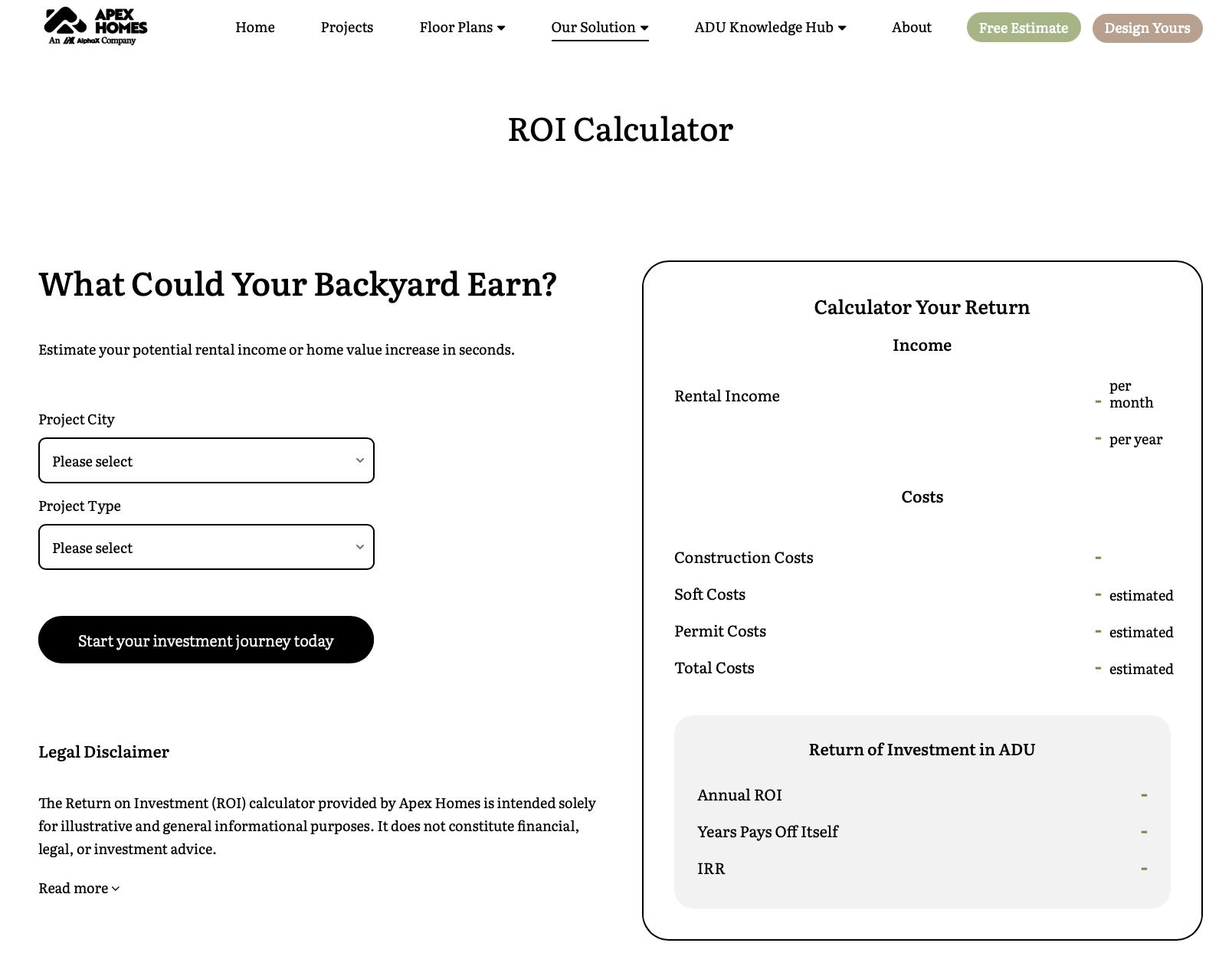
Calculate your potential ADU ROI with Apex Homes’ ROI calculator.
Cost of Getting There (Value You Don’t Lose)
When comparing ADU vs addition cost, it’s tempting to assume a room addition will automatically come out cheaper. That’s not always true.
Both projects can involve architectural plans, engineering, permits, utility work, structural changes, and construction.
The home addition cost California homeowners end up paying depends heavily on the project’s size and complexity, just as ADU costs vary by design and site conditions. Often the bigger cost driver isn’t ADU versus addition at all. It’s custom design versus an efficient, repeatable process.
A highly customized addition can require multiple rounds of design changes, engineering revisions, and permitting delays. A streamlined approach using pre-approved plans and in-house permitting can help cut down on some of that back-and-forth for either project type.
Before assuming an addition is the cheaper route, compare the full project scope rather than just the price per square foot.
Property Tax Impact on Value
Taxes deserve a spot in this equation too. Both an ADU and a room addition can affect a property’s assessed value, so homeowners should factor in potential changes in property taxes when calculating the project’s real financial benefit.
The question worth asking isn’t just “how much value did I add?” It’s “how much net value did I add after construction costs and ongoing expenses?” For an ADU, that calculation can include rental income offsetting the tax increase. For an addition, the return tends to come through everyday enjoyment of the home and eventual resale.
California’s rules around ADU assessment and property taxes can get nuanced, so it’s worth confirming the treatment of your specific project with your county assessor or a tax professional before you build.
Long-Term Value: What a Room Addition Can’t Offer
There’s one more long-term value category that a standard room addition simply doesn’t have access to.
California’s ADU laws have evolved to let local governments adopt ordinances permitting the separate conveyance of an ADU and primary residence as condominiums, under specific legal requirements. That change came through AB 1033, which took effect January 1, 2024.
That doesn’t mean every homeowner can automatically sell an ADU separately. The law is opt-in: a city or county has to adopt its own ordinance first, and where they have legal, subdivision, condominium, lender, and safety requirements still apply.
But structurally, the possibility exists for an ADU in a way it simply doesn’t for an ordinary room addition. For homeowners thinking decades out, that’s a meaningful difference.
So Which Should You Build?
The choice gets much clearer once you start from your actual goal rather than the price tag.
Choose a room addition if:
- You primarily want more space for yourself or your family.
- You need a larger bedroom, kitchen, living room, or home office.
- You don’t want to deal with tenants.
- You want the new space to flow directly into your existing home.
- Your property or project constraints make an ADU impractical.
In other words, choose the addition when comfort is the primary objective.
Choose an ADU if:
- You want the property to generate rental income.
- You want independent space for parents, adult children, guests, or caregivers.
- You want to increase the property’s functional versatility.
- You’re comfortable with the responsibilities of owning a rental unit.
- Your lot can support a legal, financially viable ADU.
Choose the ADU when you want the property to work for you financially as well as functionally.
Not sure which one your property can actually support?
Apex Homes’ ADU feasibility study can evaluate your lot, zoning, potential layout, and project constraints before you commit to construction.
Answering the Value Question
So, which adds more value: an ADU or a room addition?
If you’re measuring value primarily by additional living space and eventual resale, the two can be fairly comparable. A well-executed room addition is a genuinely good investment, especially when it solves a real space problem for your family.
But if you define value more broadly as resale potential plus rental income plus long-term flexibility, an ADU generally has the stronger upside. That extra value comes from what an ADU can do that a room addition can’t: function as an independent dwelling and potentially generate income year after year.
That said, an ADU isn’t automatically the better investment for everyone. Rental income comes with real responsibilities: vacancy, maintenance, and tenant management among them. A homeowner who simply needs another bedroom may get more practical value from an addition, full stop.
And here’s one assumption worth challenging: the “safer” choice isn’t necessarily the cheaper or faster one. Once custom design, engineering, permitting, revisions, and construction complexity enter the picture, a traditional addition can become just as involved as an ADU.
A streamlined process built around pre-approved plans and in-house permitting can help narrow that gap considerably.
Before choosing between an ADU vs room addition, run the numbers based on your specific property, your goals, and your local market. The right answer is the one that matches what you actually want the space to do.
Book a free consultation with Apex Homes to discuss your options and determine which project makes the most sense for your Bay Area home.