
If you’ve started researching “how much does ADU permit cost in California,” you’ve probably noticed something frustrating: the numbers vary widely.
Some homeowners budget only a few thousand dollars, while others discover additional fees during the permitting process. The truth is that ADU permit costs are one of the most misunderstood aspects of building an accessory dwelling unit.
Permits include more than a single permit fee. They often involve:
- Plan check fees
- Building permit fees
- Development impact fees
- Inspections, and sometimes utility connection charges
Understanding these costs early can help homeowners avoid delays and unexpected expenses.
In this guide, we break down ADU permit fees in California, including typical cost ranges and the factors that influence the total.
What Is an ADU Permit and Why Do You Need One?
An ADU permit is official approval from your local city or county, allowing you to build an accessory dwelling unit on your property legally.
California requires permits for all ADU types, including:
- Detached ADU construction
- Attached units
- Garage conversion ADU projects
- Junior ADUs (JADUs)
During the permit application process, cities review several aspects of the project:
- Architectural building plans
- Structural safety
- Zoning compliance
- Mechanical, electrical, and plumbing systems
- Energy standards such as Title 24
This stage is known as plan review or plan check.
Building an ADU without permits can result in stop-work orders, fines, and complications when refinancing or selling the property. A properly permitted accessory dwelling unit, however, can significantly increase property value and generate rental income opportunities.
What Does an ADU Permit Actually Cost in California?
Before diving into the fee breakdown, it’s important to understand that ADU permit costs vary depending on location, ADU size, and project scope.
Each city sets its own building permit fees and development fees. That’s why homeowners often see dramatically different numbers between cities like San Jose, San Francisco, and Los Angeles.
At the same time, California state laws have reduced many of the traditional impact fees associated with building an ADU.
Statewide Overview
Across California, the typical ADU permit cost ranges from roughly $1,000 to $30,000+
The final amount varies depending on:
- The ADU size
- Whether the project is a detached ADU or a garage conversion
- Local city fee structures
- Infrastructure requirements like sewer or electrical upgrades
Smaller ADUs under 750 sq ft have a major cost advantage. Under California law, particularly Senate Bill (SB) 13, cities cannot charge development impact fees on units below this size.
School impact fees are also commonly waived for smaller ADUs in many jurisdictions.
Because each city sets its own building permit fees, homeowners should always confirm the latest numbers with their local building department.
ADU Permit Costs by City (Focus on the Bay Area & Southern California)
Below is a general breakdown of ADU permit fees across major California cities. These estimates reflect publicly available municipal fee schedules and planning department guidance.
| CITY/REGION | ESTIMATED ADU PERMIT COST RANGE |
| Los Angeles | $1,000 – $8,400 |
| San Francisco | $5,000 – $20,000 |
| Orange County | $3,000 – $7,000 |
| Riverside County | $3,000 – $10,000 |
| Sacramento City | $5,000 – $14,000 |
| San Jose | $8,000 – $30,000 |
| Bay Area (General) | $5,000 – $10,000 |
These figures are sourced from publicly available data at the time of writing and may vary based on project scope and jurisdiction. Always confirm with your local community development or building department before submitting plans.
Breaking Down the Fee Types — What You’re Actually Paying For
When homeowners ask how much does an ADU permit cost, they often expect a single fee. In reality, the permitting process includes several separate charges that appear throughout the approval and construction process.
Understanding these different fees makes it easier to estimate the total cost of building an ADU.
Plan Check Fees ($500 – $5,000)
Plan check fees cover the city’s review of your ADU design.
During this stage, city staff verifies that the building plans comply with:
- Structural codes
- Fire safety requirements
- Zoning regulations
- Mechanical, electrical, and plumbing systems
- Energy standards like Title 24
Complex ADU design plans usually require more review time, which increases plan check costs.
Using pre-approved ADU plans can significantly reduce these fees because the city has already reviewed the design in previous submissions.
Building Permit Fees ($450 – $15,000+)
Building permit fees are one of the largest portions of ADU permit costs.
These fees are generally calculated based on the estimated construction valuation of the project.
They typically include:
- Construction permit issuance
- Required inspections during construction
- Final building approval and occupancy clearance
Detached ADUs usually have higher building permit fees than a garage conversion because they involve more construction work.
Impact Fees ($500 – $5,000)
Development impact fees help cities pay for public infrastructure improvements related to new housing construction.
These can include:
- Road improvements
- Fire protection services
- Park fees
- Public facility upgrades
However, as mentioned, SB13 exempts ADUs under 750 square feet from these impact fees entirely. If the ADU exceeds that size threshold, cities can still charge impact fees, but they must be charged proportionately based on the square footage of the primary dwelling unit.
Utility Connection Fees (variable)
Utility fees are one of the most common hidden fees in ADU projects.
Depending on your property, you may need to pay for:
- Sewer connection upgrades
- Water meter upgrades
- Electrical service upgrades
- Gas line extensions
These infrastructure improvements can add several thousand dollars to total permit costs.
California law limits how cities charge connection fees, so ADUs are not treated the same as new single-family homes.
Other Soft Costs to Budget For
Several additional fees are commonly required during the ADU permitting process:
- Mechanical, electrical, and plumbing permits
- Title 24 energy compliance report
- Architectural design and engineering services
- School district development fees (often for projects over 500 sq ft)
Custom ADU plans alone can cost $8,000 to $12,000 before construction even begins.
When homeowners talk about “all the fees,” these soft costs are usually what they’re referring to.
What Drives Your Permit Cost Up (And What Brings It Down)
Even within the same city, ADU permit fees can vary widely. Several factors influence the total cost, from ADU size to infrastructure requirements. Understanding these drivers helps homeowners plan a more efficient project.
Factors That Increase Permit Costs
Several factors tend to increase total ADU permit fees:
- Large ADU size: Projects approaching 1,000 to 1,200 sq ft typically trigger additional reviews and development fees.
- Custom architectural design: Unique layouts require more extensive plan review and engineering.
- Special zoning areas: Properties located in historic districts, coastal zones, or hillside overlays often require additional approvals.
- Utility upgrades: Electrical panel upgrades or sewer capacity increases can significantly raise permit costs.
- Structural complexity: Multi-story ADUs or additions attached to the primary dwelling unit require more engineering review.
How Pre-Approved Plans Lower Your Permit Costs
One of the simplest ways to reduce ADU permit costs is to use pre-approved building plans.
Cities that have already reviewed and accepted specific ADU designs can fast-track these submissions.
Benefits of pre-approved ADU plans include:
- Reduced plan check fees
- Faster permitting timelines
- Fewer design revisions
- Simplified construction documentation
Apex Homes offers pre-approved ADU designs already accepted in several California cities, including:
- San Jose
- Cupertino
- Mountain View
- Gilroy
- Pomona
- Chino
- Rancho Cucamonga
- Saratoga
- Antioch
- Campbell
Because these designs have already gone through city review, homeowners often experience faster permit approvals and lower soft costs.
See if your city is on the list. Get a free estimate today!
SB13 Fee Waivers — Ask for These
California’s SB13 legislation created several fee reductions that many homeowners tend to miss.
For example:
- ADUs under 750 sq ft are exempt from development impact fees
- Some cities offer additional fee waivers for affordable housing or owner-occupied ADUs
- School impact fees may be waived depending on size thresholds
These waivers are often applied during the permit application stage, which is why working with an experienced ADU builder can help ensure they’re included.
Custom ADU vs. Pre-Approved ADU — The Permit Cost Difference
The design path you choose can significantly affect both the cost and timeline of permitting. Here’s a typical comparison between custom designs and pre-approved ADU plans.
| CATEGORY | CUSTOM ADU DESIGN | PRE-APPROVED ADU
(Apex Homes) |
| Architectural fees | $8,000 – $12,000 | Included or reduced |
| Plan check fees | Higher | Lower |
| Permitting timeline | 4-9 months | As little as 60 days |
| Risk of revisions | High | Low |
These figures are based on typical industry estimates at the time of writing. Actual costs vary by jurisdiction and project scope.
What Happens If You Skip the Permit?
Some homeowners consider building an ADU without permits to avoid fees, but this can create serious problems.
Cities may issue:
- Stop-work orders
- Fines
- Retroactive permit requirements
- Demolition orders in extreme cases
Unpermitted ADUs can also create problems during real estate transactions because lenders often won’t count unpermitted square footage toward property value.
In most cases, fixing an unpermitted ADU costs far more than obtaining the permit.
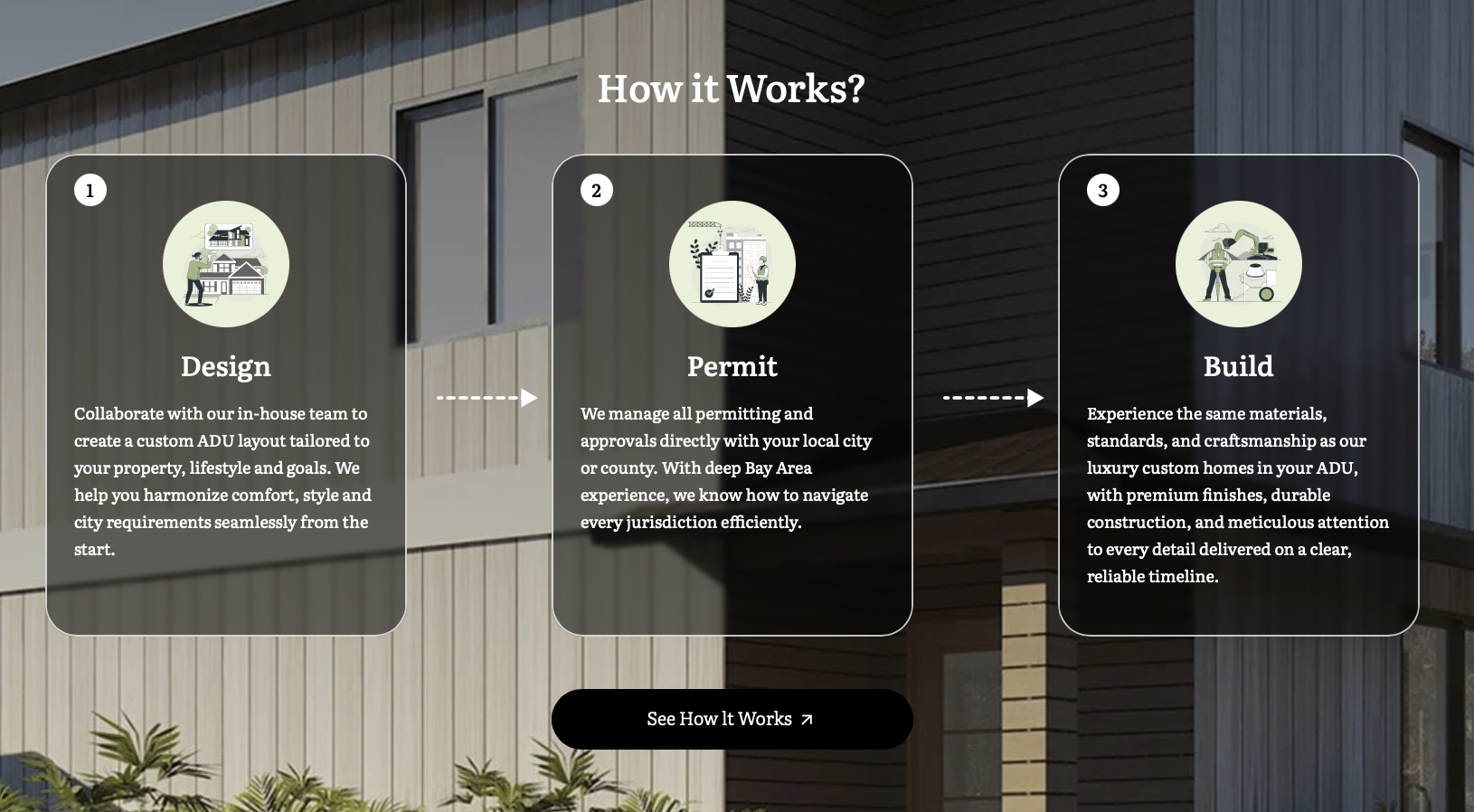
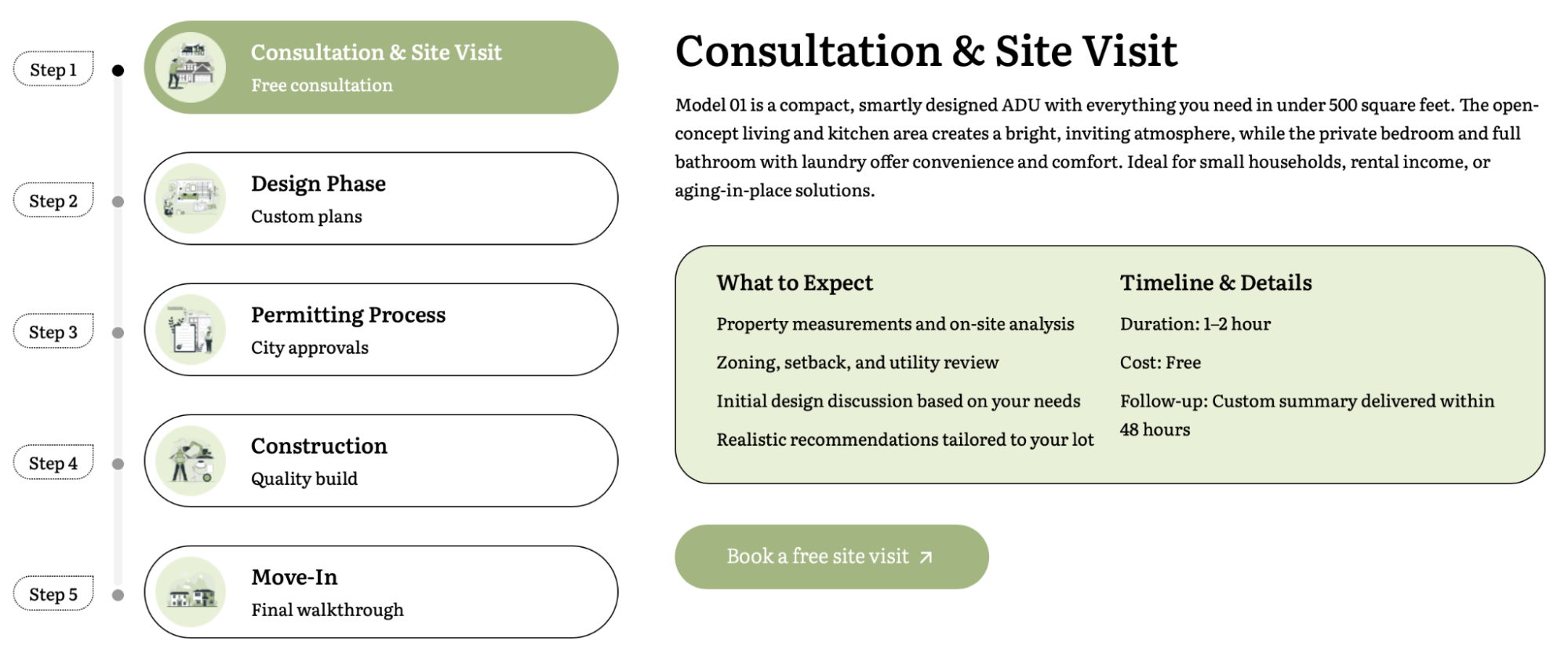
How Apex Homes Handles Permitting For You
The ADU permitting process can be complicated and time-consuming, notably in Bay Area cities with strict planning departments.
That’s why Apex Homes manages the entire process in-house.
When you build an ADU with Apex Homes, their team handles:
- Permit applications
- Digital submission to city departments
- Plan revisions and corrections
- Communication with community development offices
- Inspection scheduling
Homeowners never need to visit City Hall themselves.
Because Apex Homes works regularly with cities across the Bay Area, including San Jose, Cupertino, Campbell, and Mountain View, they understand local permit requirements and how to avoid costly delays.
Our pre-approved ADU plans also help streamline plan check approvals and reduce unnecessary architectural costs.
Most importantly, we provide transparent pricing that includes permitting in the overall project scope, so there are no surprise invoices halfway through construction.
Build Your ADU Without the Permit Headaches.
Permit costs are a real and important part of building an ADU in California. Between plan check fees, building permits, and development impact fees, the total permit cost can range anywhere from a few thousand dollars to well over $20,000, depending on the project.
But permits shouldn’t be a source of stress.
The best way to minimize ADU permit fees and speed up the approval timeline is to work with a builder who already understands your city’s requirements and has proven ADU designs that local planning departments approve quickly.
Apex Homes handles the entire permitting process so homeowners can focus on the exciting part: creating additional housing, generating rental income, and increasing property value.