
Building an accessory dwelling unit (ADU) comes with a long list of decisions, but few are as easy to underestimate as utilities.
Before you can move anyone in, your electrical, water, and sewer connections need to be planned, permitted, and approved. In the Bay Area, that process has its own timeline and its own costs.
What Counts as “ADU Utilities” (And Why It’s Not Optional)
When homeowners picture an ADU project, they think about square footage, finishes, and floor plans. Utilities rarely make the list until they become the reason a “six-month” project stretches into a year.
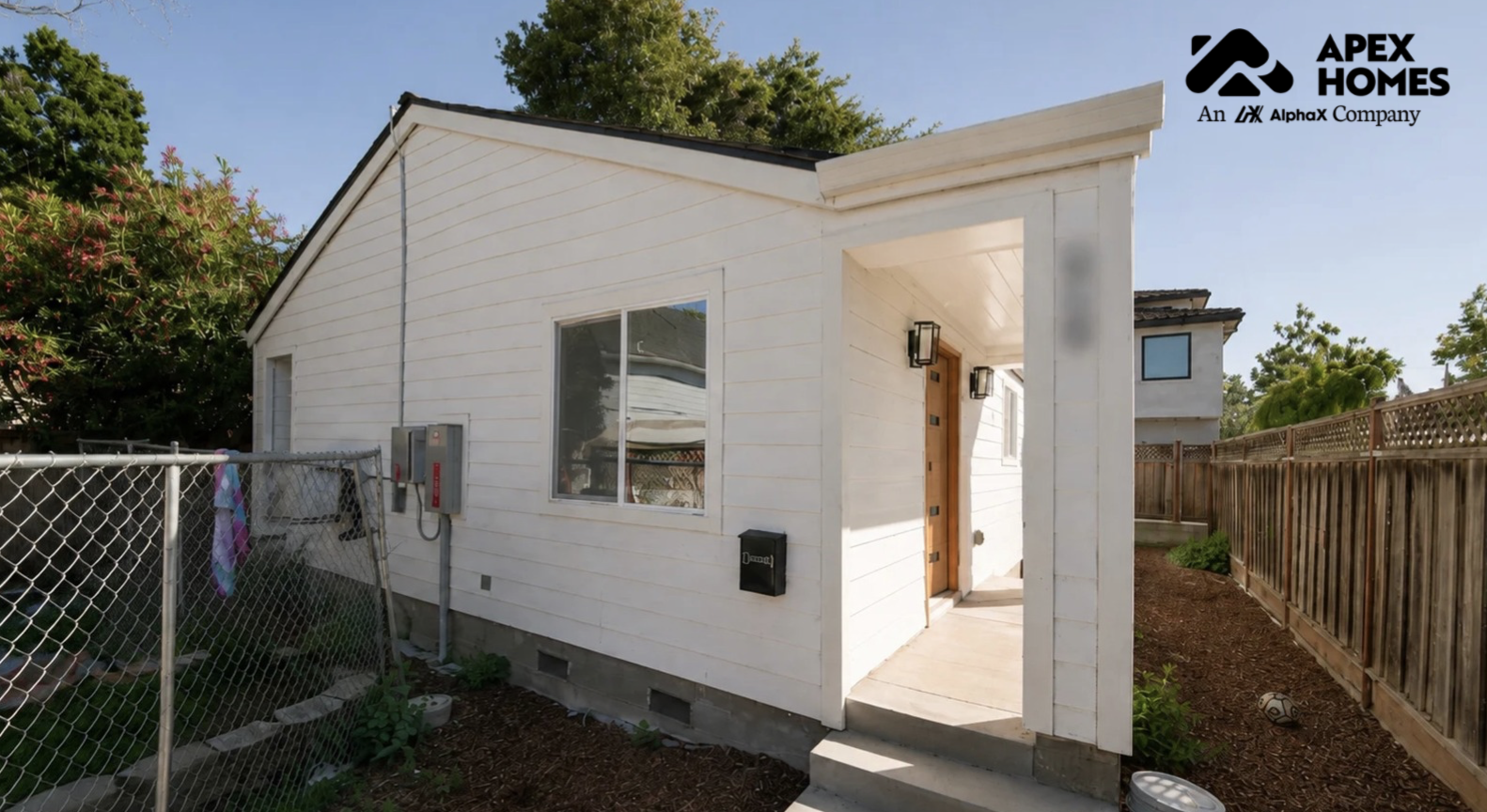
In California, every ADU needs a working connection to:
- Electricity
- Water
- Sewer
- Gas; this is optional and increasingly skipped in favor of all-electric design.
- The Internet; note that this is a homeowner’s call rather than a code requirement.
Many homeowners also pair an all-electric setup with solar panels, which can offset energy costs and qualify the property for California’s clean energy incentives.
What’s not optional is the coordination behind the scenes: cities, utility providers, and your builder all have to sign off before you can legally move someone in.
This is where ADU utility costs and ADU electrical requirements tend to catch homeowners off guard. Utility connections aren’t a line item you can shrink to save money, and they’re rarely the fastest part of the process.
Understanding what’s required, and what it actually takes to get there, is the difference between a project that runs on schedule and one that sits finished but unusable while paperwork moves through a utility company’s queue.
Electrical Requirements for Your ADU
Electrical work is usually the most involved, and most misunderstood, utility requirement for a California ADU.
In the webinar above, Apex Homes‘ Utility Manager Patrick Guan walks through:
- What actually happens during PG&E coordination
- How Apex Homes manages that process end to end; and
- A real project that went from construction start to energization in just 5 months.
Why Most Bay Area ADUs Need Their Own Meter
In San Jose and most Bay Area cities, a detached ADU isn’t treated as an extension of your house; it’s treated as its own independent dwelling unit. That means it typically needs its own address and its own electrical panel and meter, separate from the main home’s.
How that gets done depends on your property’s existing setup.
- A dual-meter panel houses two meters, one for the main house, one for the ADU, in a single enclosure, which is space-efficient but still requires coordination with the utility.
- A subpanel setup has the ADU fed from the main house’s upgraded panel; it’s the fastest option when your existing electrical service already has the capacity to support it.
- A fully separate panel, with the ADU’s meter physically located at the ADU itself, is possible but far less common in practice.
Which route makes sense comes down to your home’s current electrical capacity, so it’s worth having that assessed early before you’re locked into a floor plan that assumes a configuration your panel can’t support.
Book a free feasibility study with Apex Homes today to learn more about utilities before you start your ADU project.
Water And Sewer Connections for ADUs
Electrical tends to get the attention, but your ADU water connection and ADU sewer connection carry their own set of decisions and their own potential delays. Get either one wrong, and you’re looking at the same kind of holdup as a mismatched electrical panel, just with a different utility provider on the other end of the phone.
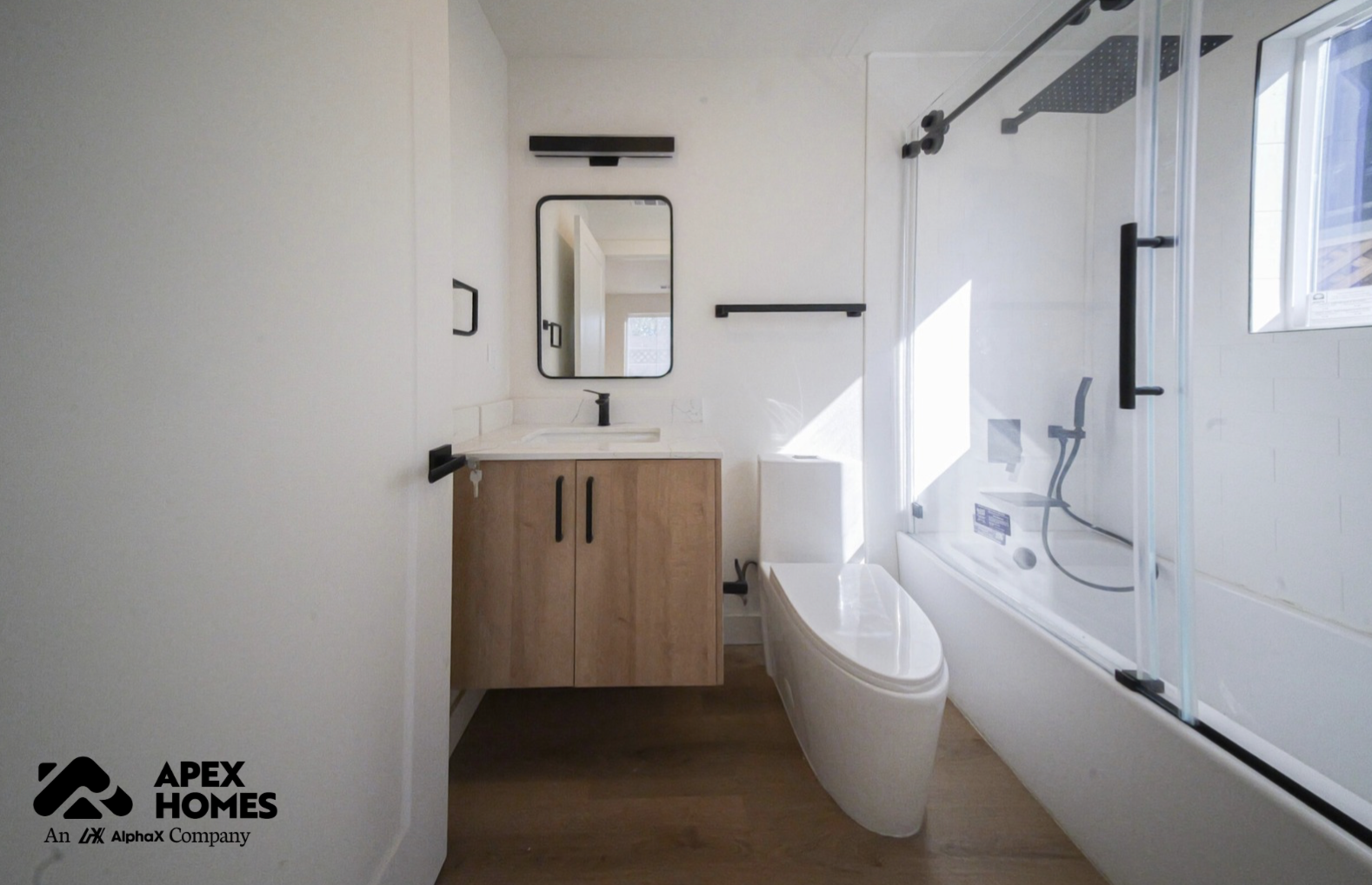
Shared Line vs. New Connection
Most ADUs extend water and sewer service from the main house’s existing lines rather than tapping into a new municipal connection, which is usually simpler and less expensive. But it’s not automatic.
Your sewer lateral needs enough capacity for the added fixture count, and most jurisdictions require a dedicated cleanout for the new unit. If your existing lateral is older or undersized, that’s a conversation to have with your builder before construction starts, not after.
Some cities also require a video inspection of the existing sewer lateral before signing off on a new connection point, and if inspectors are backed up, that alone can add a few weeks to your permitting timeline. Building in a buffer for that step is one of the easiest ways to keep your water and sewer connection on schedule.
Bay Area Utility Providers Homeowners Should Know
Who you’re dealing with depends entirely on where you live. Electrical service is fairly consistent across the region, but water is a patchwork of municipal and private providers:
- Electrical: PG&E delivers power region-wide, though local public agencies handle energy generation.
- San Jose: Primarily San Jose Water, with small pockets served by municipal and Great Oaks water.
- Cupertino, Saratoga, Campbell, Mountain View: A mix of San Jose Water, Cal Water, and local municipal infrastructure, varying by city.
It’s worth confirming your specific provider early, since permitting requirements and turnaround times vary between them.
Shared vs. Separate Metering: Making the Right Call
Once your connections are in place, you still have a decision to make: shared vs. separate utility meter, ADU or main house. Does the unit run on its own meter, or share one with the property it’s attached to? The right answer depends on how you plan to use the space.
Separate or Sub-Metered: Best For Renting Out Your ADU
If you’re renting the ADU out long-term, a separate or sub-metered setup gives you a clean way to bill for usage and avoids disputes over who’s paying for what.
Sub-metering tracks the ADU’s usage without a fully independent utility account, while fully separate metering gives it its own account entirely; either way, you get a clear line between what the ADU uses and what the main house uses.
Shared Metering: Best For Family Use
If the ADU is for aging parents or family living on the property, shared metering with no separate billing is often simpler and cheaper to set up, since you’re not paying for a second utility account you don’t need. Utility costs can also just get folded into a flat rental rate if that fits your situation better.
What ADU Utility Connections Actually Cost in the Bay Area
Utility hookups are one of the most commonly underquoted parts of an ADU budget. Available cost data suggests that combined electrical, water, and sewer connections in California can run $8,000–$23,000 or more, depending on your property’s existing infrastructure, distance from the main service point, and whether a panel upgrade is needed.
Apex Homes publishes this range as a transparent baseline rather than folding it into vague “starting at” pricing.
That “starting at” framing is worth watching for when you’re comparing builders. A low headline price that excludes utility connections isn’t actually a lower price; it’s an incomplete one, and the gap tends to surface as a change order once construction is already underway.
Utility costs are one of several factors that shape ADU pricing in California overall, and they’re worth weighing against what an ADU could actually earn you before you commit to a budget.
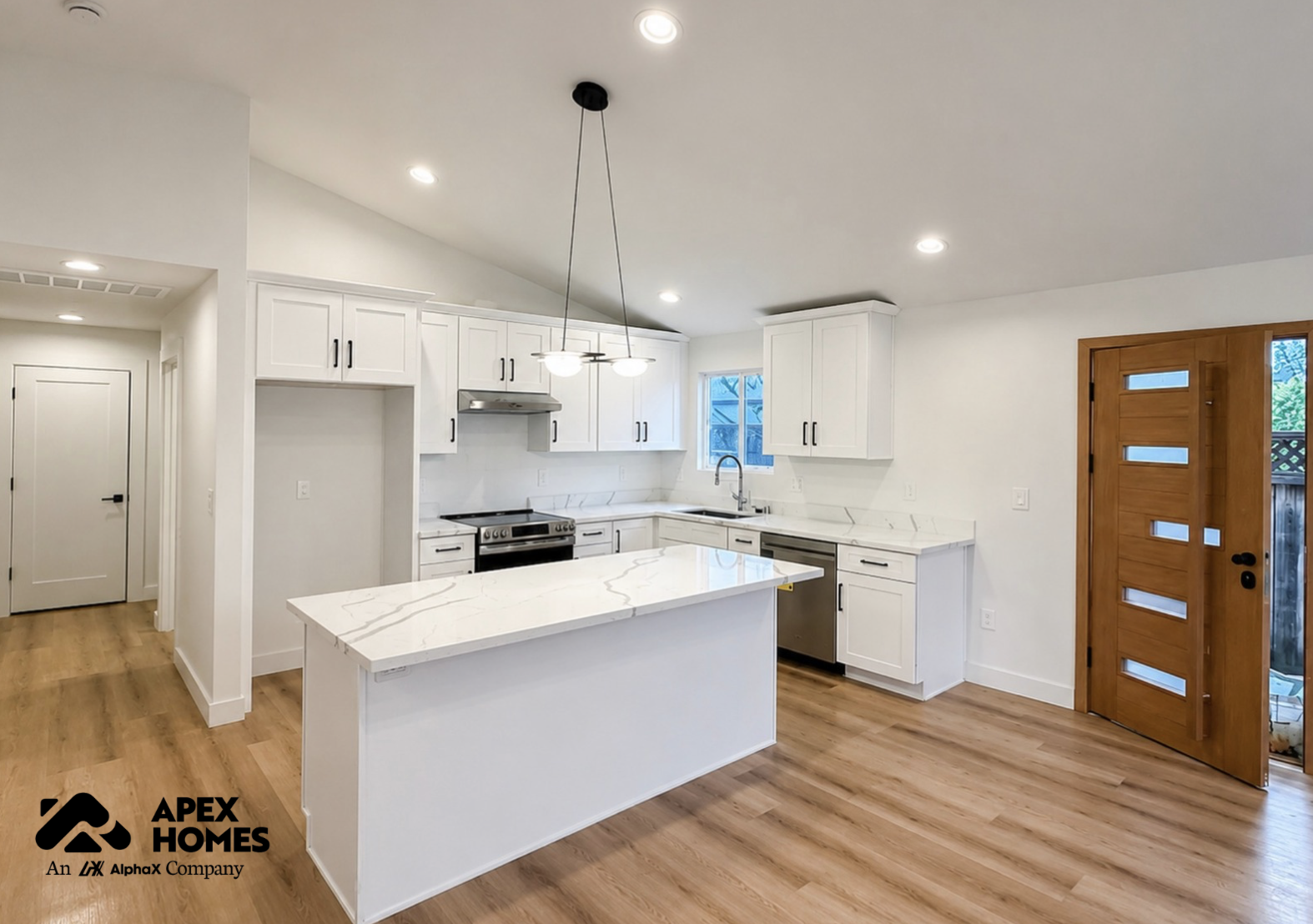
How Apex Homes Manages the Utility Connection Process
Knowing the requirements is one thing. Managing them so they don’t derail your timeline is another. Here’s how Apex Homes handles the utility side of an ADU project.
Running Permitting and PG&E in Parallel, Not in Sequence
PG&E’s own process commonly takes six to eight months on its own, often longer than the construction itself. Most builders follow the same sequence:
- Wait for permits to be issued.
- Start the PG&E application only after that.
- Finish construction.
- Wait for PG&E to catch up before move-in.
That means the utility timeline gets tacked onto the end of an already-finished build. Homeowners can end up with a finished ADU they still can’t move into. It’s a big part of why ADU projects get delayed in the first place, and why sequencing the utility work correctly from day one matters as much as any other step in ADU planning.
Apex Homes runs it differently. We:
- Start preparing the PG&E application before permits are finalized.
- Submit it as soon as permits are clear.
- Let the utility-side timeline run alongside construction instead of after it.
A Direct Line Into PG&E
Apex Homes’ parent company, AlphaX RE Capital, has an ongoing working relationship with PG&E’s Service Planning & Design team. It is a partnership PG&E itself has publicly recognized.
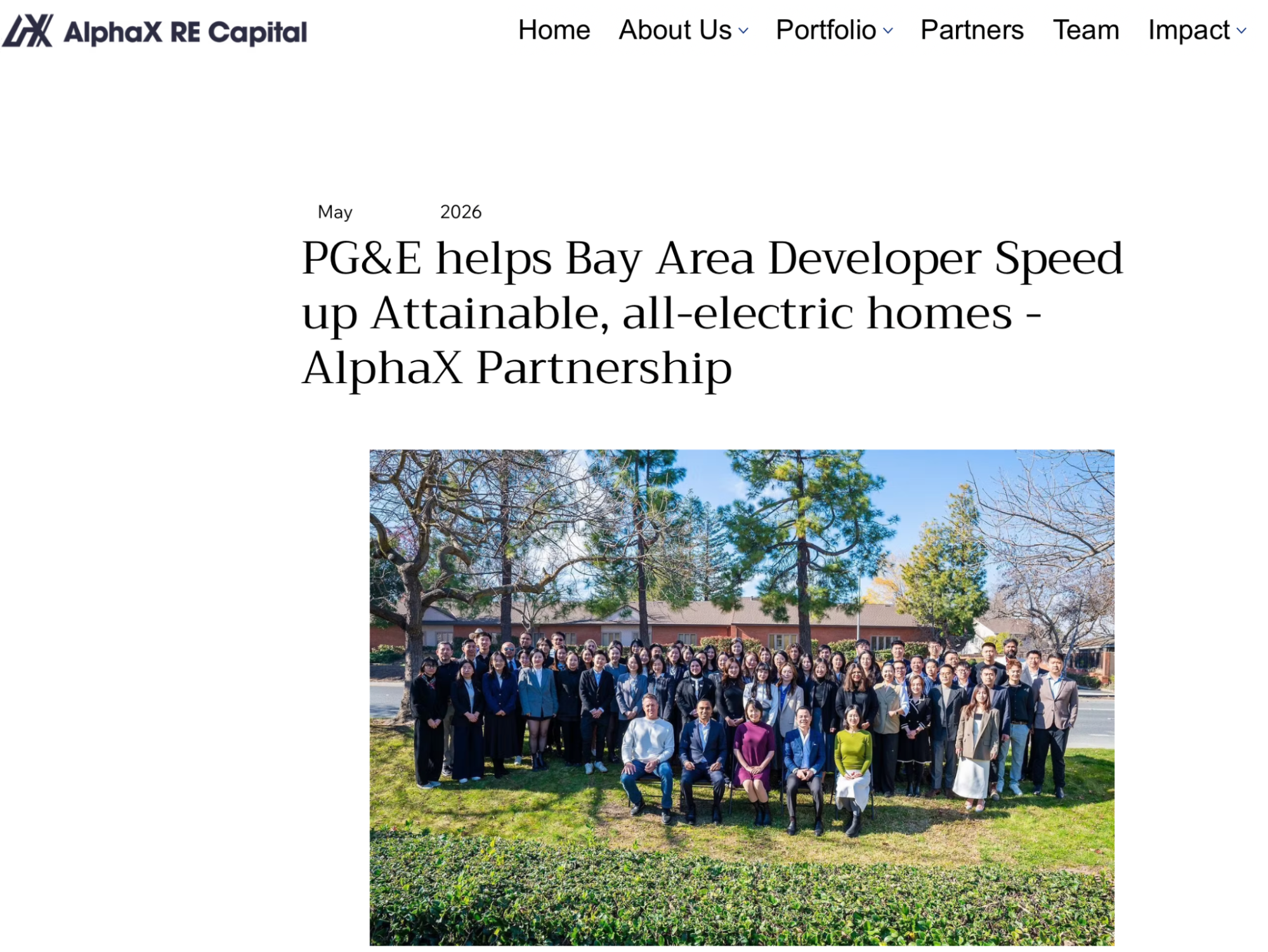
In practice, that means earlier visibility into process changes and a direct channel to PG&E when something on a project needs attention, rather than waiting in a general queue.
For homeowners, that rarely shows up as a single dramatic fix; it shows up as fewer stalled applications and faster answers when a project is waiting on a decision from PG&E’s side.
Utilities Can Make or Break Your ADU Timeline and Budget
Utility connections are frequently the longest, least visible part of building an ADU. It’s easy to overlook when you’re comparing floor plans and finishes, and hard to ignore once they’re holding up your move-in date.
Bay Area homeowners who plan for electrical, water, and sewer requirements early, and who work with a builder that manages the utility side in parallel with construction, are the ones who avoid the delays that catch most projects off guard.
Book a free consultation with Apex Homes to make sure your ADU project’s utilities are well taken care of!