
California law says 60 days. Your builder said six months. Somehow, you’re now 14 months in and still waiting.
If that sounds familiar, you’re not alone. ADU project delays are one of the most common frustrations homeowners face across the Bay Area and Southern California. Whether you’re in San Jose, Mountain View, Cupertino, or even the Joshua Tree vicinity, timelines almost always stretch beyond expectations.
Here’s the truth: delays don’t happen randomly. They happen at predictable points in the project lifecycle. And once you understand where things typically go wrong, you can avoid most of them.
Why Are ADU Delays So Common In California?
Accessory Dwelling Units (ADUs) are a different kind of construction. Unlike a public construction project built on empty land, ADUs are infill builds, meaning they take place on occupied properties with existing structures, utility connections, and strict local zoning rules.
That alone introduces complexity. Your ADU construction has to work around the main house’s sewer line, existing water line, and sometimes outdated systems like a septic system or aging electrical panels. Add in property and local rules that vary city by city, and every project becomes highly specific.
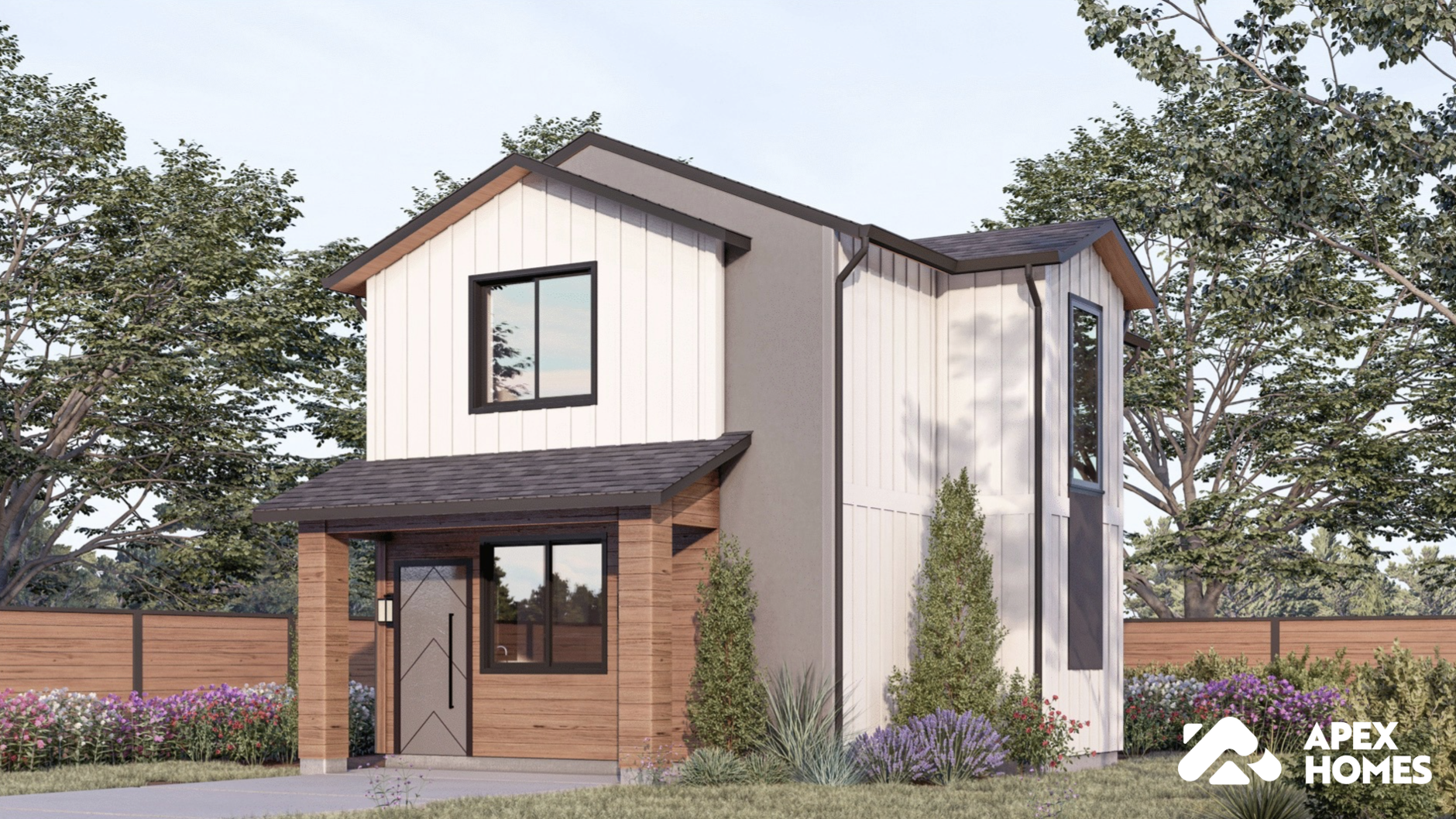
State law requires a building permit decision within 60 days, but only after a complete initial submission.
If your plans are missing details like site plans, structural calculations, or energy compliance documentation, the permitting process pauses. Each round of corrections from the local building department or building officials can add weeks or even months.
That’s why, in reality, most Bay Area ADU projects take 12–18 months from design to move-in.
Here’s the key insight: most ADU construction delays happen before construction even begins. The approval process is where projects experience the most significant delays, not the build itself.
The 6 Most Common ADU Project Delays (Phase by Phase)
Every ADU follows the same general path — design, permitting, then construction. The problem is that each phase has built-in risks that can trigger ADU construction delays if they are not handled correctly.
The good news? These delays are predictable. The better news? With proper planning and the right team, most of them can be avoided.
1. Incomplete or Incorrect Permit Submission
This is the number one cause of ADU delays in California, and it almost always starts with the initial submission.
A complete building permit package requires more than basic drawings. You need accurate site plans, detailed architectural drawings, structural calculations, a clear foundation plan, and energy compliance documentation under Title 24.
Common issues include:
- Incorrect setbacks that don’t align with local zoning rules
- Missing details about the ADU’s foundation or the structure’s foundation
- Incomplete documentation for utility connections
- Plans that don’t reflect actual site conditions
When the local building department flags these issues, the permitting process pauses. Each correction cycle can add 30–60 days, and many jurisdictions require two or three rounds, especially for first-time applicants.
How Apex Homes prevents it:
Apex Homes’ pre-approved plans already meet jurisdiction-specific local codes. Combined with an in-house permitting team, this ensures complete and accurate submissions the first time, minimizing back-and-forth with building officials.
2. Utility Upgrade Surprises
Utility issues are one of the most common sources of unexpected delays, particularly for homes built decades ago.
Once construction begins, a city inspector may uncover problems like:
- An undersized or damaged sewer line connected to the main house’s sewer line
- An outdated electrical panel requiring upgrades
- An existing water line that doesn’t meet current standards
- A septic system with insufficient septic tank capacity
These issues often lead to potentially costly upgrades and coordination with utility providers. And unlike the local planning department, utility companies often operate on slower timelines, creating bottlenecks that stall progress.
How Apex Homes prevents it:
Utility connections and infrastructure are reviewed during Apex Homes’ feasibility phase. This includes evaluating the home’s sewer line, municipal utility requirements, and identifying potential utility upgrades before permits are approved.
3. Mid-Project Design Changes
Design changes after permit approval are one of the most avoidable causes of costly delays, but also one of the most common.
Once plans are approved, any change — no matter how small — can trigger:
- New architectural drawings
- Updated structural calculations
- Additional approval process cycles
- Redesign costs and added permit fees
Even minor adjustments, like window placement or room dimensions, require rework from architects and engineers.
This is where many ADU projects involve unnecessary setbacks. Without proper planning, decisions get pushed into construction, where changes are far more expensive and time-consuming.
How Apex Homes prevents it:
All design decisions are finalized before the initial submission. By front-loading decision-making, Apex Homes eliminates mid-project changes and keeps the permitting process moving without interruptions.
4. HOA Review Complications
Homeowners Associations (HOAs) can’t stop ADUs under state law, but they can still slow them down.
Many associations require:
- Design review approvals
- Material and aesthetic compliance
- Alignment with Covenants, Conditions, and Restrictions (CC&Rs)
These reviews run parallel to the city’s permitting process. If they’re not coordinated early, they can create conflicts with local regulations or force revisions after permits are already in progress.
That’s where significant delays happen, especially when HOA requirements differ from standard ADU plans.
How Apex prevents it:
HOA approvals are handled at the same time as city submissions. Apex Homes guides property owners through CC&R requirements early, preventing conflicts later in the approval process.
5. Cascading Construction Delays
Once construction begins, everything becomes sequential. Each trade depends on the previous one finishing on time. If one phase slips, the entire schedule shifts.
Common causes include:
- Delays in city inspector scheduling
- Failed inspections requiring rework
- Material shortages tied to the global supply chain
- Poor coordination between subcontractors
What starts as a small delay can quickly turn into six to seven weeks of lost time or more.
How Apex Homes prevents it:
As a coordinated builder, Apex Homes keeps all building professionals aligned under one team. Materials are ordered early, and scheduling is tightly managed to reduce downtime between phases.
6. Coastal and Special Zone Review Layers
Some properties come with hidden complexity based on their location.
Homes in coastal zones, hillside areas, fire hazard zones, or even parts of the Joshua Tree vicinity often require additional environmental or zoning reviews beyond standard permitting.
These layers can add months to the timeline, and many homeowners don’t know they apply until the project is already underway.
Other factors that trigger delays include troublesome site features, such as:
- All the trees requiring permits or removal approvals
- An outdated or cracked foundation
- A buried swimming pool that a previous owner buried
- Sloped terrain affecting design and stability
All of these can lead to unexpected delays and require potentially costly upgrades.
How Apex Homes prevents it:
A detailed site assessment is done upfront. Local rules, zoning overlays, and site constraints are identified before design begins, so there are no surprises later.
What ADU Delays Actually Cost You?
Most property owners think ADU project delays are just a time issue. In reality, they come with real financial consequences.
Every month of delay adds:
- Carrying costs from construction financing
- Lost rental income (typically $2,000–$3,000/month in the Bay Area)
- Extra permit fees, correction cycles, and re-inspections from the local building department
- Redesign costs if plans change after the initial submission
For example, a three-month delay could mean $6,000–$9,000 in lost rental income alone, even before factoring in labor costs or inflation.
Delays rarely happen in isolation. For example, a slow permitting process, incomplete site plans, or missing energy compliance documentation can snowball into unexpected delays. This is how budget overruns could affect seemingly simple ADU projects. Choosing the right builder isn’t just about speed; it’s about protecting your investment.
Contact Apex Homes today to get a realistic timeline estimate before you commit.
How To Choose A Builder That Won’t Delay Your Project
Not all builders are equipped to handle ADU projects efficiently. Many operate like a typical construction business, without systems in place for navigating the permitting process, local regulations, and coordination with multiple stakeholders. That’s where costly delays often begin.
Choosing the right team isn’t just about price — it’s about avoiding breakdowns across design, approvals, and construction.
Here’s what to ask before you sign:
- Do they have pre-approved plans for my city?
-
-
- Builders familiar with local zoning rules and local codes can reduce correction cycles with the local building department and speed up building permit approvals.
-
- Who handles the permitting process?
-
-
- If permitting is outsourced, expect slower communication and more back-and-forth during the approval process.
-
- How do they coordinate with utility providers?
-
-
- A strong builder should evaluate utility connections early, including the home’s sewer line, electrical systems, and municipal utility requirements to avoid surprises later.
-
- Do they lock design decisions before submission?
-
-
- Frequent changes after initial submission lead to re-design costs, updated architectural drawings, and delays.
-
- How do they manage inspections and subcontractors?
-
- Poor coordination between trades is a major cause of ADU delays once construction begins.
Remember to also watch out for these red flags:
- Vague timelines with no clear milestones
- “Starting at” pricing that doesn’t account for real site conditions
- No in-house permitting expertise
- Separate teams with no single point of accountability
How Apex Homes Is Built Around Avoiding Delays
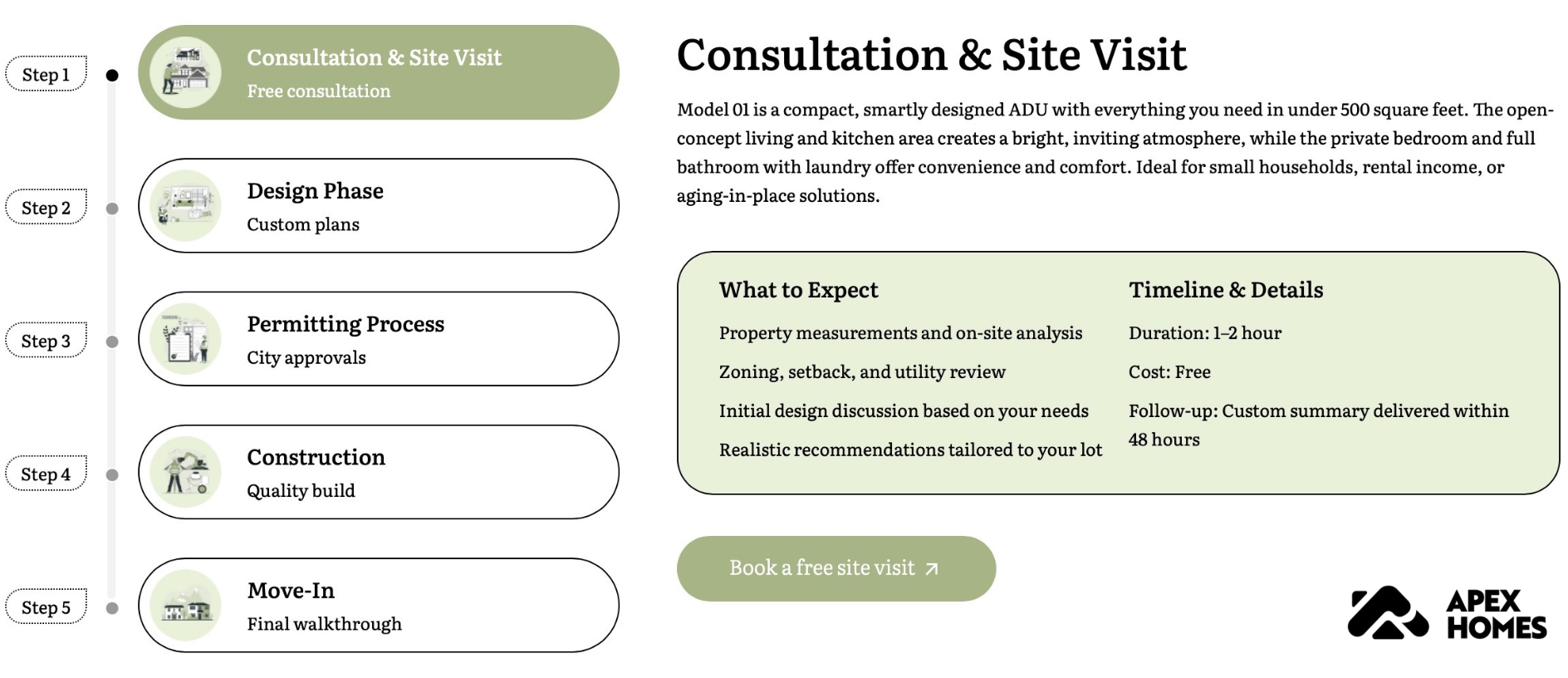
Apex Homes is designed to prevent ADU project delays, not just manage them.
At Apex Homes, we use pre-approved plans across more than ten Bay Area and Southern California cities, already aligned with local zoning rules and local codes. This helps shorten the permitting process, with many building permit approvals completed in about 1.5-2 months instead of 3-6 months.
We handle everything in-house, from permitting to ADU construction, so there are no coordination gaps between building professionals.
Utility connections and HOA reviews are addressed early. That means fewer surprises from a city inspector, whether it’s a damaged sewer line, outdated systems, or needed utility upgrades.
With real-time tracking and tight coordination, some ADU projects are completed in as little as three months after permits are approved. Of course, delays can still happen, but with the right process and pre-approved plans, they’re far less likely and easier to manage.
Get a free consultation with Apex Homes to start your ADU projects and avoid delays!
Get A Real Timeline Before You Commit
ADU delays are common, but they’re also predictable and largely preventable. They usually happen at the same stages:
- Permitting
- Utility coordination
- Design decisions
- Construction sequencing
The difference is whether your builder has engineered their process to prevent them, or simply reacts when they happen.
If you’re a California homeowner planning your own ADU project, the smartest first step is understanding exactly what your property requires.
Book a site visit with Apex Homes to get realistic expectations on costs and timeline before committing your time and money.