
A soil report is one of the most overlooked line items in an ADU budget. Skip it, or underestimate what it costs, and it can catch homeowners off guard partway through permitting. Here’s what a soil report actually covers, what it costs, and when you need one.
What Is a Soil Report, and Why Does My ADU Need One?
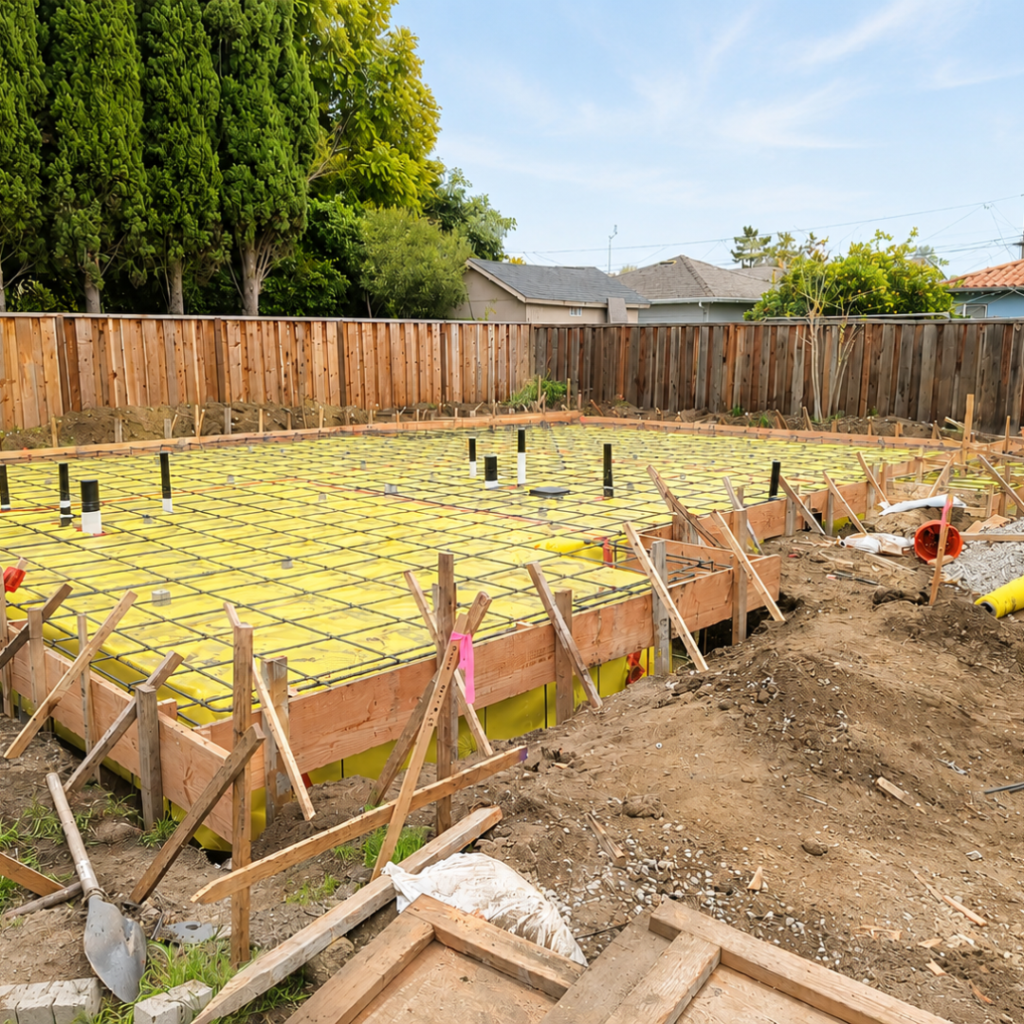
A soil report, also called a geotechnical report, tells an engineer what’s actually underneath your lot: soil type, compaction, drainage, and bearing capacity. That information drives the foundation design for a new structure. Since a detached ADU requires an entirely new foundation, cities and structural engineers typically require a soil report before finalizing plans, unlike an attached addition or garage conversion that can sometimes rely on the existing foundation’s engineering.
How Much Does a Soil Report Cost?
A standard soil report for a residential ADU project typically costs $1,500 to $5,000, depending on the scope of testing and the engineer’s fee structure. Simple, flat, easily accessible lots tend to land on the lower end. Sloped, tight, or hard-to-access sites push costs toward the higher end.
What Affects the Cost?
- Lot accessibility: tight urban lots or backyards with limited equipment access can raise drilling and labor costs.
- Slope and soil type: hillside lots or unusual soil conditions often require more borings or specialized testing.
- City requirements: some jurisdictions require additional review or a specific report format, adding time and cost.
- Number of test borings: larger or more complex lots may need multiple sample points instead of one.
When Do You Need a Soil Report in the ADU Process?
A soil report typically comes early, during the feasibility and design phase, before permits are submitted. Getting it done early avoids delays later, since structural engineers need the soil data to finalize foundation plans. Apex Homes’ ParcelZ feasibility tool can help confirm what your specific lot will need before you commit to a design, and the ROI Calculator can show how that cost fits into your overall budget. A soil report is one piece of the puzzle — see the full cost picture in our guide to building an ADU in San Jose.
Apex Homes Handles Soil Reports as Part of Your ADU Build
Apex Homes coordinates the soil report along with the rest of the design and permitting process, so it’s one less thing to manage on your own. Learn more about how our process works, check your lot with a free feasibility study, or request a free estimate for a full cost breakdown.