
For many Bay Area homeowners considering building an accessory dwelling unit (ADU), the real question is whether building an ADU for a parent, adult child, or extended family members will actually work long-term.
Most homeowners already understand what an ADU is. What they’re trying to figure out is whether living on the same property can improve family life without sacrificing privacy, independence, and future flexibility.
The families who move forward successfully aren’t chasing trends. They’re solving real problems: aging parents who need support, adult children priced out of Bay Area housing, or grandparents who want to be closer to grandchildren.
In recent years, ADU multi-family living has become one of the most practical housing solutions in California. And the families who are happiest with the outcome are often the ones who took time to understand how the decision would affect everyday life, not just construction costs.
Why More Bay Area Families Are Building ADUs Right Now
More Bay Area families are building ADUs because rising housing and care costs, combined with stronger California ADU laws, make it more practical to house multiple generations on one property instead of paying separate housing or assisted living.
The Numbers Behind The Shift Toward Multigenerational Living
Multigenerational living is becoming increasingly common across the United States. As of July 2025, research data showed that more than 66 million adults in the country lived in multigenerational households.
California remains one of the states where multigenerational living is most common, particularly in high-cost housing regions such as the Bay Area.
Several factors are driving this trend:
- Rising housing costs
- Longer life expectancy
- Growing caregiving responsibilities
- Increased demand for flexible housing options
At the same time, the financial reality is difficult to ignore.
At the time this article was written, assisted living costs in California often range roughly $84,000 to $93,600 annually, depending on location and care needs. By comparison, many ADU projects fall between $120,000 and $360,000.
For many families, that math changes the conversation. Instead of paying an ongoing annual expense, they’re investing in a permanent residential unit that can increase overall property value while serving a family need today.
California SB 543 and Recent ADU Policy Updates
California’s state law continues to encourage ADU development.
Recent legislation, including SB 543 provisions that took effect in 2026, introduced stricter review timelines for local jurisdictions.
Cities generally have 15 business days to determine whether an application is complete and must act within prescribed approval timelines once applications are deemed complete. These changes were designed to reduce permit uncertainty and shorten project timelines.
Additional reforms have also reduced certain impact fees on qualifying ADUs, helping property owners move forward with more confidence.
California has also continued expanding opportunities for homeowners in single family zones, making it easier to consider adding ADUs on properties that were once limited to a traditional single family dwelling.
What Is A Multifamily ADU?
A multifamily ADU is an ADU built on a lot that already contains a multifamily property.
Under California regulations, multifamily property owners may be able to create multiple ADUs through:
- Existing non-habitable space
- Repurposing existing non-livable space
- Building detached ADUs on the same property
- Some properties may even qualify for two detached ADUs, depending on the existing development and local regulations.
- Utilizing an existing accessory structure
- Completing ADU conversions inside a main structure
Property owners often ask how many units can be added to a multifamily structure. The answer depends on local regulations, lot conditions, and the minimum number of existing units on-site. In some situations, many ADUs may be permitted through conversion opportunities and detached construction.
Unlike single family ADUs built on single family properties, multifamily ADUs often provide opportunities to add units more efficiently because portions of the property may already contain existing units, storage rooms, or other underutilized spaces.
How Much Does A Multi-Family ADU Cost?
The cost of an ADU multifamily California project depends on several factors:
- New construction vs. conversion ADUs
- Site conditions
- Utility connections
- Building codes
- Parking requirements
- Height limits
- Setback requirements
- Floor area ratio limitations
- Fire sprinkler requirements
- Local jurisdiction requirements
The table below shows the general range of ADU construction costs:
| ADU Type | Typical Cost Range |
| Garage conversion | $80,000 – $200,000 |
| Attached ADU | $150,000 – $300,000 |
| Detached ADU | $200,000 – $475,000 |
| Junior accessory dwelling unit | $60,000 – $150,000 |
| Large 2-bedroom family ADU | $280,000 – 310,000 |
Note that projects involving a detached garage often fall into the garage conversion category, although costs can vary depending on structural upgrades and utility requirements.
Real Multifamily Cases With Apex Homes
Case 1: Parents Sell Their Home Move Into The ADU
One Bay Area family reached a crossroads many homeowners recognize immediately.
The parents were living in a home that had become too large, too expensive to maintain, and increasingly impractical as they aged. Meanwhile, their adult child worried about distance and future caregiving needs.
The solution wasn’t assisted living. Instead, the family decided to sell the parents’ existing home and apply part of the proceeds toward building an ADU on the adult child’s property.
Several design decisions proved especially important.
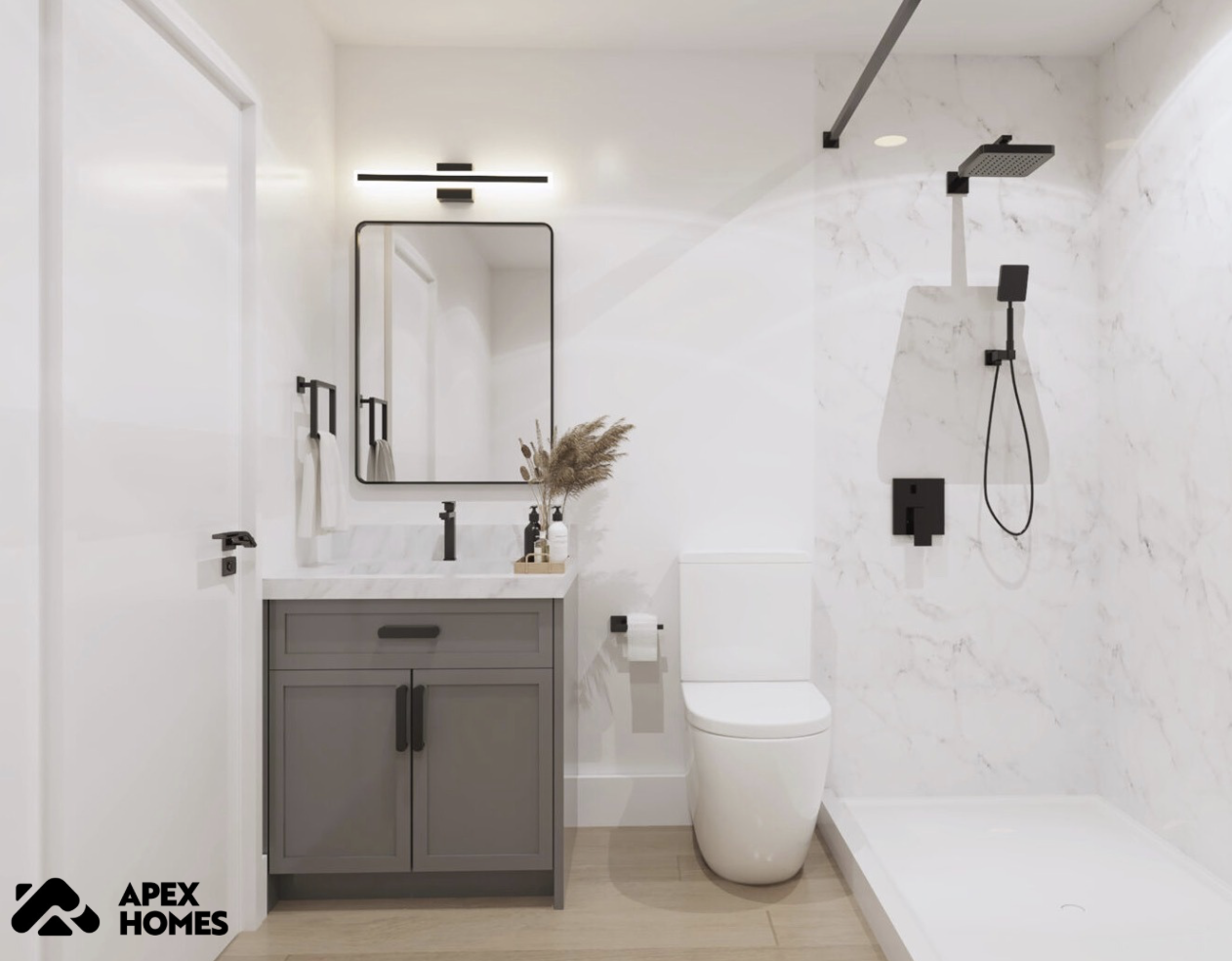
The floor plan was entirely single-level. There were no stairs to navigate and no future mobility concerns built into the layout. Doorways were designed at 36 inches wide to accommodate potential wheelchair access. The bathroom included a step-free wet-room shower from day one rather than being retrofitted later.
Most importantly, the ADU had its own dedicated exterior entrance.
Many families underestimate how important this detail becomes. Entering through their own front door allowed the parents to feel like they were moving into a home — not a spare room behind someone else’s house.
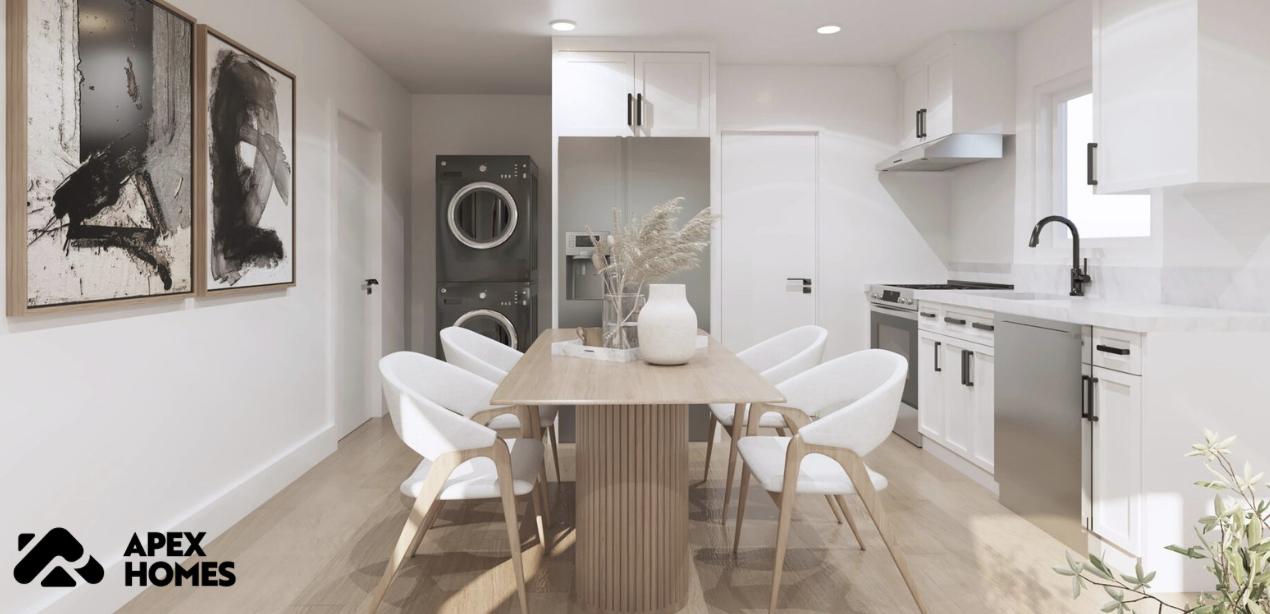
The unit also included a full kitchen. That mattered because these homeowners had spent decades cooking daily. Eliminating that capability would have changed the experience dramatically.
Six months after moving in, the family reported something simple but powerful: checking on parents no longer required scheduling a visit. It became part of everyday life.
Case 2: Creating Independent Living: ADUs For Adult Children
Housing costs in the Bay Area make independence difficult for young adults.
In one Apex Homes project, a recent graduate landed a Bay Area technology position but faced rental costs approaching $2,500 to $3,000 per month. Instead of immediately entering the rental market, the family created an ADU designed specifically for independent living.
Several design choices made a difference:
- One-bedroom layout rather than a studio
- Separate electrical meter
- Dedicated internet connection
- Enhanced acoustic insulation
- Full kitchen
- Independent entrance
The bedroom separation turned out to be especially valuable for hybrid work. Work and sleep occupied different spaces, making the home feel substantially larger than its square footage suggested. The estimated savings compared with market rent exceeded $28,000 annually.
Another Apex Homes project involved a college student attending school nearby. The goals were different, but the design philosophy remained similar.
The studio included:
- Defined living zones
- Significant acoustic insulation
- Built-in storage
- A compact but functional kitchen
- A private outdoor patio area
Even a small outdoor space transformed the experience. Rather than feeling temporary, the additional ADU felt like a genuine home.
In both cases, the families planned for the future from the beginning. When the children eventually move out, the units can transition into strong rental properties capable of generating additional rental income.
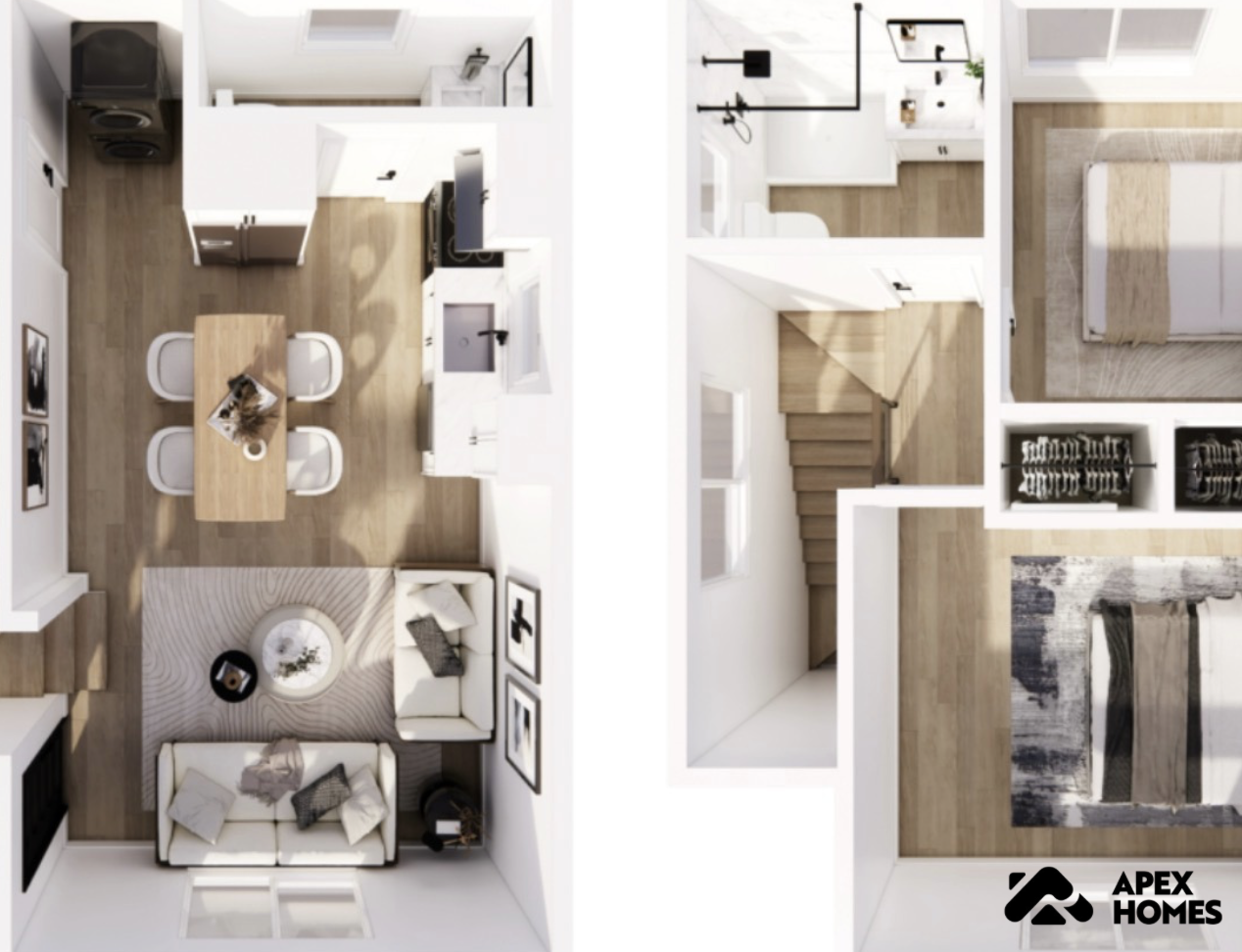
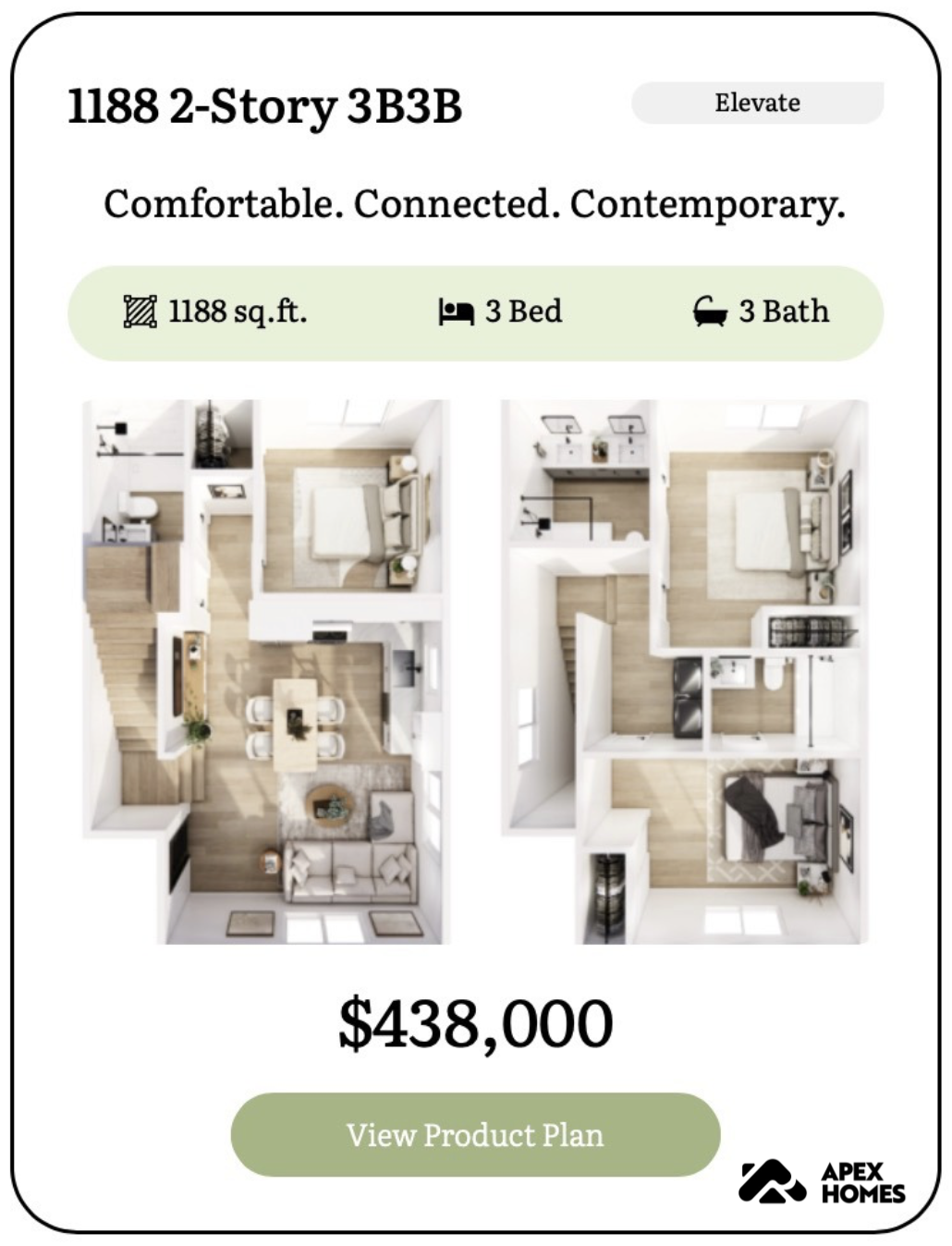
Notably, there are families who also need significantly more space. Some Apex Homes projects involved a two-story, 3-bedroom, 3-bathroom ADU designed to function as a fully independent home while remaining on the same property as the primary residence.
Case 3: Three Generations, One Property
One of the most successful Apex Homes ADU projects involved three generations sharing a single property.
The homeowners had sufficient land to support a larger family ADU. Grandparents wanted to spend more time with grandchildren while maintaining their own household.
The resulting unit measured approximately 850 sq ft and included two genuine bedrooms. The second bedroom wasn’t treated as an afterthought or storage room; it was designed as a functional living space.
The primary bedroom sat toward the rear of the structure to reduce street noise. The second bedroom was positioned closer to the main entrance and eventually evolved into a flexible space used by visiting grandchildren.
The kitchen featured an extended countertop layout because cooking together was an activity the family specifically discussed during planning. That design decision reflected real life rather than a generic floor plan.
The result exceeded expectations.
The grandparents went from seeing grandchildren only a few times each year to interacting several times every week. Interestingly, the second bedroom became an after-school homework area — a use nobody initially planned but everyone appreciated.
Before You Build — Questions Your Family Should Answer
Who Is This ADU Actually For?
Families often begin by saying, “We’re building for my parents.” That’s not specific enough. They need to identify the actual person and consider:
- Mobility needs
- Health considerations
- Relationship status
- Career plans
- Lifestyle preferences
- Future location flexibility
A design that works today should still work five years from now. The best ADU projects anticipate change rather than react to it.
What Relationship You Want Between The Two Households?
Some families want close integration while others want comfortable independence. Neither approach is better but they lead to completely different design decisions.
Integrated designs may prioritize:
- Shared outdoor spaces
- Convenient pathways
- Close proximity
- Easy access between homes
Meanwhile, independent designs often prioritize:
- Separate entrances
- Acoustic separation
- Private outdoor areas
- Separate utility meters
When families fail to discuss these expectations early, friction tends to appear later.
What Happens To This Unit If Circumstances Change?
Life circumstances change — parents may relocate, children may move out, and caregiving needs may evolve.
The strongest ADU projects maintain flexibility. A properly permitted additional dwelling unit with a good layout, functional kitchen, private entrance, and appealing design typically retains strong rental potential.
That future flexibility helps protect the investment while creating options for the family. A flexible ADU can also help families save money over time by reducing housing expenses while preserving long-term rental opportunities.
What Makes A Family ADU Different To Build?
The Design Mindset Shift
A family-focused ADU differs from a purely rental-focused ADU. The difference isn’t dramatic, but it’s meaningful.
Family ADUs prioritize:
- How a specific family lives
- Full cooking capability
- Accessibility features
- Personalized layouts
- Connections to the main residence
- In some cases, attached designs with shared walls make sense for families who want closer proximity, while detached layouts prioritize privacy and independence.
Meanwhile, rental-focused ADUs generally emphasize:
- Broad tenant appeal
- Simpler layouts
- Neutral finishes
- Lower-maintenance features
- Greater separation from the primary unit
The interesting reality is that a well-designed family ADU often becomes an excellent rental later. The reverse isn’t always true.
Timeline: Decision To Move-In
Most ADU projects follow a timeline similar to:
- Feasibility and design: 4–8 weeks
- Permit review and approval: 6–10 weeks
- Site preparation and foundation: 3–5 weeks
- Framing, mechanical, electrical and plumbing: 8–12 weeks
- Finishes and landscaping: 4–6 weeks
Most homeowners should expect approximately six to nine months from contract signing to move-in. Pre-approved plans can shorten portions of the design and permitting process in some Bay Area cities.
Feasibility Before Design
Before discussing finishes, floor plans, or square footage, determine whether the property can support the project.
Important factors include:
- Lot size
- Zoning restrictions
- Setback requirements
- Many California jurisdictions continue to allow reduced setbacks, with rear and side setbacks often as little as four feet for qualifying ADUs.
- Height limits
- Parking requirements
- Existing structures
- Utility access
- ADUs allowed under local regulations
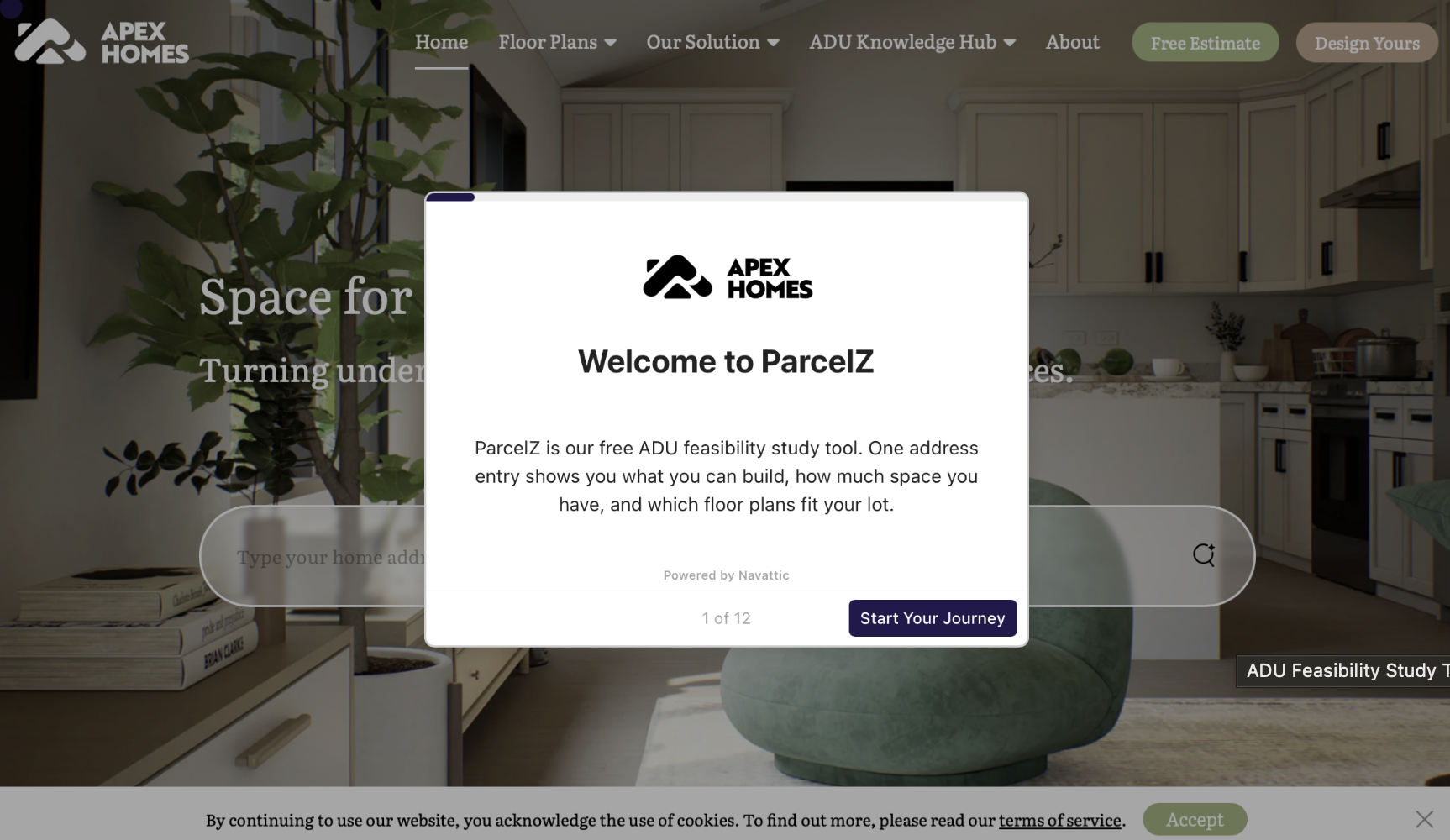
If you’re considering additional ADUs — whether detached or attached ADUs, converted ADUs, a multifamily or single ADU — understanding feasibility first prevents expensive surprises later.
Apex Homes begins with a site consultation that evaluates the property’s ADU potential based on current California regulations and local requirements.
Building More Than An Additional Living Space
Multigenerational living is now becoming the most practical financial and emotional choice available for many families in California.
The families who are happiest years after construction aren’t necessarily the ones who built the biggest ADU or spent the most money.
They’re the ones who had honest conversations before they started. They identified who the unit was for, how they wanted to live together, and what flexibility they wanted for the future.
Apex Homes has helped families create housing solutions for aging parents, adult children, and three-generation households across the Bay Area. The right ADU starts with understanding the people who will live there — and designing around real life.
Book a free consultation with Apex Homes to explore what’s possible on your property. There’s no pressure and no obligation, just a clear conversation about your options.