
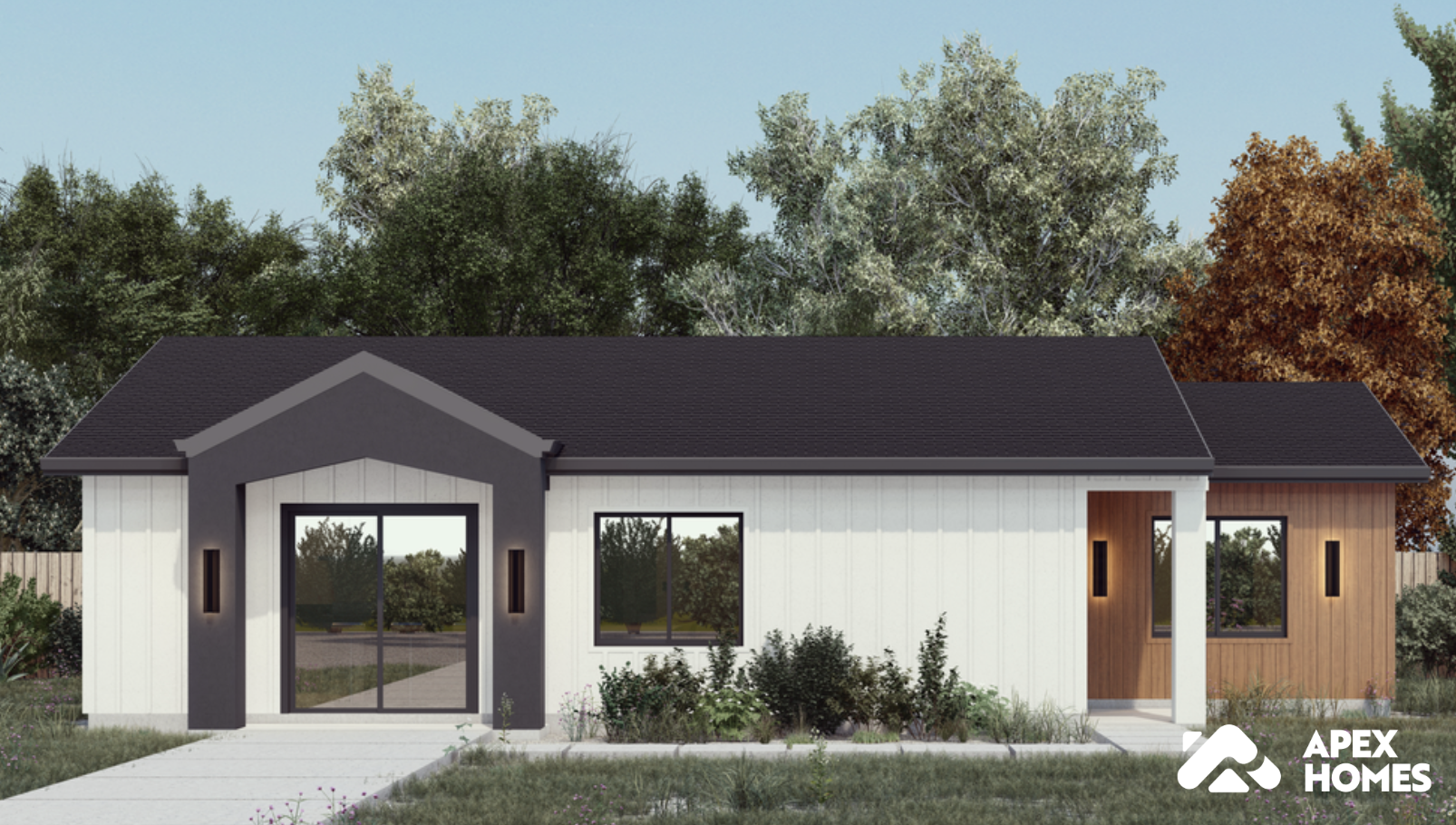
California has some of the most homeowner-friendly ADU laws in the country, but figuring out how big your accessory dwelling unit (ADU) can be still isn’t straightforward.
On paper, the rules seem simple. In reality, your allowed ADU size depends on a combination of California state law, local regulations, zoning rules, and the physical constraints of your lot. Two properties on the same street can end up with very different outcomes.
That’s why the real question isn’t just “how big can an ADU be in California,” it’s “Given my property and my goals, what size ADU actually makes the most sense?”
In this guide, we’ll break it down clearly:
- The maximum ADU size allowed under California state law
- How local jurisdictions like San Jose and Los Angeles County shape your options
- And how to choose the right ADU size based on cost, ROI, and long-term use
Apex Homes works within these regulations daily, helping property owners design ADUs that pass permitting smoothly while maximizing value.
If you want clarity upfront, our free site consultation offers a tailored recommendation before you spend money on design or permits.
California ADU Size Limits — What State Law Actually Says
Before diving into local zoning rules, it’s important to understand what California state law guarantees. These rules act as a baseline. Every city must allow them — no exceptions.
The 800 Sq Ft Guarantee
No matter where your property is located, state law guarantees the right to build at least one accessory dwelling unit up to 800 sq ft.
This baseline includes:
- Up to 800 sq ft of livable space
- A 16-foot height limit
- 4-foot setback requirements from rear and side property lines
- Applies to both detached and attached ADUs
Local jurisdictions cannot impose additional restrictions that prevent you from building this unit. This means even in areas with strict zoning regulations, you still have a clear path to building a functional, self-contained living space.
However, this is just the starting point. In many cases, property owners can build significantly larger ADUs, often up to 1,200 sq ft, depending on local ordinances and lot conditions.
Size Limits by ADU Type
Not all ADUs are treated equally. Your maximum ADU size depends on whether you’re building a detached unit, attached ADU, or converting an existing structure.
Here’s a simple breakdown:
| ADU Type | Maximum Size | Key Notes |
| Detached ADUs | Up to 1,200 sq ft | 800 sq ft guaranteed;
up to 850 sq ft: one bedroom; up to 1,000 sq ft: with two or more bedrooms |
| Attached ADUs | Up to 50% of the primary dwelling | Max cap of 1,200 sq ft |
| Conversion ADUs (e.g., garage, basement) | No set maximum;
no impact fees |
Limited by existing living area or structure footprint |
| Junior ADUs (JADUs) | 500 sq ft | Must be within the existing primary home |
Each ADU type comes with trade-offs:
- Detached ADUs provide you with the most flexibility in terms of layout, privacy, and overall square footage. They’re typically the best choice if you want to maximize long-term rental income or create a standalone living space.
- Attached ADUs are tied to the size of your primary residence. If your main house is small, your ADU will be limited accordingly.
- Conversion ADUs are often the easiest to permit. Since they use an existing structure, they avoid certain fees and zoning restrictions.
- Junior ADUs are smaller and must be built within the existing primary dwelling, but they can be a fast and cost-effective way to add livable space.
The same property can support very different outcomes depending on which approach you choose, which is why early planning matters.
Height and Setback Rules That Shape Your Footprint
Even if your zoning allows a larger ADU, your buildable footprint may be constrained by height limits and setbacks.
Here are the standard rules under California ADU regulations:
- Height limit (detached ADUs): 16 feet
- Near transit (within 0.5 miles): up to 18 feet
- Attached ADUs: up to 25 feet, or match the primary dwelling height (whichever is lower)
- Setbacks: 4 feet from rear and side property lines
For conversion ADUs, setbacks usually don’t apply if you maintain the existing structure’s footprint, but any expansion may trigger standard setback requirements.
These rules directly affect how much square footage you can realistically build.
For example:
- A narrow lot with tight property lines may not physically fit a large detached unit.
- Height restrictions can limit your ability to build a second story.
- Setbacks can shrink your buildable area even if zoning allows a larger ADU.
In other words, the legal maximum isn’t always the practical maximum.
How Local Rules Can Change What You Can Build
California law, such as SB9, sets the floor, but local rules define the ceiling. Navigating both is where most homeowners get stuck. Each city can impose local rules, zoning regulations, and design standards, as long as they don’t conflict with state law.
When Your City Goes Beyond the State Minimums
In many California cities, especially in the Bay Area, the typical ceiling for detached ADUs is 1,200 sq ft. Many cities generally align with this upper limit, including:
- San Jose
- >Campbell
- Cupertino
- Los Gatos
- Mountain View
However, some cities impose tighter restrictions. For example:
- Certain jurisdictions, such as Walnut Creek, may cap ADUs closer to 1,000 sq ft
- Others may introduce stricter design standards or lot coverage limits
Even in cities that follow state law closely, like San Francisco or Los Angeles County, local ordinances can still influence:
- Building height
- Parking requirements
- Architectural design
Because these rules change over time, it’s critical to verify requirements with your local planning department before finalizing your ADU plans.
The FAR and Lot Coverage Factor
One of the most overlooked constraints in considering ADU size is the floor area ratio (FAR) and lot coverage. These zoning rules control how much total building area is allowed on your property.
Here’s where California ADU law creates an important advantage:
- ADUs under 750 sq ft are exempt from:
- FAR limits
- Lot coverage requirements
- Open space restrictions
Once your ADU exceeds 750 sq ft, these restrictions can apply, potentially limiting your design or requiring additional approvals.
This is why many experienced builders design ADUs at 749 sq ft. At this size, you can:
- Be exempted from development impact fees
- Avoid zoning constraints tied to FAR
- Fit more easily on smaller lots
- Reduce permitting complexity and lower construction costs
- Maintain strong rental appeal
This isn’t just a regulatory detail; it’s a strategic advantage.
The 750 Sq Ft Rule — Why It’s the Strategic Sweet Spot
Most homeowners focus on the maximum ADU size. But the smarter approach is to focus on the most efficient size.
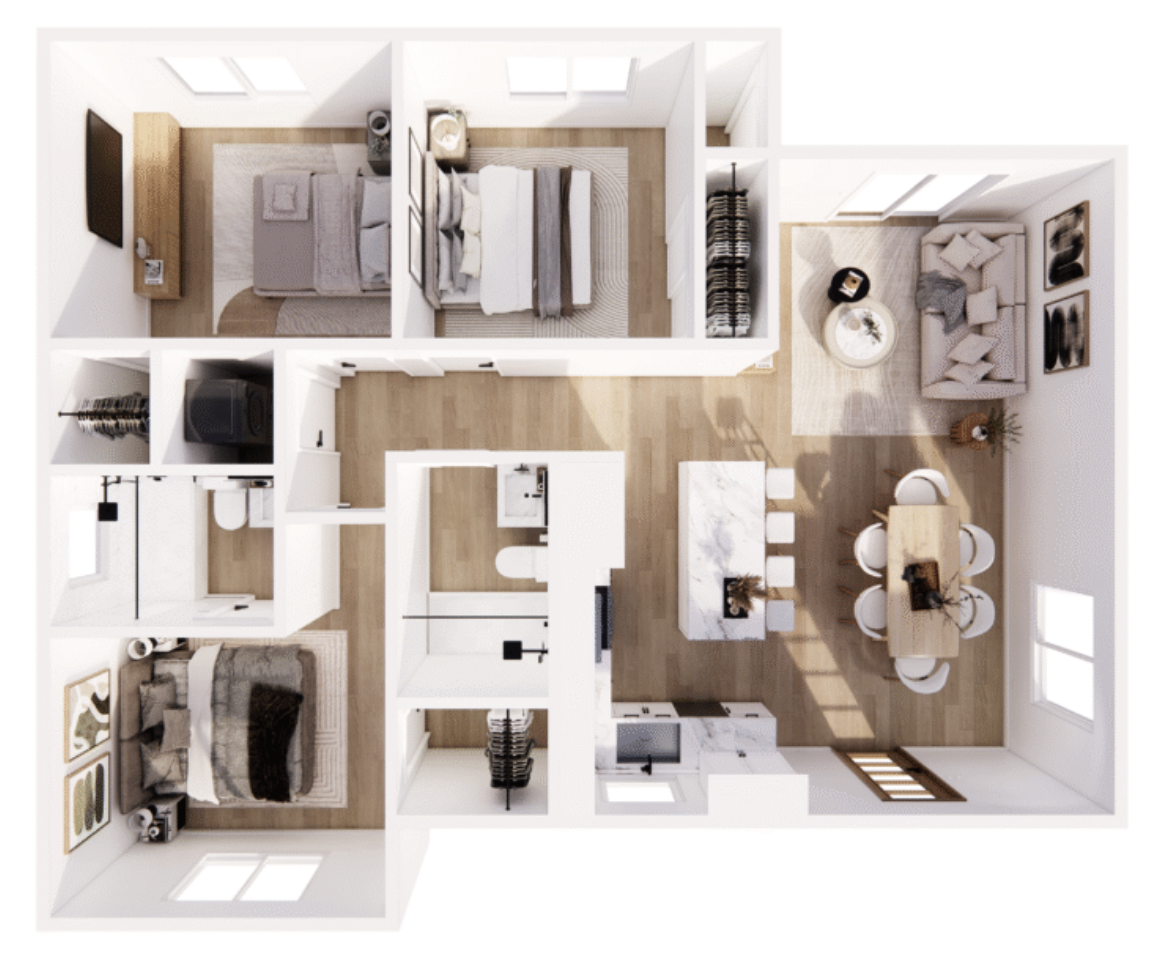
As previously mentioned, ADUs under 750 sq ft unlock several major benefits. Apex Homes has built its floor plan lineup around this insight. Two of our most popular models include:
These designs maximize livable space while staying just below the threshold that triggers higher costs and regulatory hurdles. For many homeowners, this size range delivers the best balance between:
- Cost efficiency
- Rental income potential
- Ease of approval
If you want to explore layouts that hit this sweet spot, reviewing pre-approved plans is a great place to start.
Choosing the Right ADU Size for Your Goals
Understanding the rules is only half the equation. The real decision is choosing the right ADU size for your specific use case.
Size by Use Case
Here’s a practical framework:
| Goal | Recommended Size | Apex Homes Model |
| Rental Income
(1 person/couple) |
495 – 750 sq ft | Compact (495 sq ft), Linear (746sq ft), Double (749sq ft) |
| Family/in-law suite | 750 – 1,000 sq ft | Efficient (797sq ft), Essential (991sq ft) |
| Multigenerational living | 983 – 1,188 sq ft | Cozy (983 sq ft), Elevate (1,188 sq ft) |
| Maximum ROI balance | – 749 sq ft | Double (749 sq ft) |
How to think about it:
- If your goal is rental income, smaller units tend to deliver better return on investment (ROI) due to lower upfront costs and strong demand from individuals or couples.
- If you’re building for family use, slightly larger ADUs provide more comfort and flexibility.
- For multigenerational living, maximizing square footage becomes more important than minimizing cost.
Size vs. Cost — What Homeowners Often Miss
One of the biggest mistakes homeowners make is assuming that bigger automatically means better. In reality:
- Mid-size ADUs (500–800 sq ft) often provide the best return on investment. Consider integrating solar panels into your ADU design to offset long-term energy costs.
- Going above 750 sq ft may trigger impact fees that reduce profitability.
- Units under 500 sq ft can limit rental income and tenant appeal.
- Larger units — especially two bedroom ADUs or three bedroom ADUs —significantly increase construction costs.
Larger ADUs also come with:
- More complex engineering requirements
- Longer build timelines
- Greater permitting scrutiny
The most successful ADU projects are the ones that balance size, cost, and purpose, not just maximize square footage.
Apex Homes addresses this by offering a range of various models starting from 495 sq ft, allowing homeowners to choose based on their goals rather than imposing a one-size-fits-all solution.
Get a free site consultation with Apex Homes today to find the right ADU size for your property.
ADU Size Rules in Key California Cities
If you’re building in a major metro area, local rules will directly influence your project.
Here’s a snapshot of how key Apex Homes markets approach ADU size:
- San Jose: Allows up to 1,200 sq ft detached ADUs; pre-approved plans can streamline permitting.
- Cupertino: An 800 sq ft ADU allows both an ADU and a JADU on a single-family lot; larger units may limit total count.
- Campbell: It closely follows California state law and is flexible for detached units.
- Los Gatos: Allows up to 1,200 sq ft for attached and detached ADUs; JADUs are capped at 500 sq ft
- Mountain View: It aligns with state regulations and has an efficient permitting process.
Even within these cities, zoning overlays and local ordinances can affect your final design. That’s why working with a builder familiar with local approvals can significantly reduce risk and delays.
Determine What’s The Right ADU Size For You
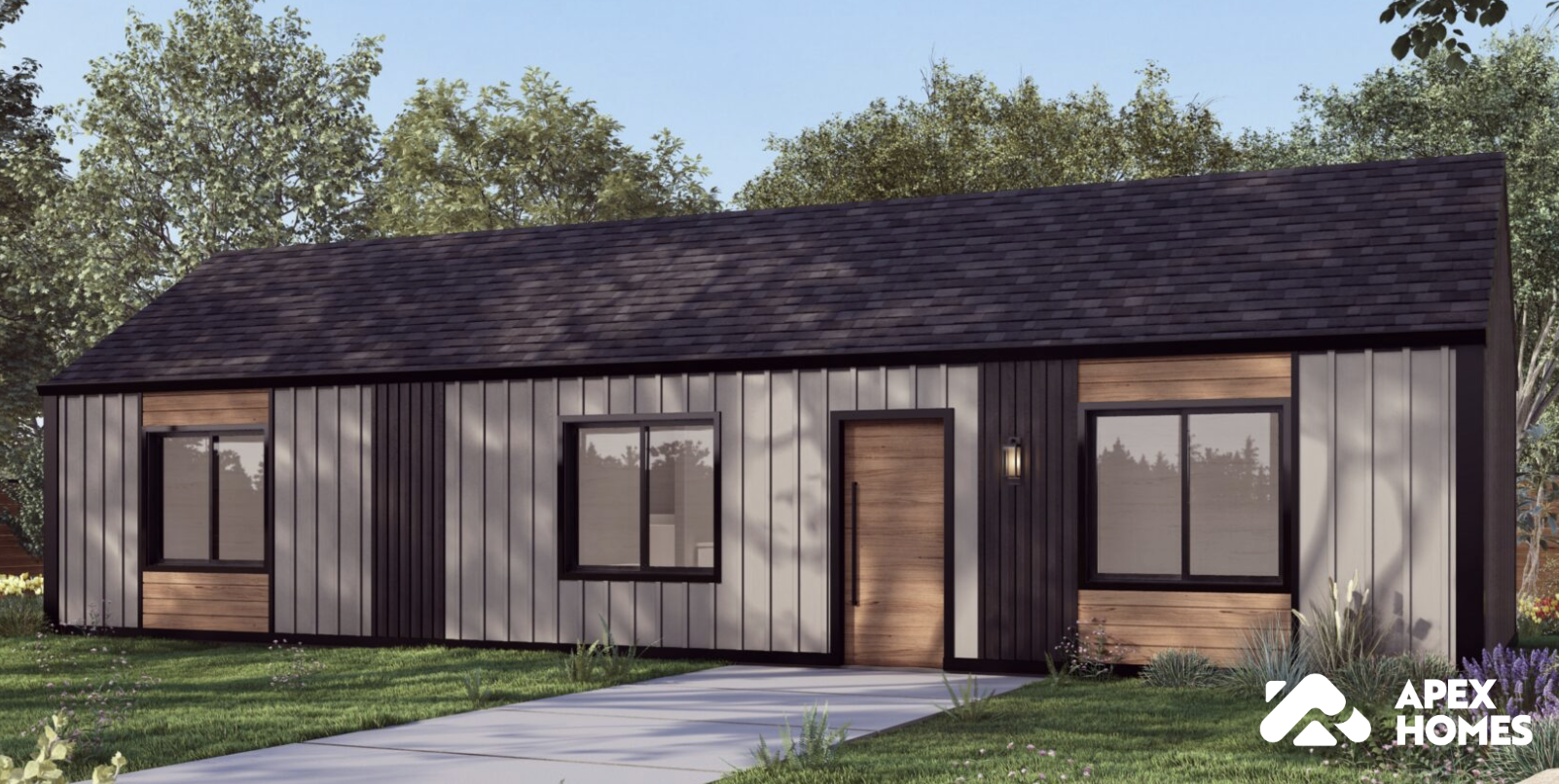
California ADU laws give homeowners more flexibility than ever. In many cases, you can build anywhere from a compact 495 sq ft unit to a full 1,200 sq ft detached ADU.
But the most important takeaway is this: The best ADU size isn’t the maximum; it’s the one that fits your lot, your goals, and your budget.
The right ADU:
- Works within your zoning rules
- Aligns with your intended use
- Maximizes value without unnecessary costs
Apex Homes specializes in helping homeowners make that decision with confidence. With our pre-approved plans across multiple California cities and models ranging from 495 sq ft to 1,188 sq ft, we simplify the process from concept to construction.
Schedule your free site consultation with Apex Homes and get a personalized ADU size recommendation!