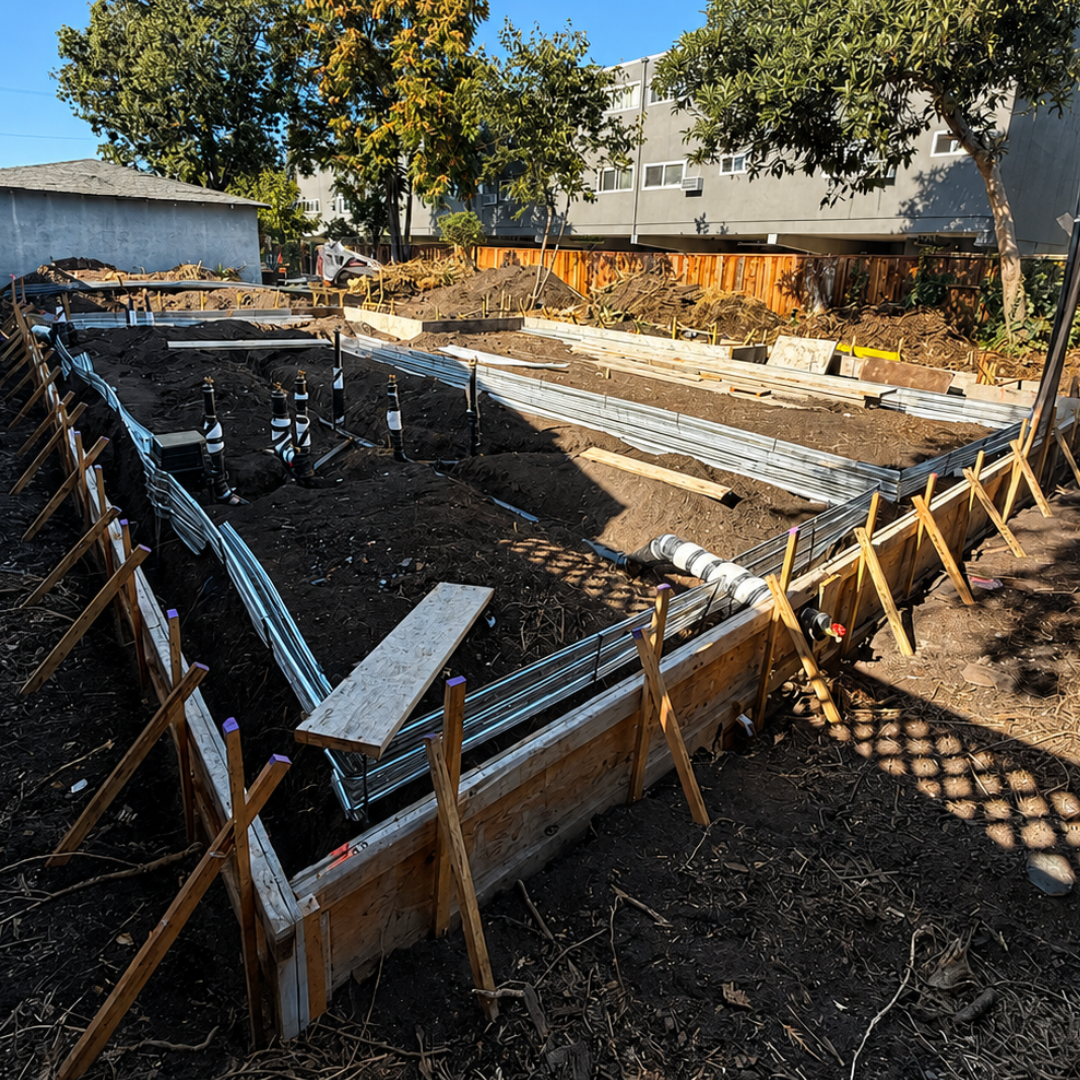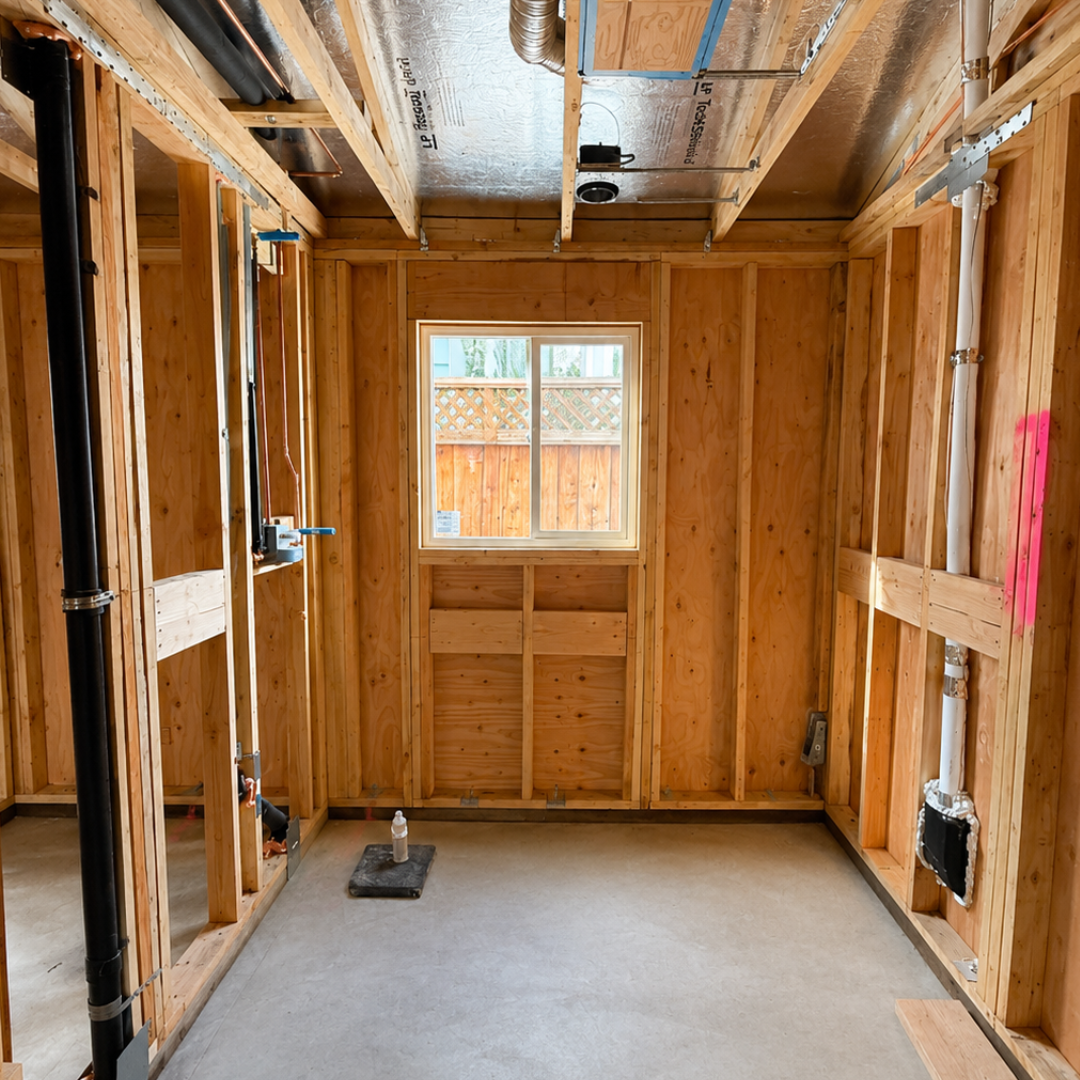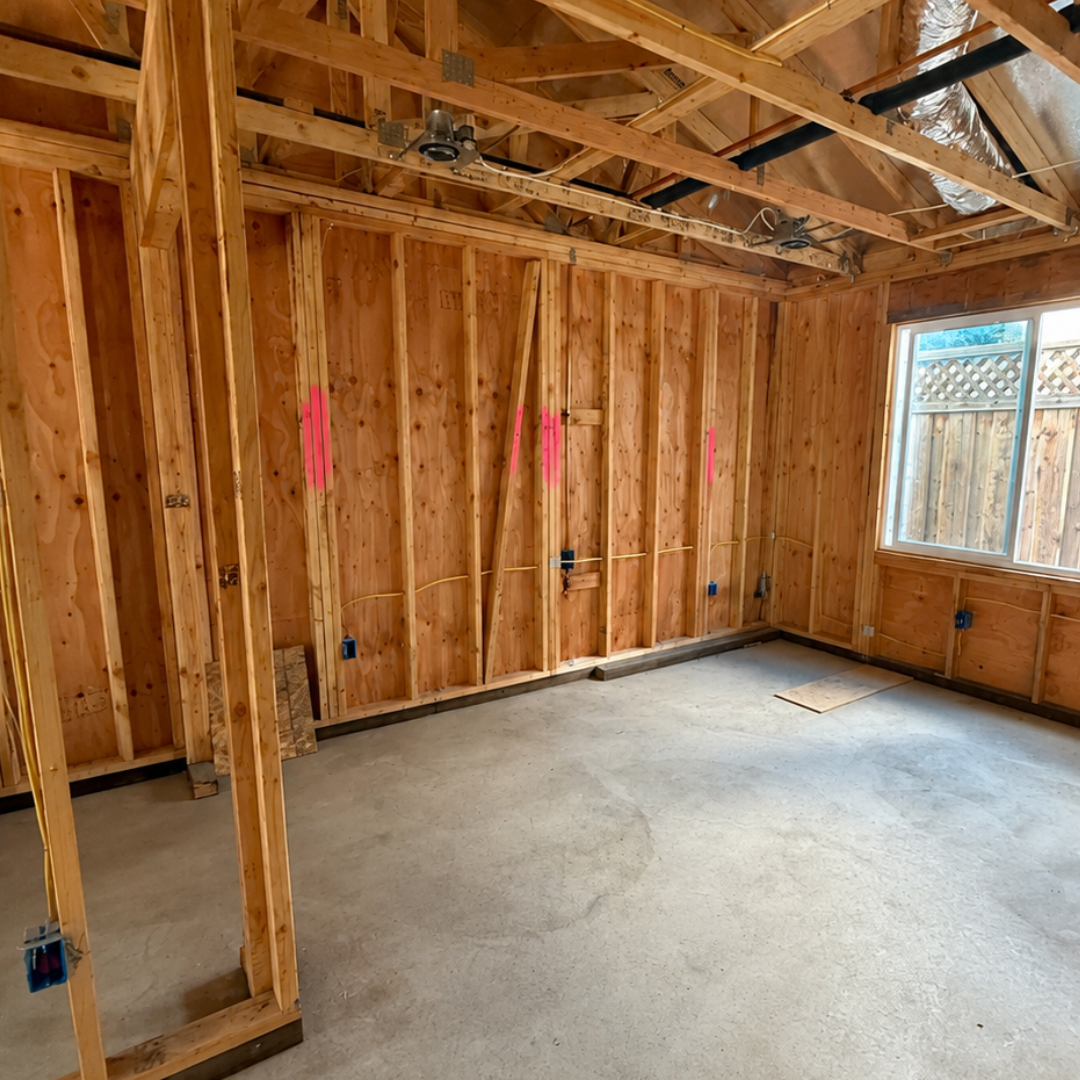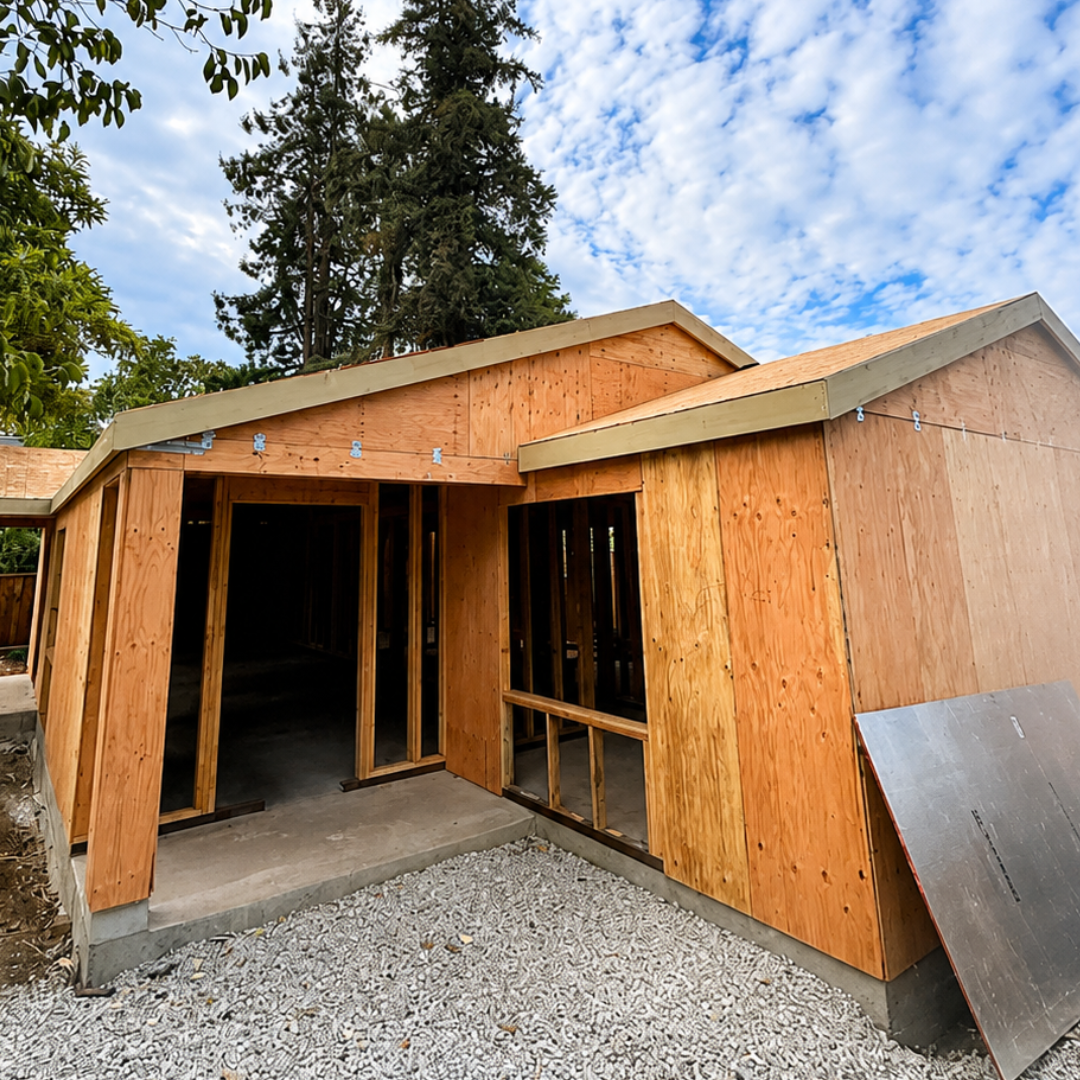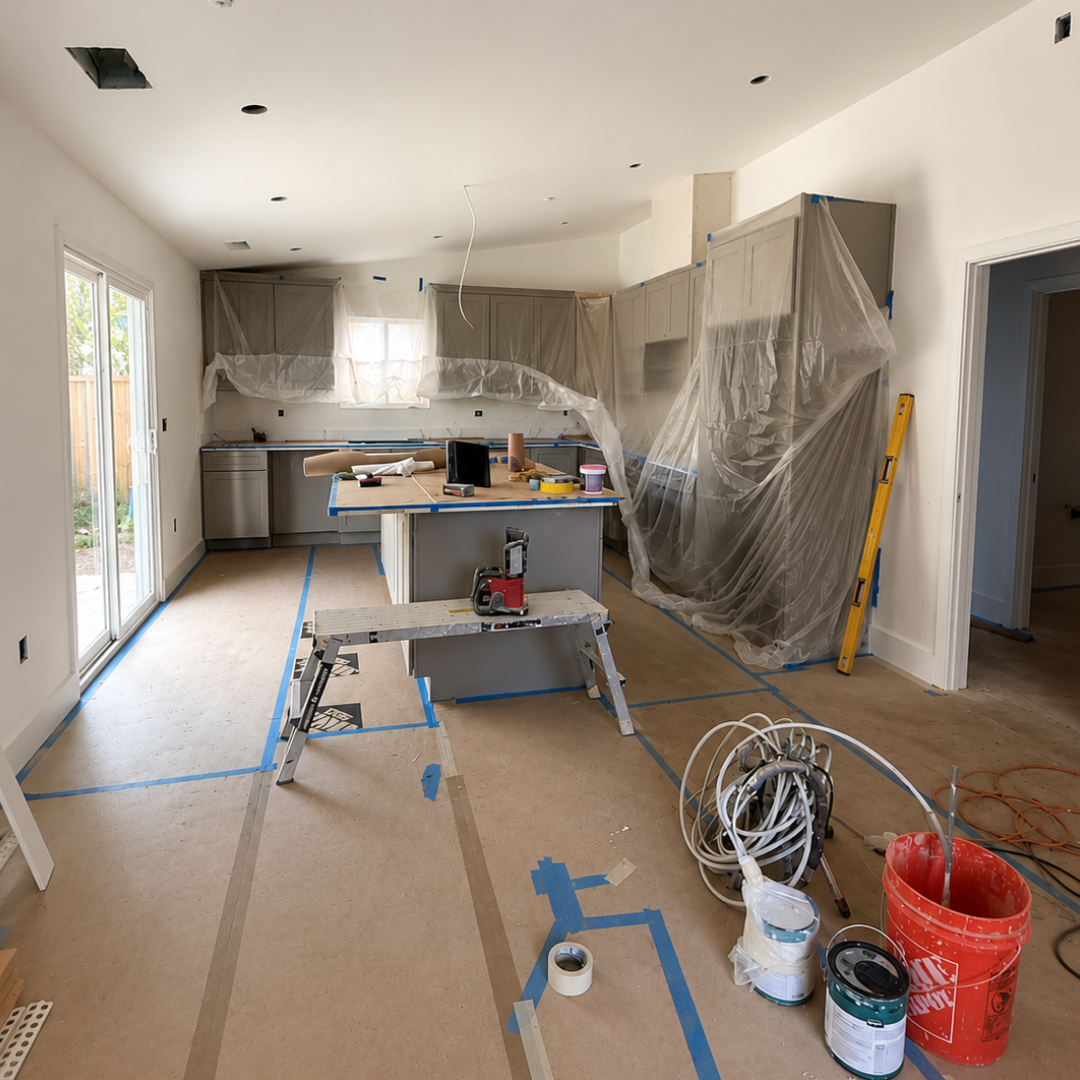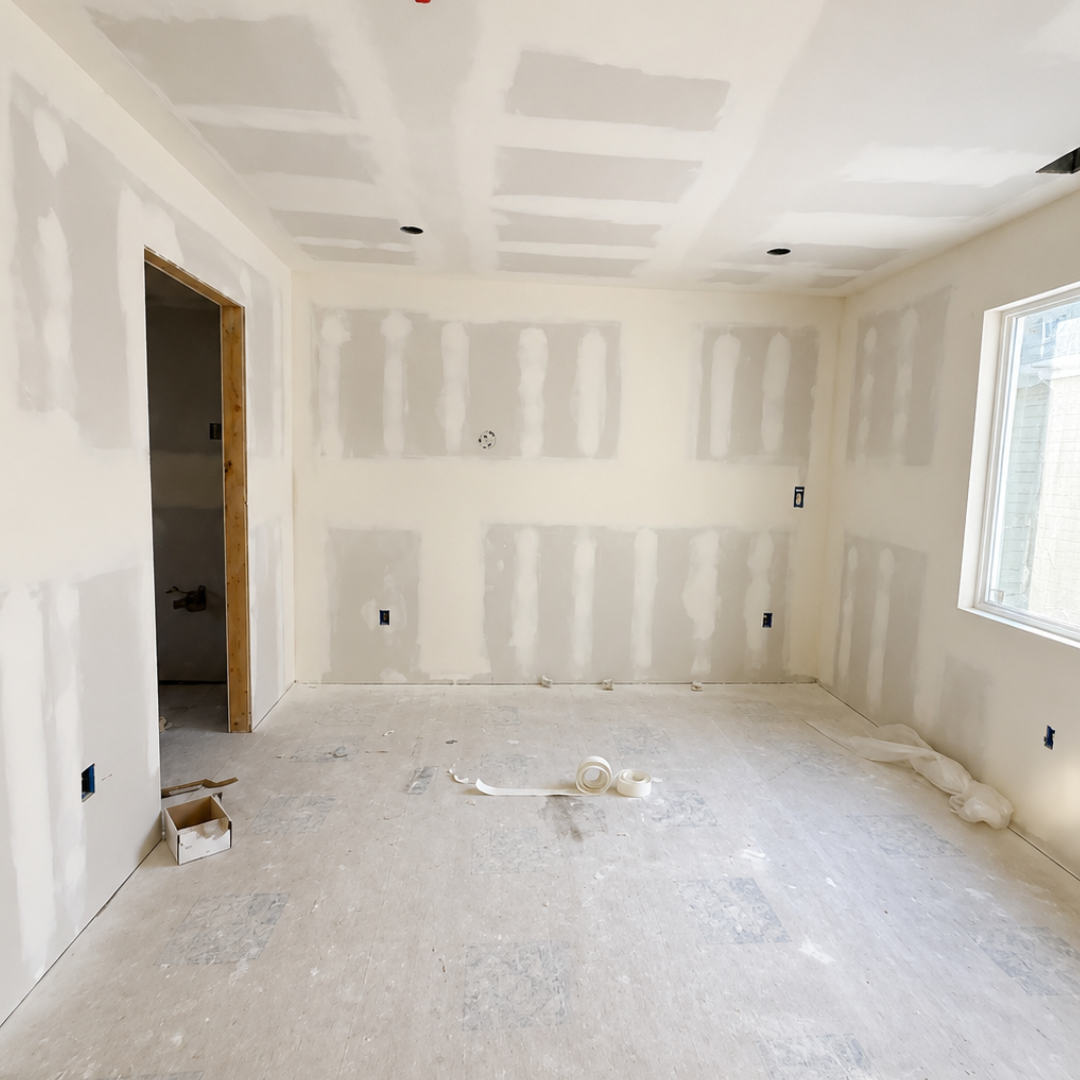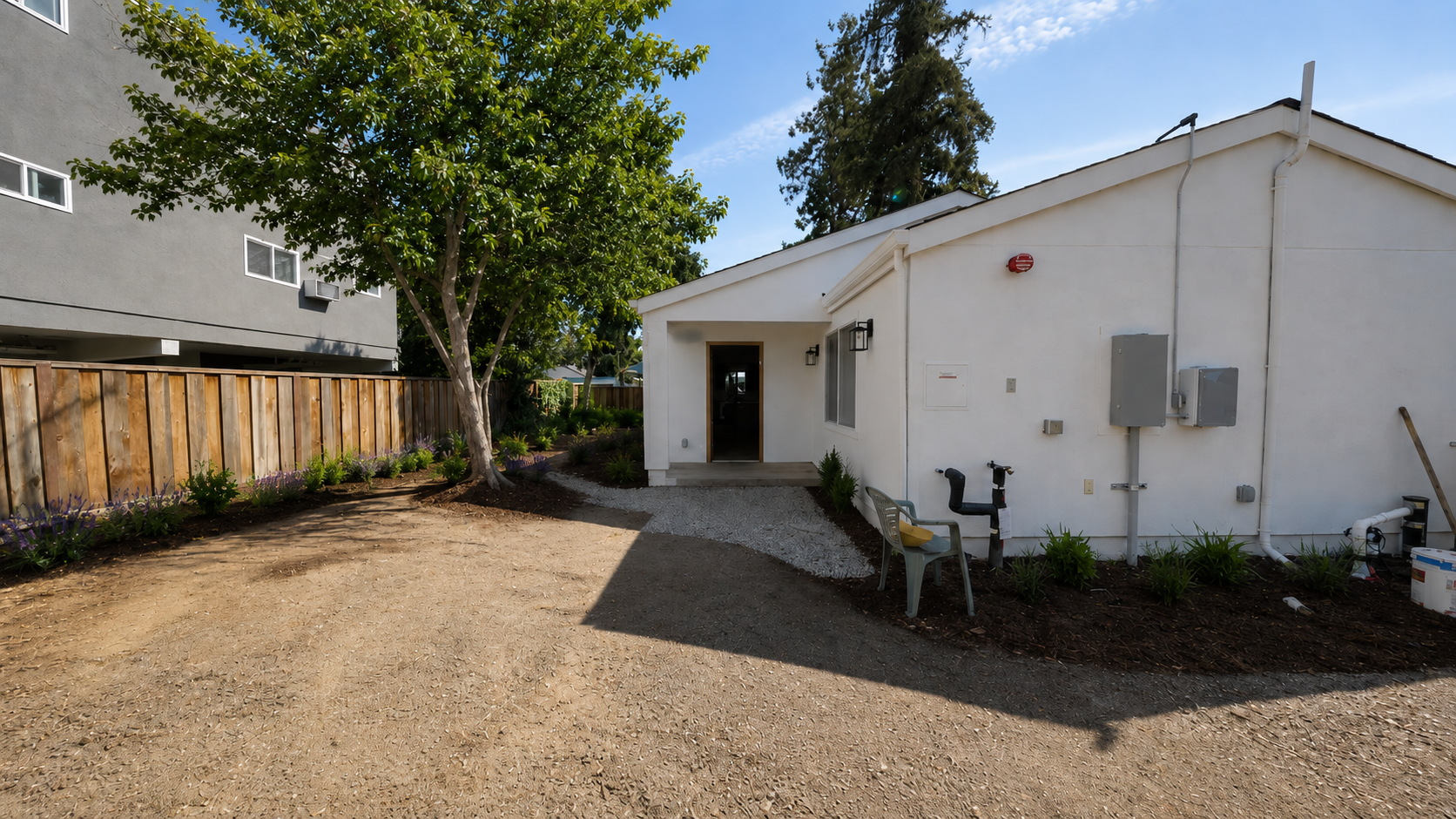
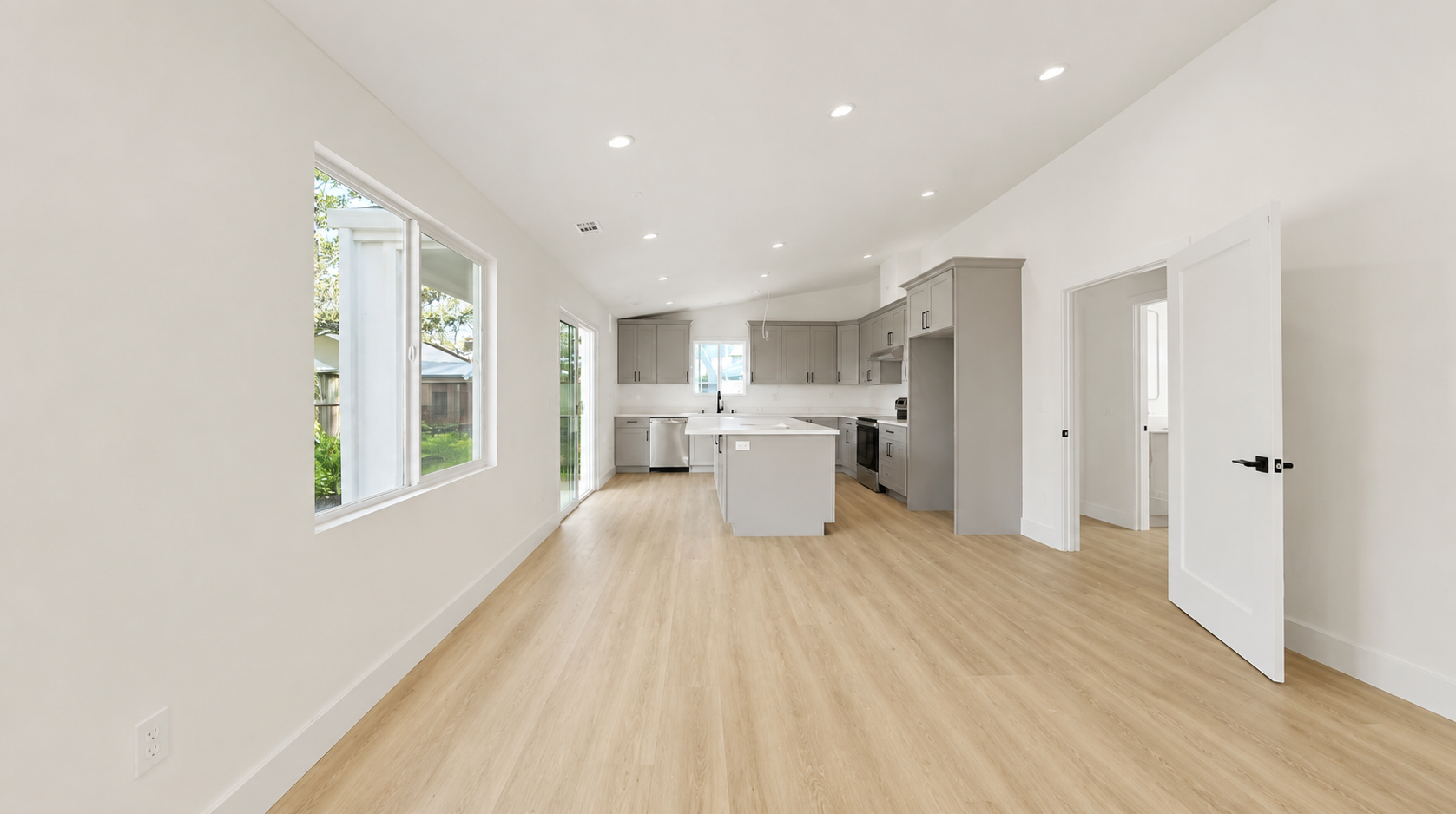
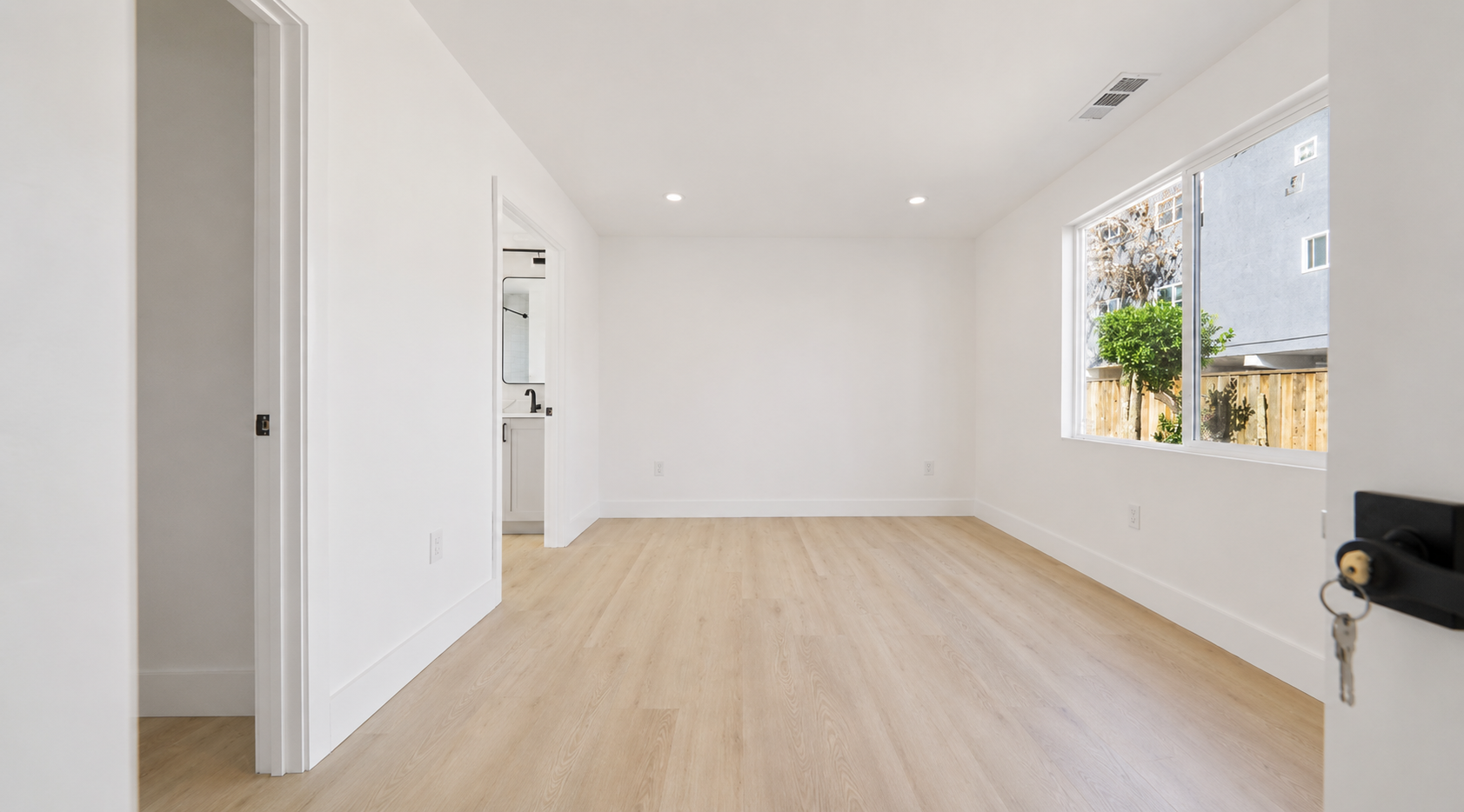
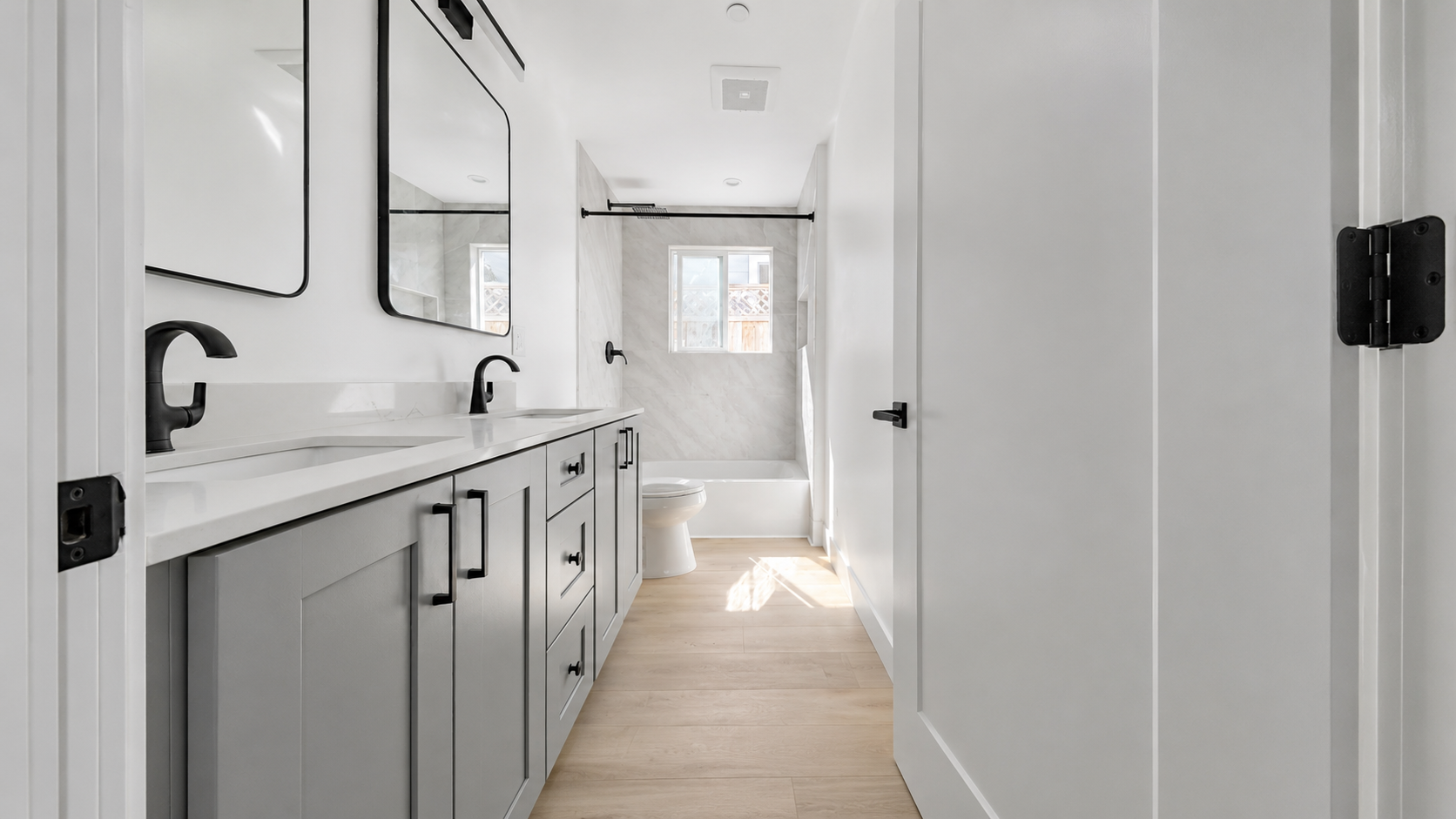
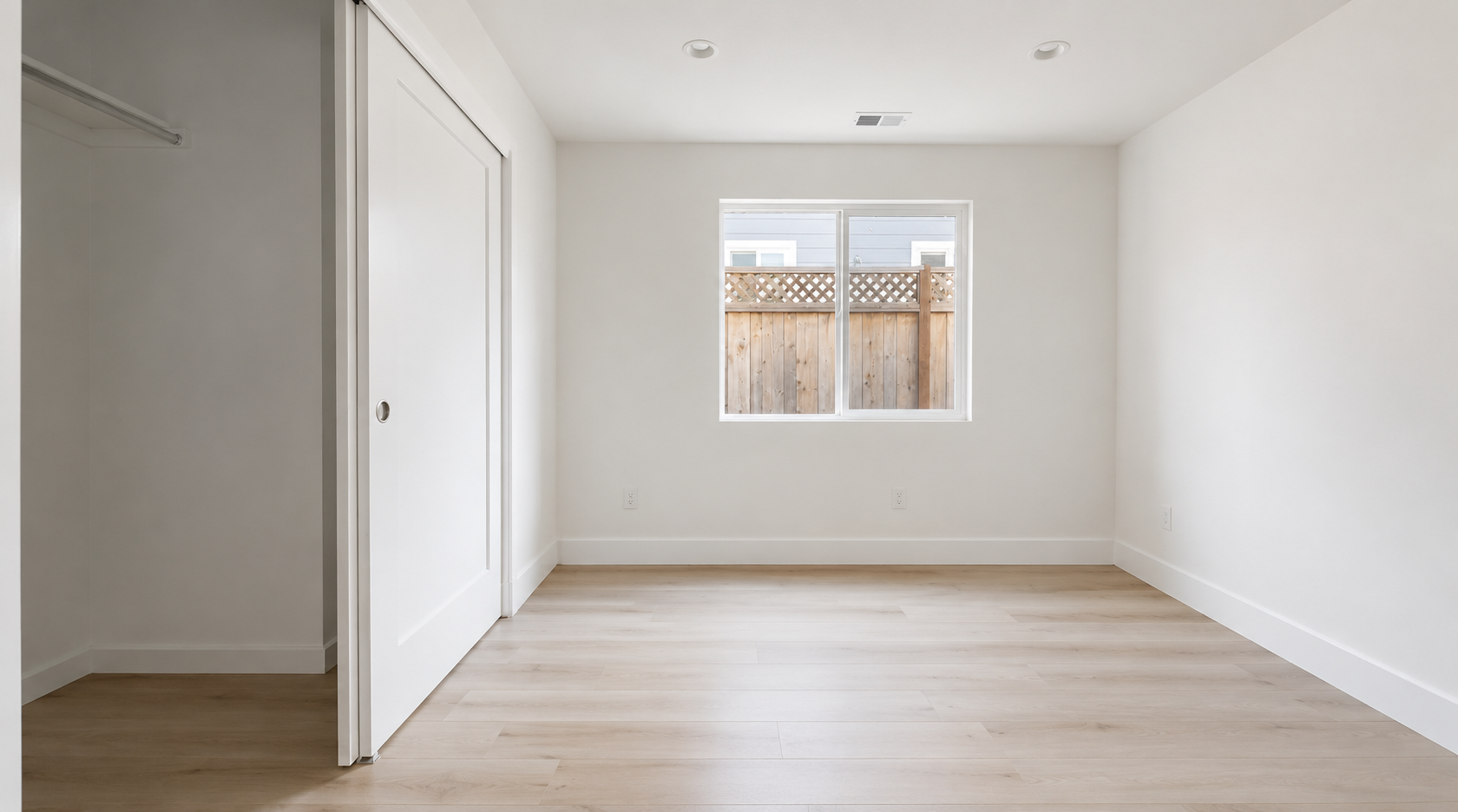
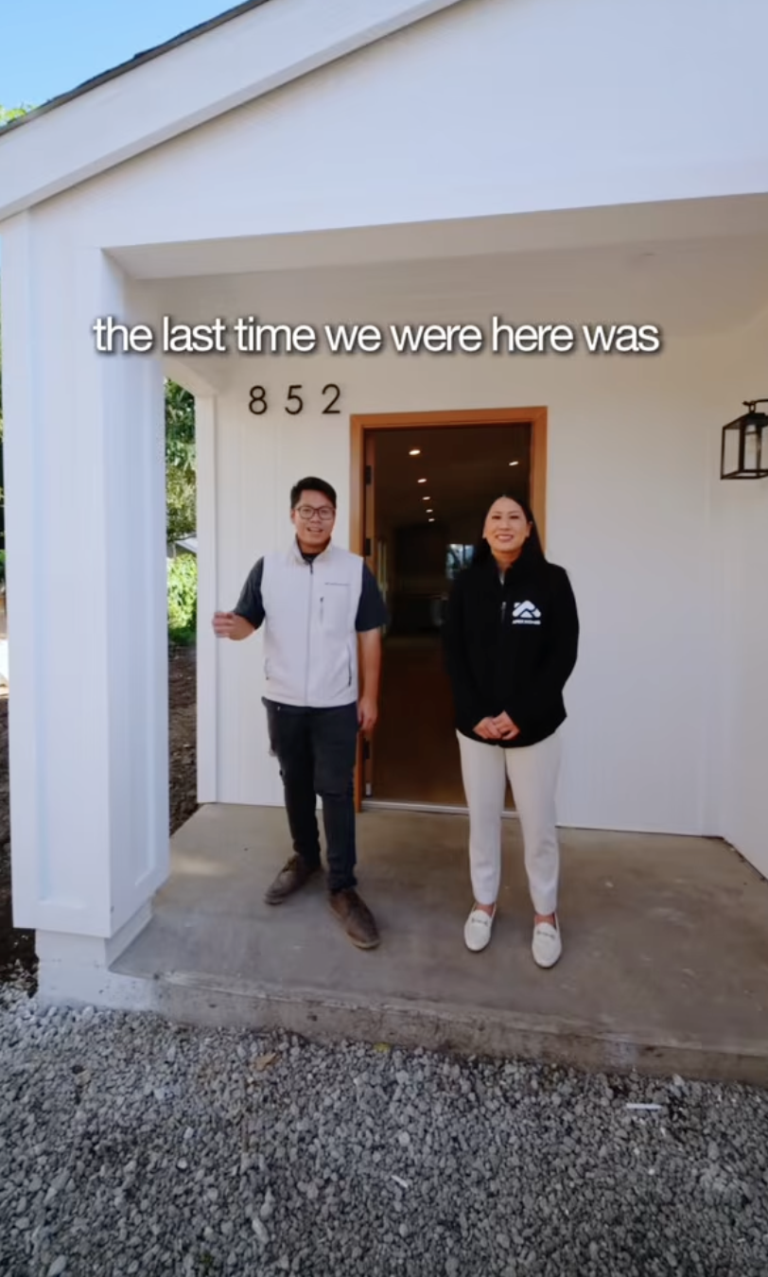
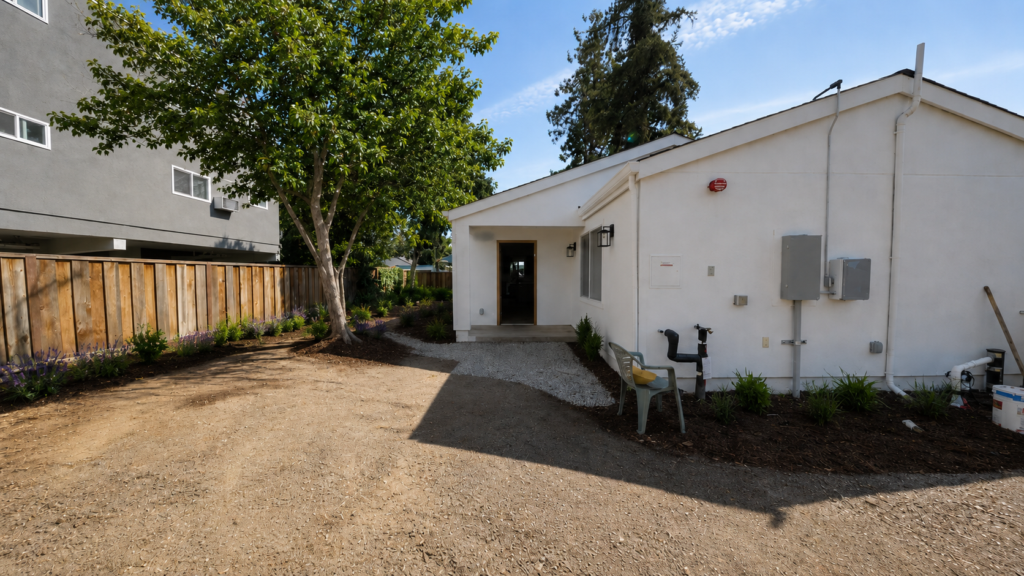
This project added a detached 1,200 sq ft, 3-bed / 2-bath ADU to a long-and-narrow duplex lot in central San Jose. Adding the ADU transforms a two-unit duplex into a three-unit income property.
The ADU was placed at the rear of the 185-foot-deep lot, with approximately 54 feet of building separation between the new unit and the existing duplex. An existing 405 sq ft garage that sat between them was demolished as part of the project. Four mature trees on the property were preserved through the design and construction process.
The main-house duplex remained tenant-occupied throughout construction, which meant scheduling sensitivity well beyond the usual. Construction milestones, fencing phases, and noisy-work windows were communicated to the homeowner in advance so the tenant could plan around them, and site safety protocols (temporary fencing, scheduled site visits with signed consent forms) were in place from day one
Detached ADU on a Duplex Lot: Built on a property already entitled for multi-family use, taking the lot from two income units to three rentable homes.
Tree-Conscious Site Design: Four mature trees on the property preserved through the design and construction process.
Garage Cleared for Clean Site: Existing 405 sq ft garage demolished to open up the corridor between the duplex and the new ADU, improving access, light, and yard space.
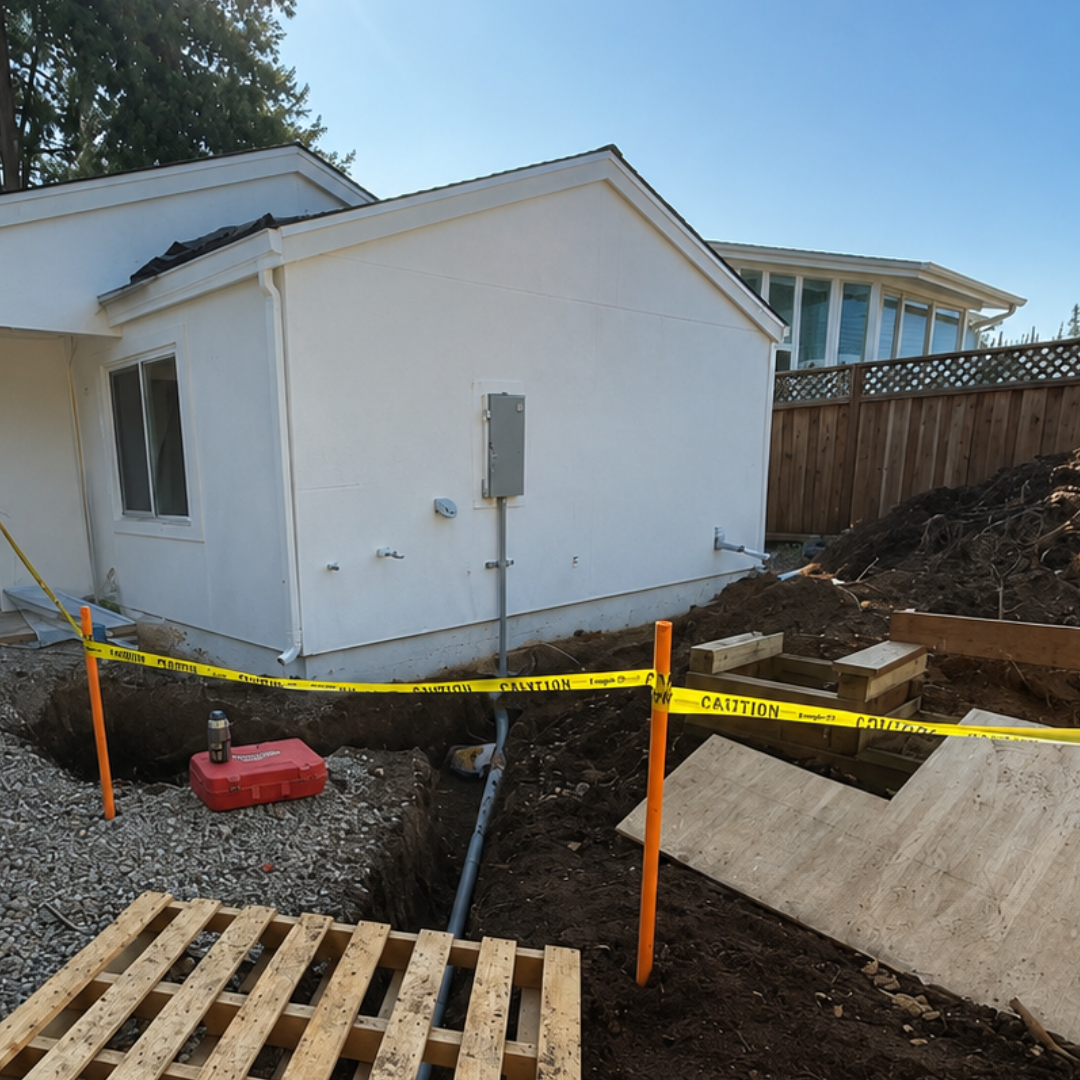
New Dedicated Utility Meters: A new electric meter and a new water meter installed for the ADU, kept fully independent of the duplex’s existing services.
Mini-Split HVAC System: Zoned heating and cooling without ductwork — energy-efficient room-by-room temperature control.
Luxury Vinyl Plank Flooring; Light wood-grain LVP, water- and dent-resistant for high-turnover rental use.
Quartz Countertops: Calacatta Storm quartz in the kitchen — marble-look veining with the durability of engineered stone.
"We had tenants living in the main house throughout construction, and we watched the whole process from start to finish. The Apex team stayed efficient but disciplined. They stuck to their work hours so they wouldn't disturb our tenants during rest time, and they still delivered the ADU in 4 months. After it was done, our tenants toured the new unit and asked if they could move into the ADU right away."
Can I build an ADU on a duplex or multifamily lot in California?
Yes — and in many cases you can build more than one. California state ADU law applies to lots with single-family, duplex, or multifamily residential use. For a duplex or multifamily property, state law allows up to two detached ADUs per lot, provided each meets standard setback, height, and lot-coverage rules.
The economics are different too. On a duplex, an ADU takes you from two income units to three — a meaningful jump in cash flow per lot. On larger multifamily lots, the math can be stronger still when paired with the second-detached-ADU allowance.
The catch: site planning gets more complex when there's already more than one unit on the property. Tenant coordination, parking access during construction, and utility sequencing all matter more. A feasibility study is the cleanest way to see what your lot supports.
Our 1,200 sq ft 3B2B on a San Jose duplex property was built this way.
What happens to existing garages, sheds, or other structures when you add an ADU?
They can be kept, converted into the ADU, or demolished to make room for a new one. The right path depends on the structure and the lot.
Three common scenarios:
- Demolish and rebuild. An old garage or shed is removed and a new detached ADU is built. Cleanest option when the existing structure is in poor condition or doesn't fit the planned ADU footprint.
- Convert in place. California state law allows garages to be converted into ADUs with relaxed setbacks and no replacement parking required. Cost-effective when the structure is sound.
- Keep both. Possible when the existing structure has separate utility, doesn't block the new ADU's setbacks, and stays under lot-coverage limits.
Demolition can be added to the ADU scope or handled separately by the owner. Browse our floor plan library to see footprints that fit different lot configurations. Our 1,200 sq ft 3B2B in San Jose required a 405 sq ft existing garage to come down to clear the site for the new ADU."
How do you protect mature trees during ADU construction?
Mature trees are often the most valuable landscape asset on a property. And many cities require you to keep them as a condition of permit approval. Protecting them through ADU construction comes down to three things:
- Design around them. The ADU footprint is shaped to clear the tree's drip line (the outer edge of its canopy) wherever possible. This may shift the building or reduce square footage in tight spots.
- Establish a tree protection zone. Temporary fencing goes up around each tree before any site work begins. No equipment, materials, or foot traffic crosses that fence. Many cities require a certified arborist to sign off on the protection plan.
- Careful utility work. Trenching for water, sewer, or electric near root zones uses hand-dig or air-spade techniques rather than mechanical trenchers.
A feasibility study upfront catches tree-conflict issues before design. Our 1,200 sq ft 3B2B in San Jose was designed and built around four mature trees that all stayed in place."
You’ve seen what’s possible—now let Apex Homes handle the details. From initial concept to precision construction, we build custom homes tailored perfectly to your lifestyle and future goals.