
California’s ADU Opportunity Can Give Real Financial Returns
California’s homeowners already know an ADU can give additional space. What’s getting more attention now is what the extra housing unit can actually earn.
A permitted ADU can generate rental income, increase property value, create passive income, and in some cases even be sold separately down the road.
That’s why timing matters. California’s ADU-friendly policies are strong, financing options are expanding, and demand for affordable housing continues to push rental value upward.
If you’re planning an ADU project and want to understand the real numbers behind the decision, this article will help you understand how to make money building an ADU in California and how to maximize your return.
Many California homeowners researching how to make money building an ADU are surprised to learn that rental income is only one part of the financial opportunity.
What Are 5 Ways That An ADU Can Make You Money?
Most articles talk about rent and stop there. But an ADU in California can create value in several ways at the same time.
You can generate rental income month after month, build equity through appreciation, lower taxable income, and create more flexibility with how you use your property.
That’s part of why ADU homeowners and many investors continue to see ADU development as a cost-effective way to build wealth in California.
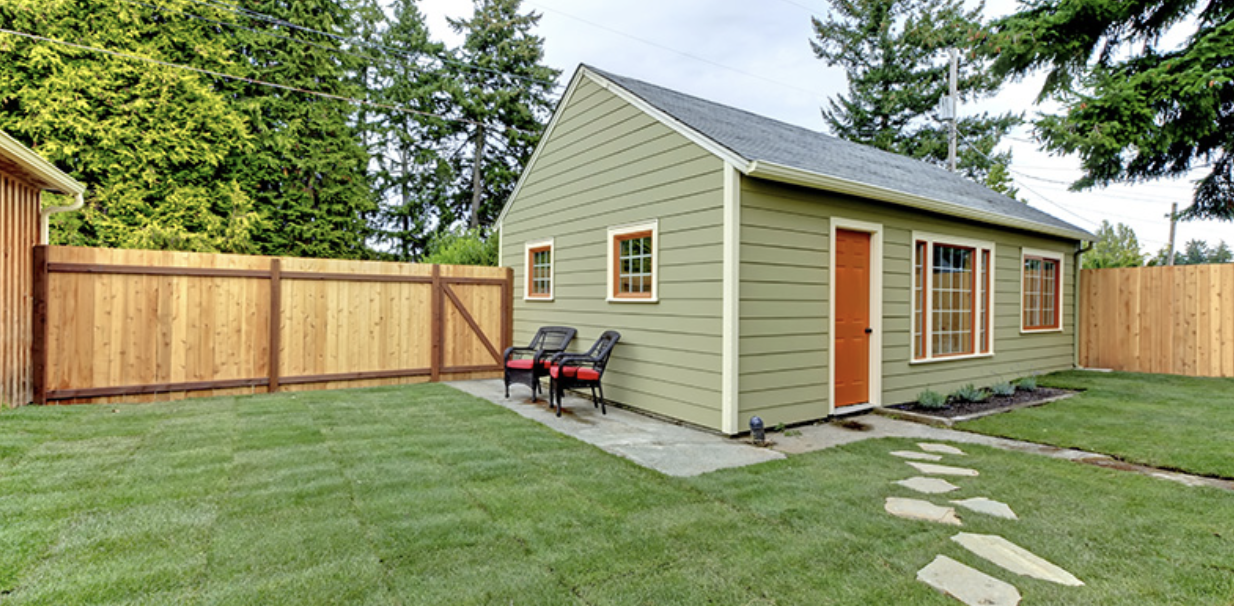
1. Long-Term Rental Income
The most obvious return is rental income — and in California, demand stays strong.
Because housing inventory remains tight statewide, renters continue looking for well-designed, smaller ADUs near jobs, schools, and transit. That creates steady rental income for homeowners who add a rental unit to their lot.
In the Bay Area, ADU rents typically range from $2,000-$3,000 per month. In Southern California, rents can range from around $1,300-$3,200 depending on square footage, neighborhood, and whether you build a detached ADU or convert existing structures.
A one-bedroom ADU in a strong market can realistically rent for $2,000-$2,500 monthly. That can create meaningful cash flow and help offset construction costs much faster than many homeowners expect.
And while short-term rental strategies often sound appealing, California law generally prohibits ADUs from being rented for fewer than 30 days. That shifts the focus to long-term rental, and for many homeowners, that’s actually better financially. Long-term tenants bring predictable income, lower turnover, and fewer management demands than a short-term rental.
2. Property Value Appreciation
Rental income matters, but so does what happens to your property value. A well-built ADU can increase property value significantly, especially in California, where ADUs have become more common, and appraisers have stronger local comps to reference. At the time of writing, many market studies suggest homes with ADUs may appreciate 30–35% more than comparable properties without one. That can vary greatly depending on location, build quality, ADU design, and whether the unit is detached or within the same structure.
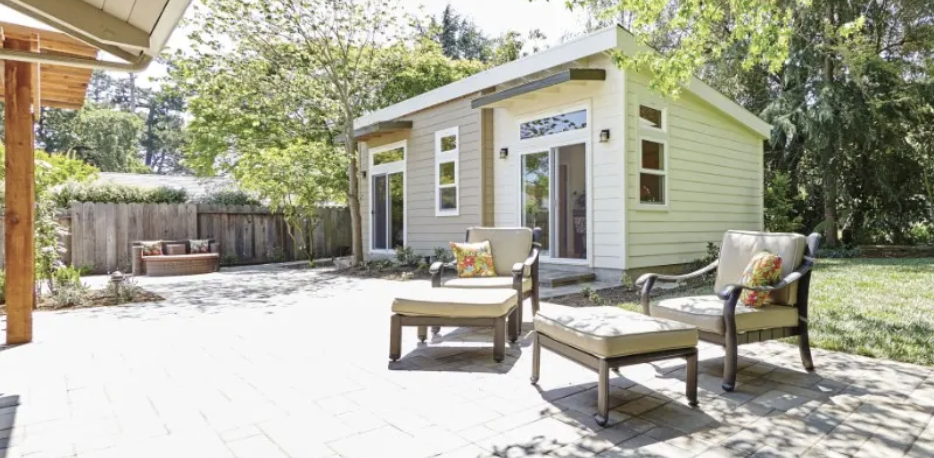
California appraisers typically look at three things:
- Comparable sales
- Rental value, and
- Replacement cost
That means your ADU may be valued not only as added square footage, but also as an income-producing asset.
This is where execution matters. A fully permitted ADU with professional plans and clear documentation generally creates a stronger property appraisal than a rushed or inconsistent ADU building.
Apex Homes’ pre-approved plans are helpful here because they simplify documentation and reduce delays. That makes it easier to support value at resale and helps many homeowners feel more confident in the total cost.
An ADU isn’t just another home improvement. If done well, it can directly increase property value while creating long-term resale value.
3. The Live-In Flip: Move Into Your ADU, Rent Your House
This strategy doesn’t get talked about enough. Instead of renting out the ADU, some homeowners move into the accessory dwelling unit and rent out the main house. Financially, it can work really well.
In high-demand Bay Area cities like Mountain View and Cupertino, a larger primary residence can rent for $3,000-$5,000 or more, depending on condition and location. Meanwhile, the homeowner lives in a compact detached ADU in the backyard. The result is a stronger monthly cash return and more efficient use of the property.
You also lower day-to-day overhead. A smaller space usually means lower utility bills, easier upkeep, and fewer fixed costs. Meanwhile, the larger house earns the premium rent.
For homeowners close to retirement, or anyone trying to improve cash flow without selling, this can be one of the smartest ADU strategies available.
It also gives flexibility later. The ADU can become an in-law suite for a family member, a guest house, or a long-term rental, depending on what life looks like down the road.
A lot of California homeowners don’t realize how powerful this option is until they run the numbers.
4. Tax Advantages
An ADU can also offer tax benefits — something that often gets overlooked when people focus only on rent.
If your accessory dwelling unit is used as a rental unit, federal tax rules may allow depreciation over 27.5 years. That can reduce taxable rental income over time. You may also be able to deduct expenses tied to the ADU, including maintenance, insurance, mortgage interest, and property management.
For California homeowners, Proposition 13 is another major advantage. One of the biggest fears around ADU development is higher property taxes. In many cases, only the new construction is reassessed. The original value of the main house typically remains protected.
That distinction matters. It keeps tax increases more manageable and makes long-term savings more realistic.
There may also be capital gains planning opportunities depending on how long you live on the property before selling. Of course, every financial situation is different. Ownership structure, financing, and whether the ADU becomes a rental or housing for a family member all affect the outcome.
It’s always worth reviewing details with a CPA before starting.
5. The AB 1033 Play: Selling The ADU As A Condo
This is the newest opportunity, and one California homeowners are paying close attention to.
Under AB 1033, qualifying cities can allow homeowners to convert an accessory dwelling unit into a condominium and sell it separately.
That changes how many investors think about ADU development. Instead of simply collecting rent, homeowners may eventually create a separate exit strategy that creates liquidity and a different kind of return:
Build an ADU. Increase value. Then sell.
Apex Homes helped complete California’s first ADU condo conversion in partnership with the City of San José in August 2025. It’s still new, but it opens up possibilities many homeowners hadn’t considered before.
For anyone evaluating whether building ADUs is a good investment, this creates another path beyond rent and resale of the full property.
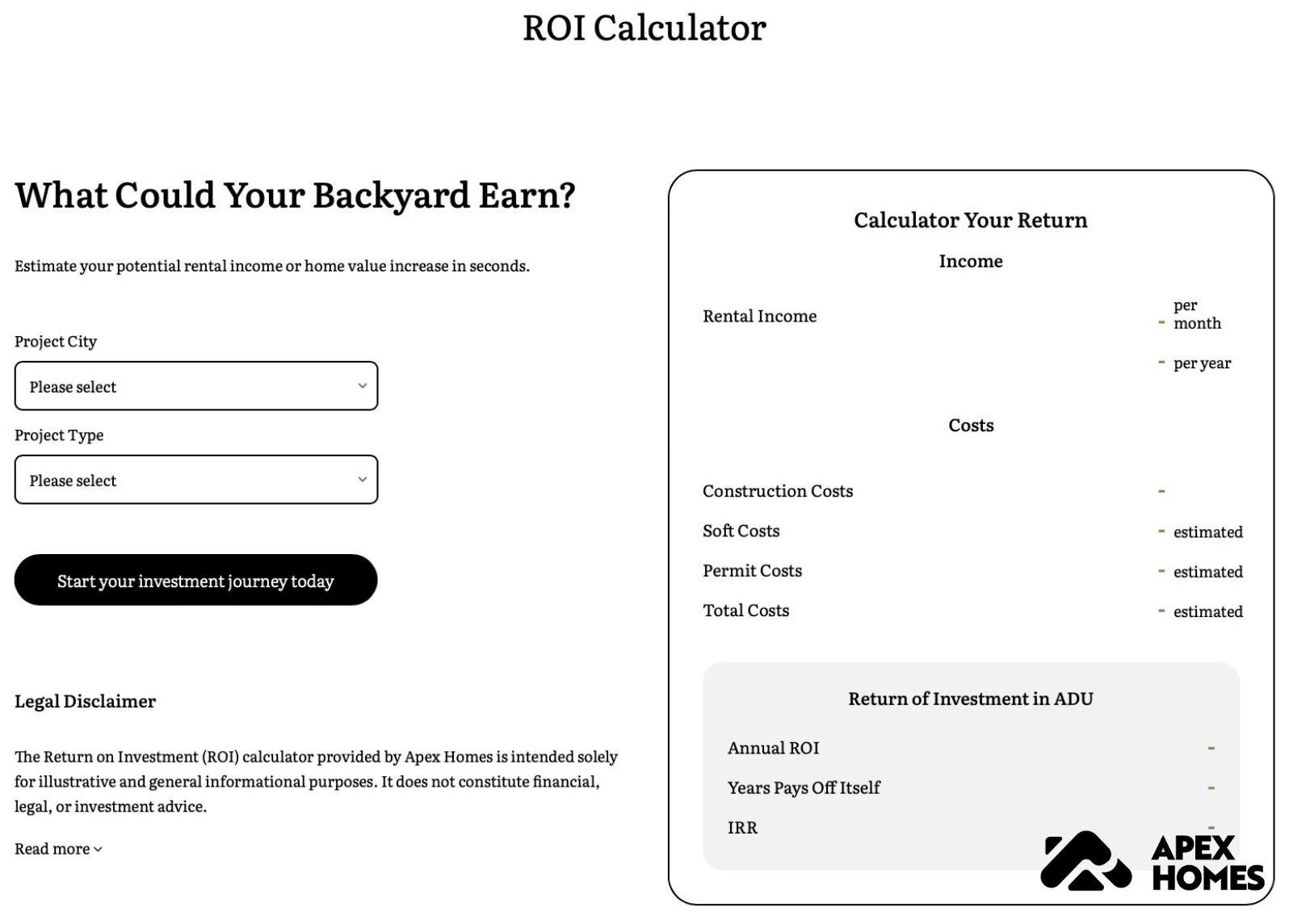
Use Apex Homes’ ROI Calculator to learn more about how much your ADU can earn.
What Affects How Much Money You Actually Make?
Not every ADU performs the same.
Two homeowners can spend similar amounts and end up with very different returns depending on the type of unit, location, and how efficiently construction moves.
That’s why planning matters before committing.
ADU Type and Size
Detached ADUs usually command the strongest rental value and often increase the property value more than conversions. But they also come with higher ADU costs.
In California, detached units often range from $250,000-$400,000 depending on square footage, site conditions, finishes, and utility access. Garage conversions and other existing structures are usually lower cost and faster.
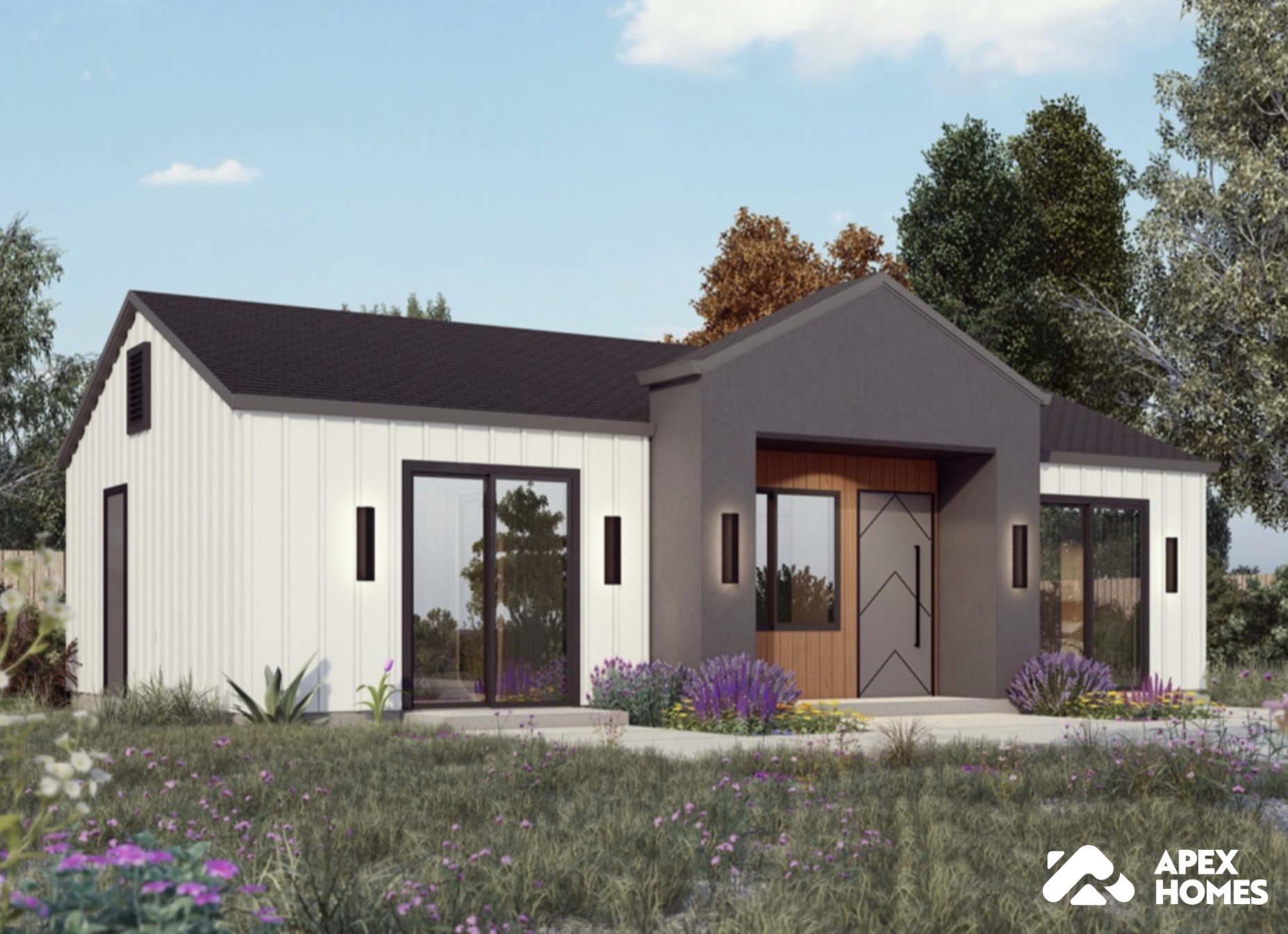
Apex Homes’ pricing gives a helpful benchmark. Our Compact model starts around $205K, while Linear and Double layouts come in around $278K.
Smaller ADUs can cut costs and reach the market faster. But two-bedroom layouts often attract more renters and offer more flexibility. Families, roommates, and professionals tend to like the added space.
If you’re unsure what your house can support, Apex Homes offers a free feasibility study through ParcelZ to evaluate local zoning, setbacks, and ADU building potential before you commit.
Location Within California
Location matters as much as design. Bay Area markets typically see the highest rents and fastest payback. Southern California also performs well, especially in Los Angeles, Orange County, and San Diego.
Inland Empire and Sacramento markets may generate lower rent, but construction costs are often lower, too. That balance still makes ADU development attractive.
Before finalizing your plan, compare neighborhood rental comps and recent resale activity. The more local your numbers are, the more accurate your projections will be.
Build Quality And Speed To Market
Time affects ROI. The faster your permitted ADU reaches completion, the faster rental income starts.
High-quality finishes also matter. Tenants consistently pay more for units that feel move-in ready and thoughtfully designed. Delays from custom revisions, permit issues, and contractor coordination can create additional costs and push back income.
Apex Homes focuses on reducing that friction through pre-approved plans, predictable pricing, and a turnkey construction process. That gets homeowners listed and earning sooner.
Running The Numbers: A Real California Example
Understanding how to make money building an ADU also means looking beyond construction and evaluating realistic payback timelines, operating costs, and long-term property appreciation.
Here’s a practical example: Say you build an ADU using Apex Homes’ Linear one-bedroom model in the Bay Area.
- Estimated total cost: $278,000
- Monthly rent: $2,200
That creates an annual rental income of $26,400. We subtract estimated operating expenses — maintenance, insurance, and management — and net income may land around $21,000 per year.
At the same time, if the ADU increases property value by even 30–35% of the build cost, that adds roughly $83,400 to $97,300 in equity.
Depending on financing options like a construction loan, home equity loan, or second mortgage, payback often falls within the 5–10 year range.
Every property is different, but the numbers show why many homeowners continue seeing ADUs as a strong California investment.
How Apex Homes Helps You Maximize Your Returns?
A builder impacts ROI more than people realize. Apex Homes is built around helping California homeowners move from planning to rental income faster.
- Our pre-approved plans streamline the permitting process and reduce delays. This means that there is less time before rental income starts.
- Our pricing is transparent, which makes your ADU financial planning easier.
- Our complimentary solar helps lower your ADU’s utility costs while supporting Title 24 compliance.
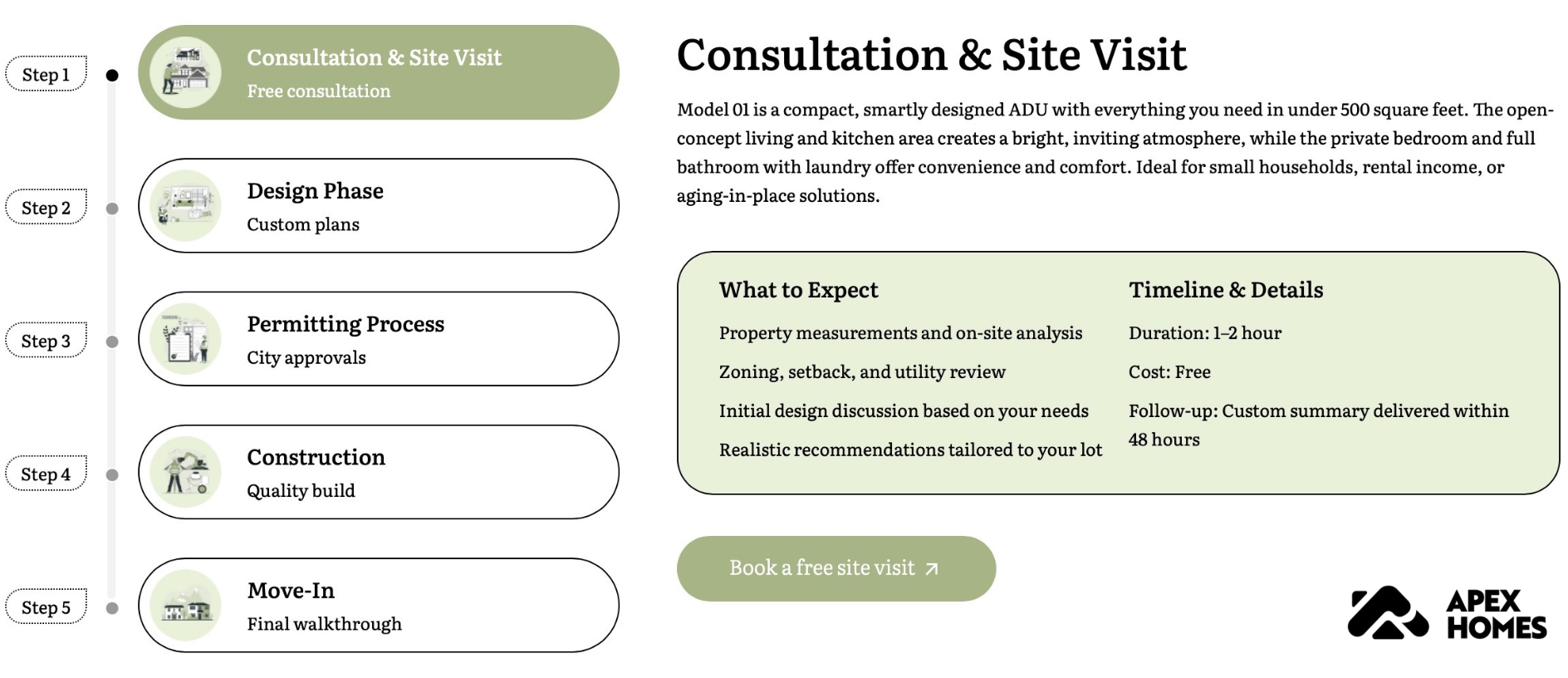
- We offer a complimentary site visit that gives you a clearer idea of what your property can support before you commit to anything.
- With our turnkey process, from ADU design through construction, you won’t need to coordinate with multiple general contractors on your own. This saves you time, energy, and money.
Schedule a free estimate and complimentary site visit with Apex Homes to find out more.
Your ADU Can Be More Than Extra Space
A California ADU can absolutely add flexibility to a house. But financially, it can do so much more: It can generate rental income, improve cash flow, increase property value, create tax advantages, and potentially become a standalone asset through AB 1033.
That is why many homeowners are treating ADUs as part of a bigger investment strategy. It is important to note that the strongest returns usually start with the right builder and plan.
If you want to build your ADU today and see what it could potentially earn, start with a free estimate from Apex Homes today!