“Can I build my own ADU?”
It’s one of the most common questions homeowners ask across California — from the Bay Area to Southern California. On the surface, it makes sense. Take control of your ADU project, avoid contractor fees, and move at your own pace.
For many homeowners, the idea feels like a smart way to save money while adding value to the property. But building an accessory dwelling unit (ADU) isn’t a casual weekend project. It’s a full-scale construction effort with legal, financial, and technical responsibilities.
Before deciding to take your own ADU project, it’s worth understanding what the process actually looks like, what local regulations require, and where the real trade-offs lie.
This comprehensive guide walks through all the details and shows why many homeowners ultimately choose a more streamlined path.
What It Actually Takes to Build an ADU in California?
Building an accessory dwelling unit (ADU) involves much more than adding extra space to your existing home. It’s closer to building a house with all the complexity that comes with it.
It’s Essentially Building a Small House
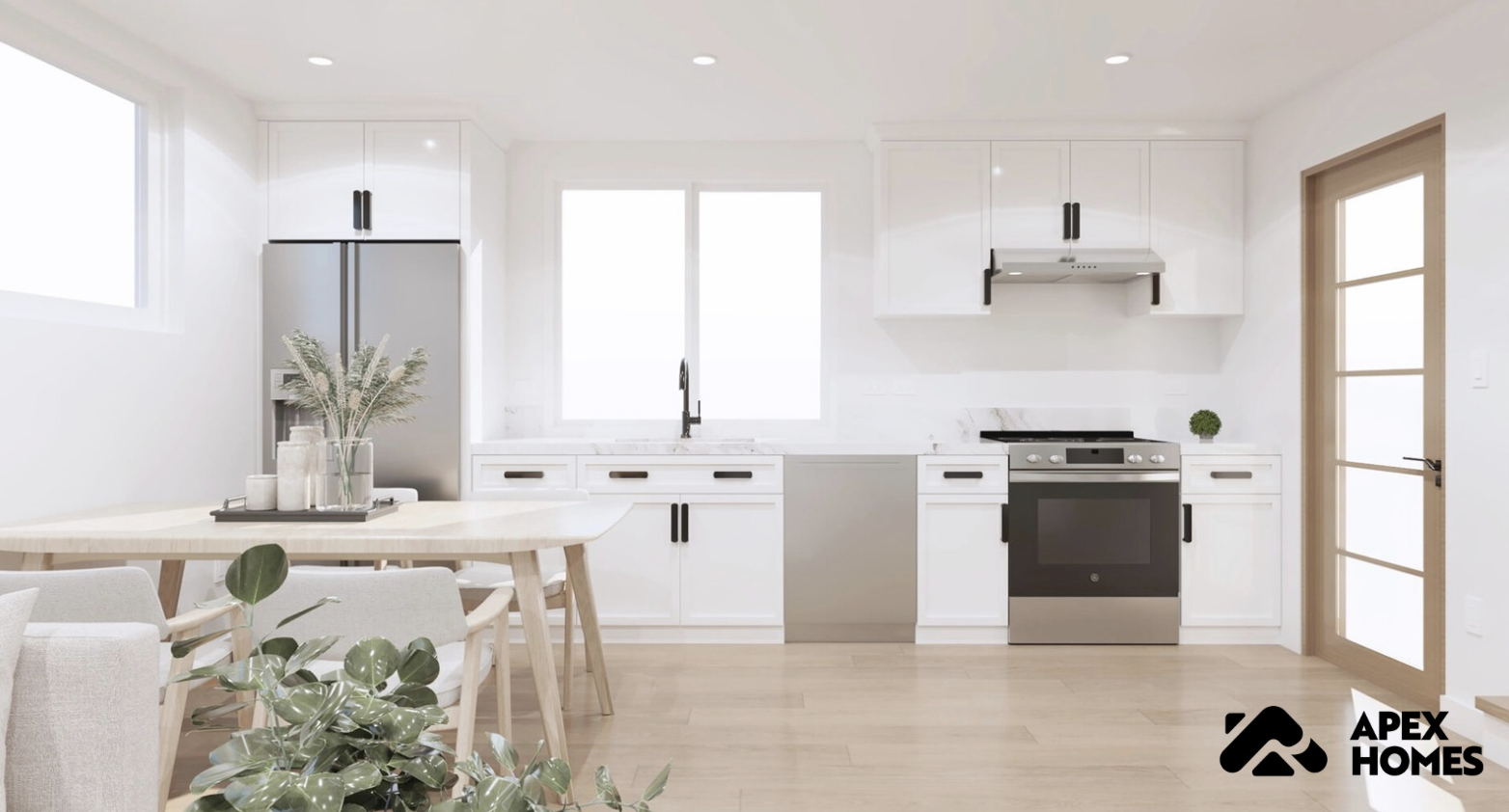
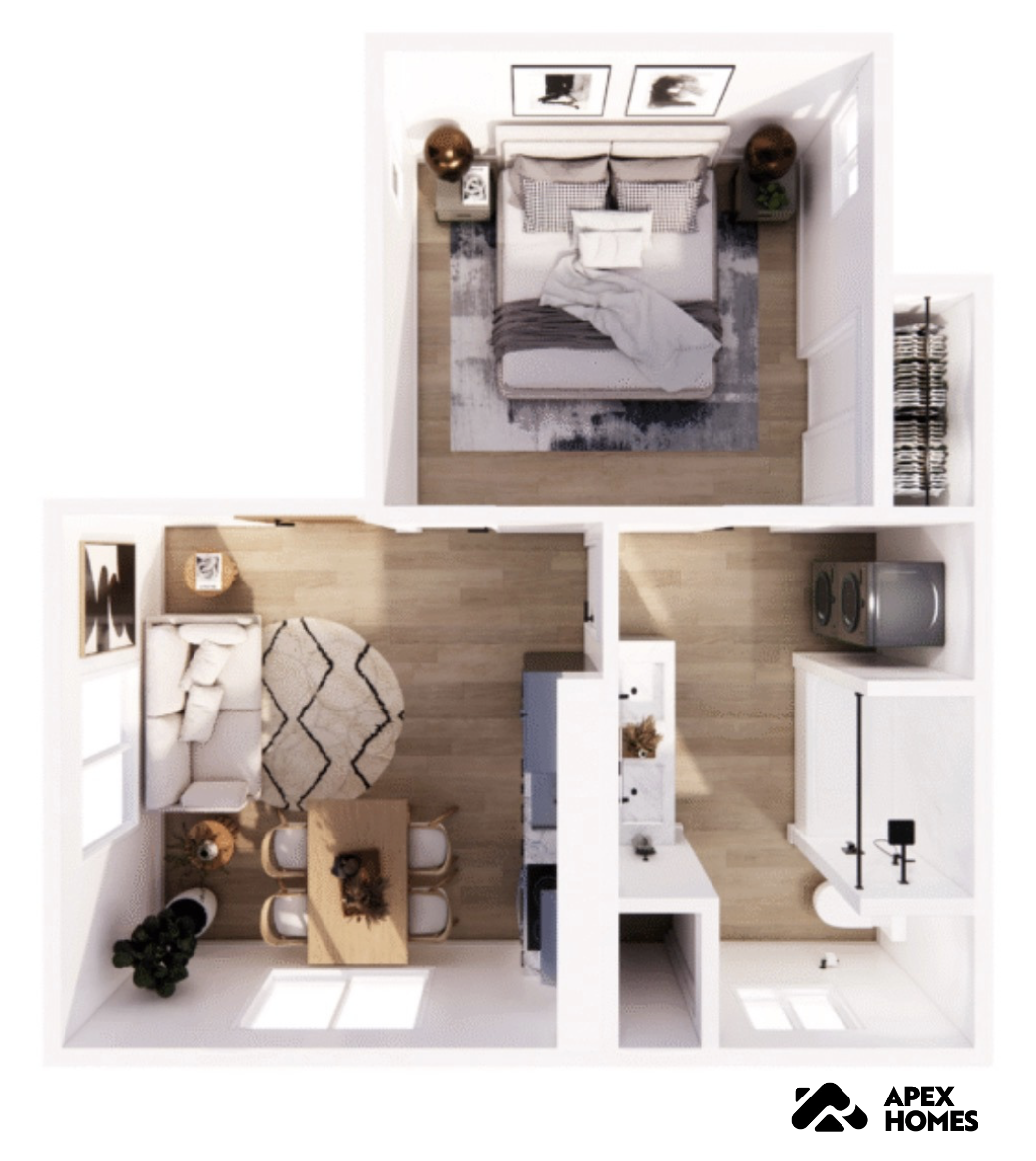
An accessory dwelling unit (ADU) must function as a fully independent living space. That means a kitchen, bathroom, sleeping area, and full utility connections. Whether you’re planning attached or detached ADUs or garage conversions, the scope remains significant.
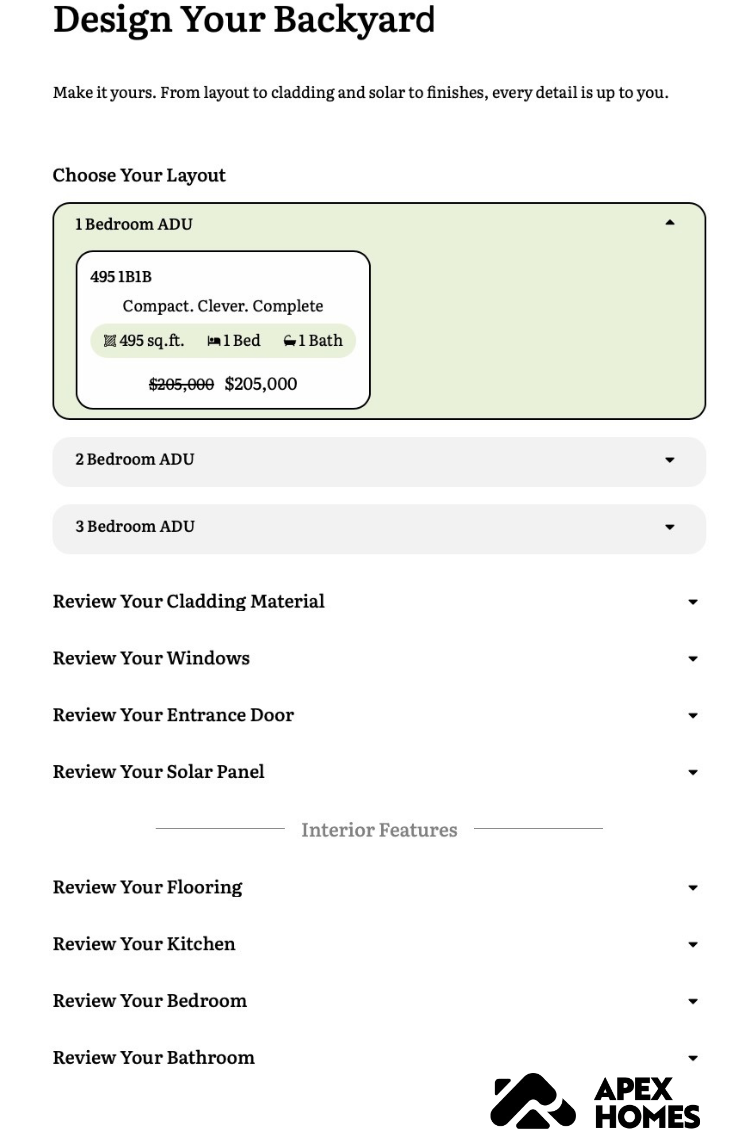
In California, new construction ADUs typically range between $205,000-$440,000 depending on location, size, and finishes. Timelines often stretch from 12 to 18 months under standard conditions.
The construction process includes:
- Feasibility study based on property constraints
- ADU design and planning
- Structural engineering
- Permits and approval
- Site prep and foundation
- Framing and structural work
- Mechanical, electrical, plumbing (MEP)
- Insulation and drywall installation
- Interior and exterior finishes
- Final inspections and certificate of occupancy
Each phase must pass inspection before moving forward. A single delay can trigger project delays across the entire ADU construction project.
If you’re converting an existing garage or using existing space, you may reduce some costs but not the complexity. Structural integrity, building codes, and proper installation still apply.
The Permitting Process Is Its Own Project
Permits are often the biggest concern for homeowners — and for a good reason.
At a minimum, building an ADU requires a building permit. Depending on your property and location, you may also need approvals for:
- Water and sewer connections
- Electrical upgrades
- Coastal zone regulations
- Fire safety compliance
California law requires cities to respond to permit applications within 60 days. But the clock resets if revisions are needed — and they often are.
Local building codes vary widely. What’s allowed in San Diego may differ from San Jose and other Bay Areas. Setbacks, height limits, and unit size caps all fall under local regulations. You’ll also need to meet Title 24 energy requirements, which include solar mandates for any new ADU construction.
Trades That Require Licensed Professionals in California
Even if you want to build your own ADU, you won’t be working alone. California law requires licensed professionals for:
- Electrical systems
- Plumbing and gas lines
- HVAC installation
Structural work typically requires engineer-stamped plans to ensure safety and compliance.
This means your role becomes less about physically building and more about coordinating subcontractors, managing schedules, and ensuring everything meets building codes.
Can You Legally Build Your Own ADU in California?
The short answer: yes. But there are important conditions.
The Owner-Builder Designation
California allows homeowners to act as their own general contractor under the owner-builder exemption.
To do this, you must file an Owner-Builder Authorization form (CSS-026), which transfers full responsibility for:
- Permits
- Code compliance
- Construction quality
- Safety and liability
You are not exempt from any rules. You’re simply taking on the responsibilities typically handled by a contractor.
Some cities offer pre-approved ADU plans that can simplify the design process and reduce upfront costs.
What Owner-Builder Actually Means Day-to-Day
Acting as your own project manager is a full-time commitment.
You’ll be responsible for:
- Hiring and coordinating subcontractors
- Scheduling inspections
- Managing materials and deliveries
- Handling plan revisions and approvals
- Ensuring proper installation at every stage
Inspections require someone to be on-site, often within a narrow time window. If an inspection fails, you’ll need to fix the issue, reschedule, and wait.
For homeowners with a full-time job, this quickly becomes a second job that can last over a year.
Pros and Cons of Building Your Own ADU
Before jumping in, it’s important to weigh both sides.
The Case For DIY
There are real long-term benefits to building your own ADU:
- Potential to save on general contractor fees by 15-20%
- Full control over the design process and materials
- Flexibility in choosing subcontractors
- Personal satisfaction for those without construction experience
DIY may make sense for simpler projects, such as garage conversions using an existing garage with minimal upgrades.
The Real Risks and Costs
This is where many homeowners underestimate the challenge, including:
- Cost savings often shrink due to higher labor costs and material pricing.
- Contractors have established supplier relationships that reduce costs.
- Permit delays and revisions are common.
- Budget overruns happen frequently because of unforeseen issues.
- Mistakes during construction can be expensive to fix.
- Legal and financial liability falls entirely on you.
Every delay means lost rental income — a key reason many homeowners invest in ADUs in the first place.
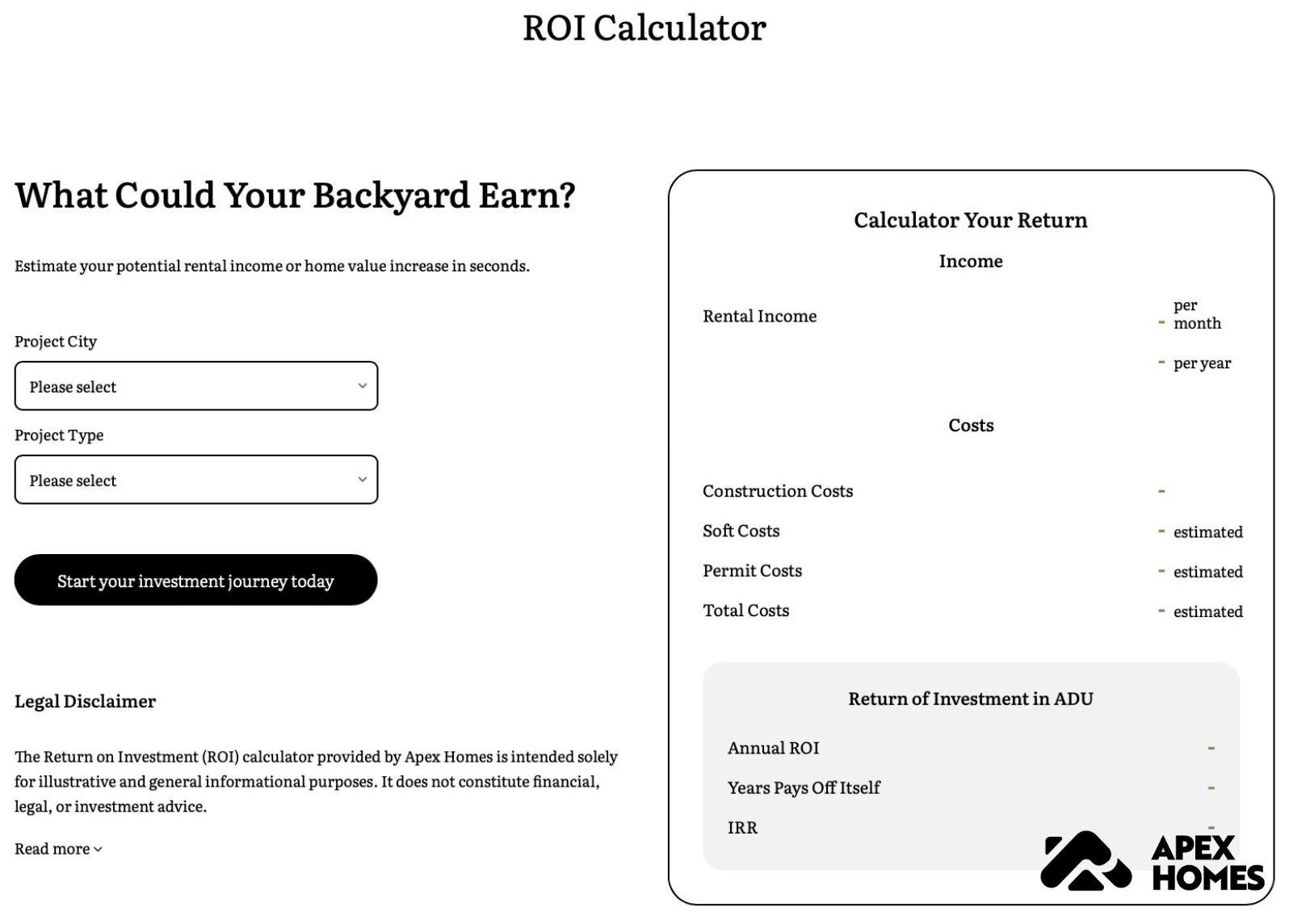
You can check out Apex Home’s ROI calculator to get an idea of how much you can earn through your ADU!
Note that as of this writing, the typical fully managed ADU build in California takes about 12-18 months. Owner-builder timelines frequently extend beyond this.
The Alternative — Working With a Fully Integrated ADU Builder
For most homeowners, the complexity of building an ADU leads them to consider a different approach.
What a Turnkey Builder Actually Handles
A fully integrated builder manages the entire ADU construction project, including:
- Permitting and city coordination
- Design and structural engineering
- Construction and inspections
- Final approvals
Instead of juggling multiple contractors, you work with a single point of contact.
This eliminates common issues like miscommunication, project delays, and cost surprises.
Why Apex Homes Is Built Differently
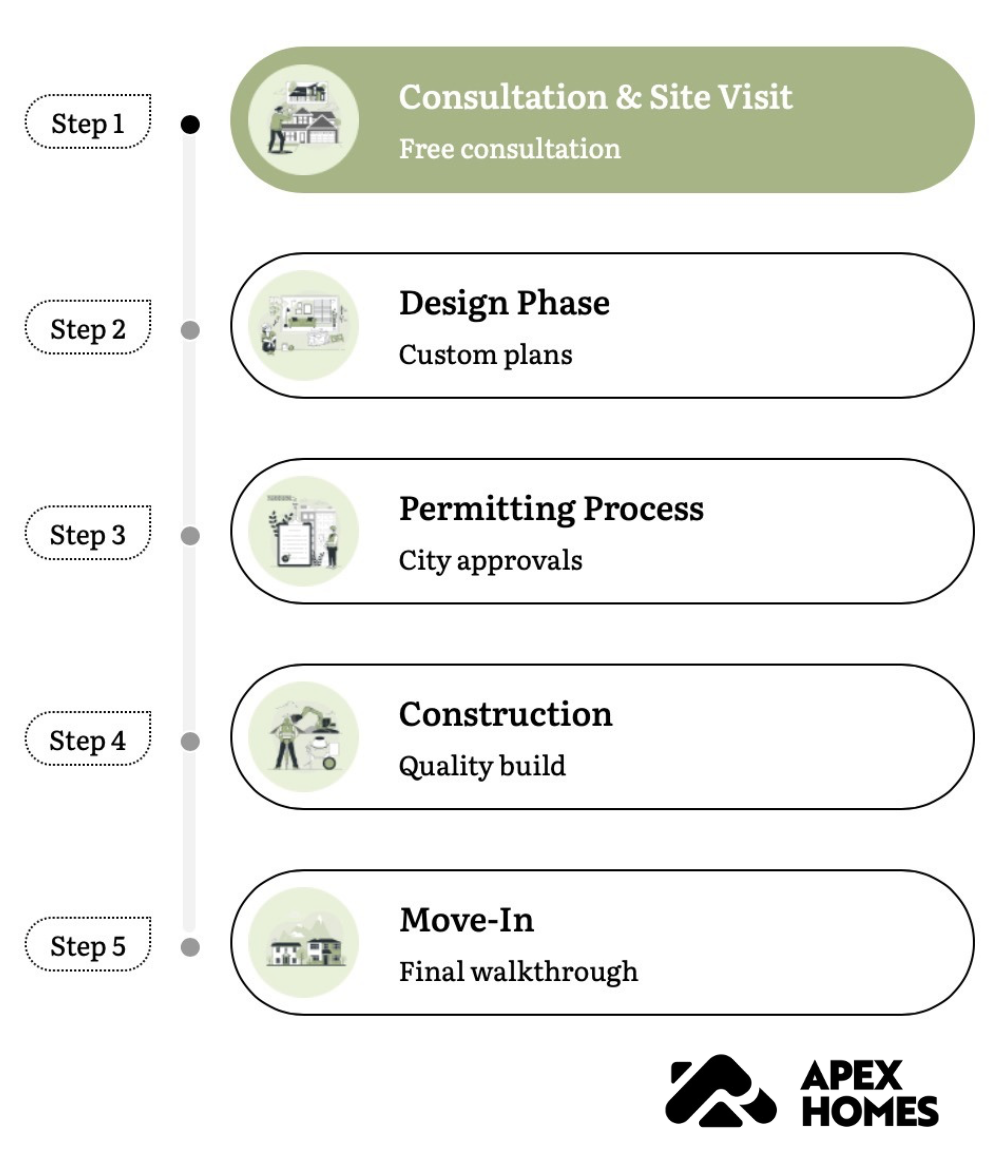
When comparing options for your ADU construction project, the difference often comes down to execution. Many homeowners start with the idea of managing their own ADU build, but quickly realize that speed, coordination, and cost control are the hardest parts to get right.
Apex Homes is structured to solve those exact challenges. Instead of approaching each ADU project as a one-off build, we operate at scale — which directly impacts your timeline, costs, and overall experience.
- Speed you can count on. While the typical construction process for building an ADU in California takes 12–18 months, Apex Homes delivers new ADU units in as fast as 4 months. That shorter timeline reduces project delays and allows homeowners to start using their additional living space — or generating rental income — much sooner.
- City-certified floor plans that lower your risk. Our city-certified floor plans also play a major role. Permits are one of the biggest concerns in any ADU construction project, especially with varying local regulations across cities like San Francisco and throughout the Bay Area. By using pre-approved plans, we avoid repeated plan checks and revisions that often slow down owner-builder projects.
- Quality built like a home — not a box. Quality is another key factor. We build every accessory dwelling unit to meet high residential standards, ensuring structural integrity, proper installation, and long-term durability. This isn’t treated as a secondary structure — it’s built like a true extension of your existing home.
- Proven at scale. With numerous residential units completed and additional developments currently in development, Apex Homes brings repeatable systems to every ADU construction project. That experience translates into smoother coordination with subcontractors, fewer surprises during construction, and a more predictable overall process.
- Competitive pricing — without compromising quality. Because we build at scale, we can source materials at lower costs and maintain strong relationships with subcontractors. This allows homeowners to access competitive pricing without compromising on quality — something that’s difficult to achieve when managing your own ADU project.
Book a free site consultation today to explore what’s possible for your property.
DIY vs. Apex Homes — A Quick Comparison
Here’s how building your own ADU compares to working with a professional builder like Apex Homes:
| DIY / Owner-Builder | Apex Homes | |
| Timeline | 18 months or more | As fast as 4 months |
| Permitting | You manage it | Fully handled |
| City-certified plans | Available but self-managed | Pre-approved in multiple cities |
| Construction quality | Varies | High-end residential |
| Cost certainty | High risk of overruns | Transparent pricing |
| Your time required | High | Minimal |
Ready To Build Smarter, Not Harder? Work with Apex Homes Today!
At this point, the question isn’t just “Can I build my own ADU?” It’s whether it truly makes sense for your time, budget, and long-term goals.
On paper, taking on your own ADU project in California looks like a smart way to save money and stay in control. But once you get into the reality of building an ADU, the complexity becomes clear. Permits, local regulations, and strict building codes vary by city, and even small mistakes can lead to project delays that push timelines from months into years.
Beyond approvals, the actual ADU construction process requires coordinating multiple licensed subcontractors, managing labor costs, sourcing materials, and ensuring proper installation at every stage.
From foundation and structural engineering to electrical, plumbing, drywall installation, and final inspections, each step depends on the one before it. If something slips, the entire construction process slows down.
For many homeowners, especially those balancing a full-time job and family responsibilities, this quickly turns into more than just a project — it becomes a second job. And while the idea of saving on contractor fees is appealing, unexpected costs, revisions, and delays often reduce those savings in real-world scenarios.
If your goal is to create additional living space, maximize investment for increased property value, or generate rental income without unnecessary stress, working with an experienced ADU builder/contractor, such as Apex Homes, can provide a more predictable path. It helps you avoid common pitfalls while keeping your ADU construction project aligned with timeline and budget expectations.
Get a free estimate with Apex Homes and discover what your property can support — without the stress of managing every detail yourself!