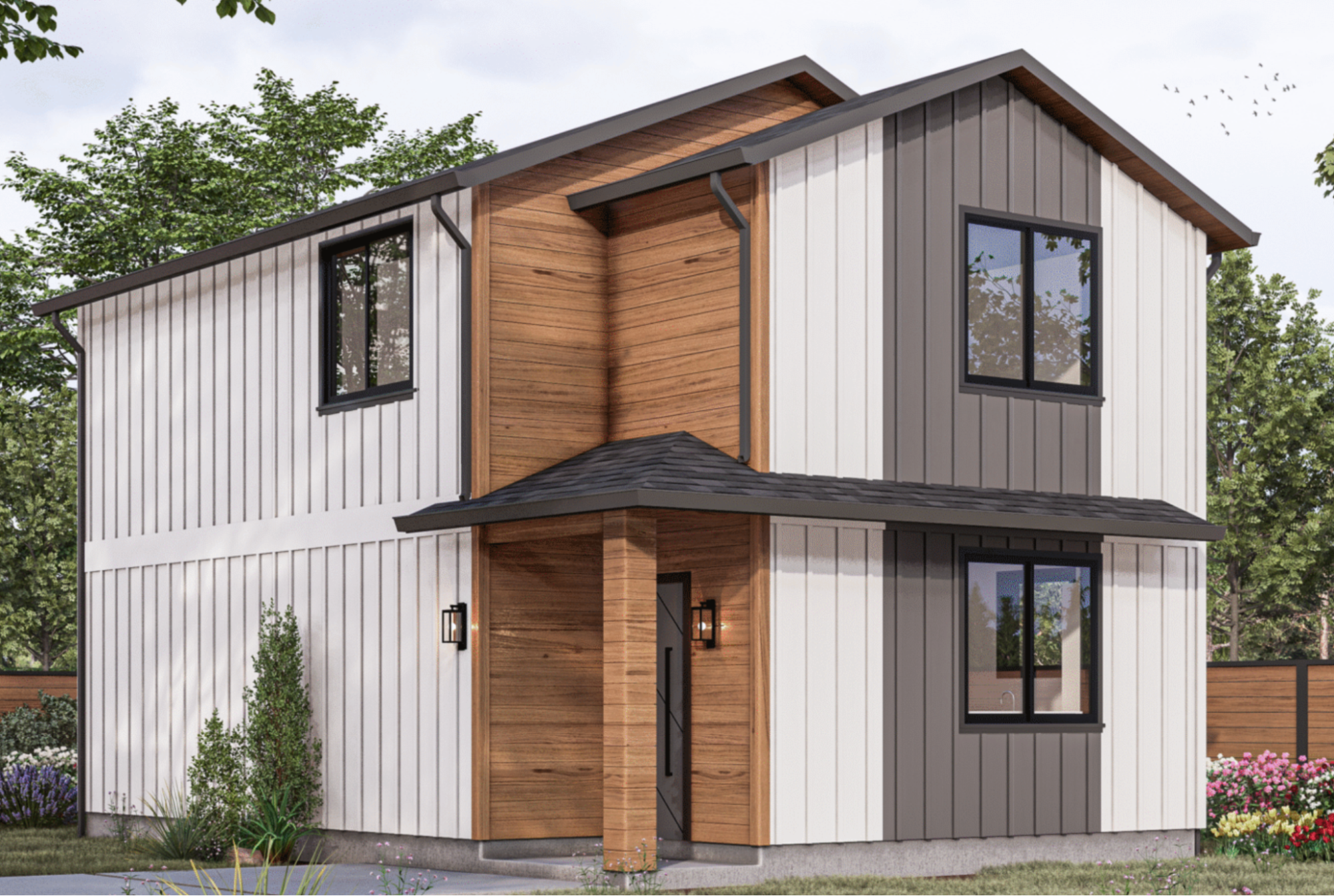
If you’re a California homeowner researching ADU examples, you’re likely balancing excitement with uncertainty.
An accessory dwelling unit (ADU) can create extra living space, generate supplemental income, or support extended families through different stages of life — but deciding what to build isn’t always easy.
Should you convert unused space like a garage? Build a detached unit in the backyard? Choose a studio apartment or a two-bedroom layout? With so many ADU ideas and floor plans available, the research phase can feel overwhelming.
That’s why real ADU examples matter. Seeing how other homeowners have transformed garage space, detached garages, and backyards into fully equipped living units makes the process clearer and more relatable.
This visual guide explores practical ADU examples across different types, square footage ranges, and intended uses, while showing how Apex Homes’ pre-approved plans help simplify the ADU project from concept to permits to construction.
Types of ADUs
California law allows several types of accessory dwelling units, each designed to work with different property layouts, budgets, and housing needs.
Understanding these ADU types helps homeowners choose the best option before diving into architecture, plans, and design inspiration.
Detached ADUs
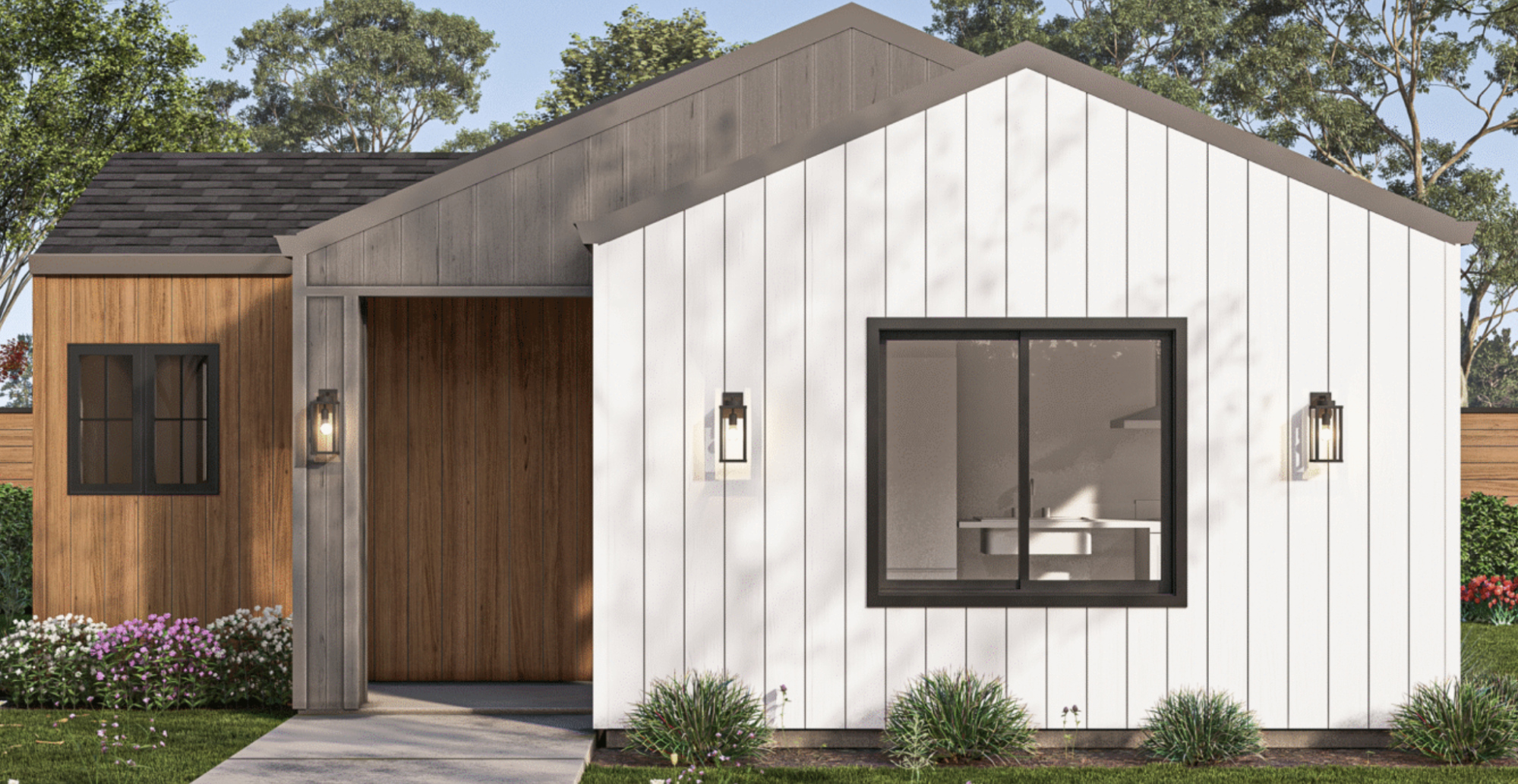
Detached ADUs are the most popular ADU option in California. These units are built separately from the main house, typically in the backyard, offering privacy, flexibility, and strong rental appeal.
A common detached ADU example is a 495 square foot studio apartment built on ground level with large windows and french doors to bring in natural light. This layout works well as a rental unit, guest suite, or home office.
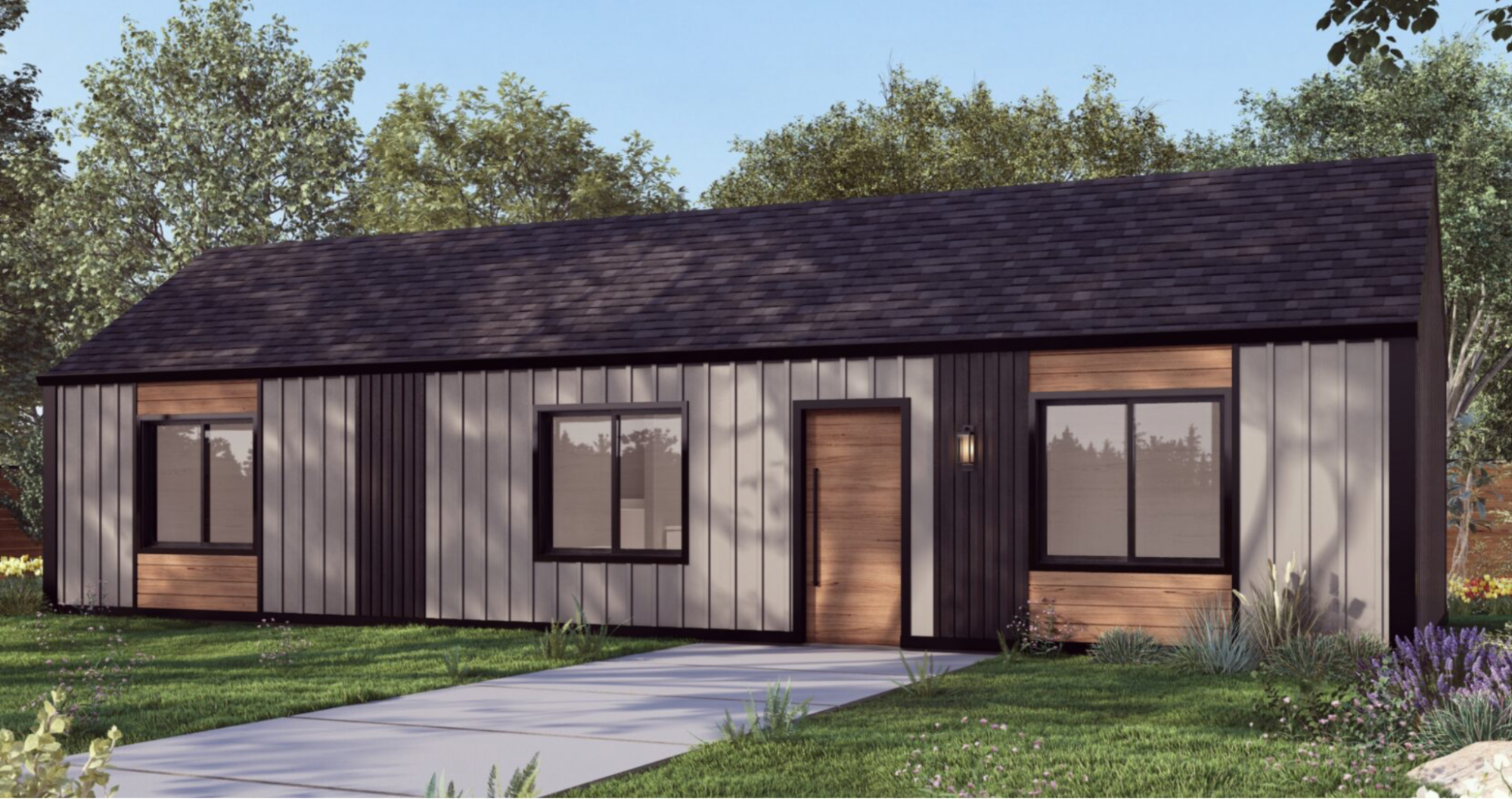
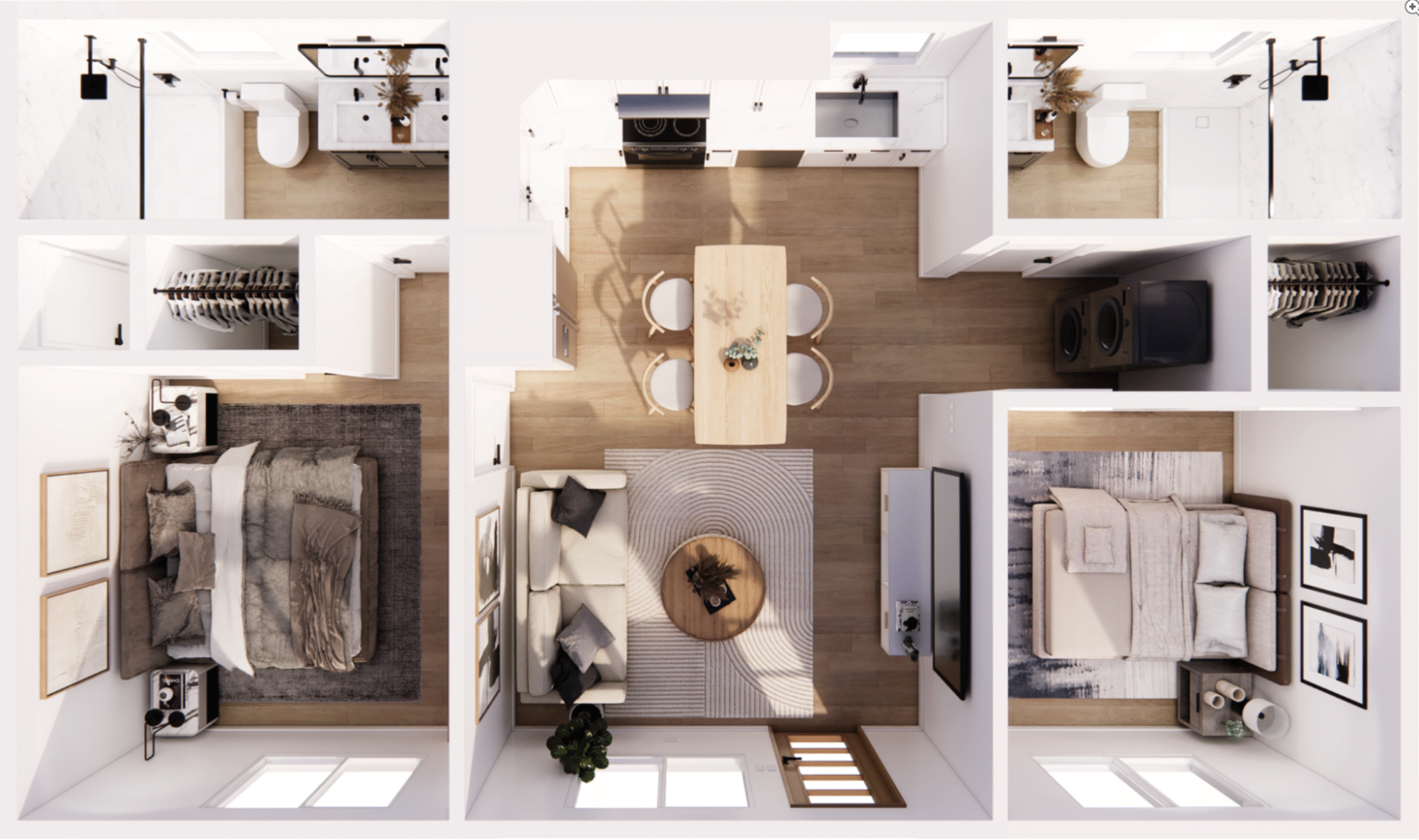
Larger detached options, such as a 749 sq ft two-bedroom ADU, provide enough living area, bedrooms, and bathrooms for small families, young adults, or parents transitioning into retirement homes.
Because detached ADUs feel like a standalone home rather than an extension of the existing house, they are ideal for homeowners looking to create a long-term rental, guest house, or independent living space for family members.
Explore Apex Homes’ detached ADU plans to see which designs fit your backyard, location, and intended use.
Attached ADUs
Attached ADUs are built onto the existing home and share at least one wall with the main house. These units are often created through home additions or by converting interior space, making them a practical option for homeowners who want close proximity without full separation.
Because attached ADUs share structures and utilities, they can be more affordable to build than detached units. In many cities, attached ADUs are also exempt from certain solar requirements under California law, which can help reduce overall cost.
Typical attached ADU examples include side-yard additions or converted garages that remain structurally connected to the home while maintaining a private entrance. These units work well for extended family, aging parents, or residents who need to stay close for care or daily support.
Garage Conversion ADUs
Garage conversion ADUs are one of the most efficient ways to create housing using existing structures. California strongly supports garage conversions, especially when transforming unused space like a two-car garage or detached garage into a livable unit.
Examples include converting a detached garage into a studio apartment with a sleeping area, bathroom, and small kitchenette, or turning an attached garage into a one-bedroom ADU. Because the roof, foundation, and walls already exist, garage conversion ADUs often move through permits faster and with fewer construction delays.
These ADUs are ideal for homeowners looking to convert underused garage space into affordable housing options, guest suites, or rental units without expanding the home’s footprint.
Multifamily ADUs
Multifamily ADUs take advantage of California’s evolving housing laws, including Senate Bill 9, which allows qualifying properties to add more units or subdivide lots. These ADU examples often include duplex-style layouts or multiple compact units located on a single property.
By increasing density legally, multifamily ADUs allow homeowners and investors to meet housing demand while generating multiple streams of rental income.
Because zoning, plumbing, and utility requirements vary by city and town, these projects benefit greatly from pre-approved plans and experienced ADU builders.
Real ADU Examples by Use Case
Beyond structure type, the best ADU ideas are shaped by how the space will be used. These real-world examples show how thoughtful design choices support different lifestyles, residents, and income goals.
Rental Income ADUs
Rental-focused ADUs are designed to function as independent living units. A private entrance, a fully equipped kitchen or kitchenette, a dedicated bathroom, and a defined living area are essential features.
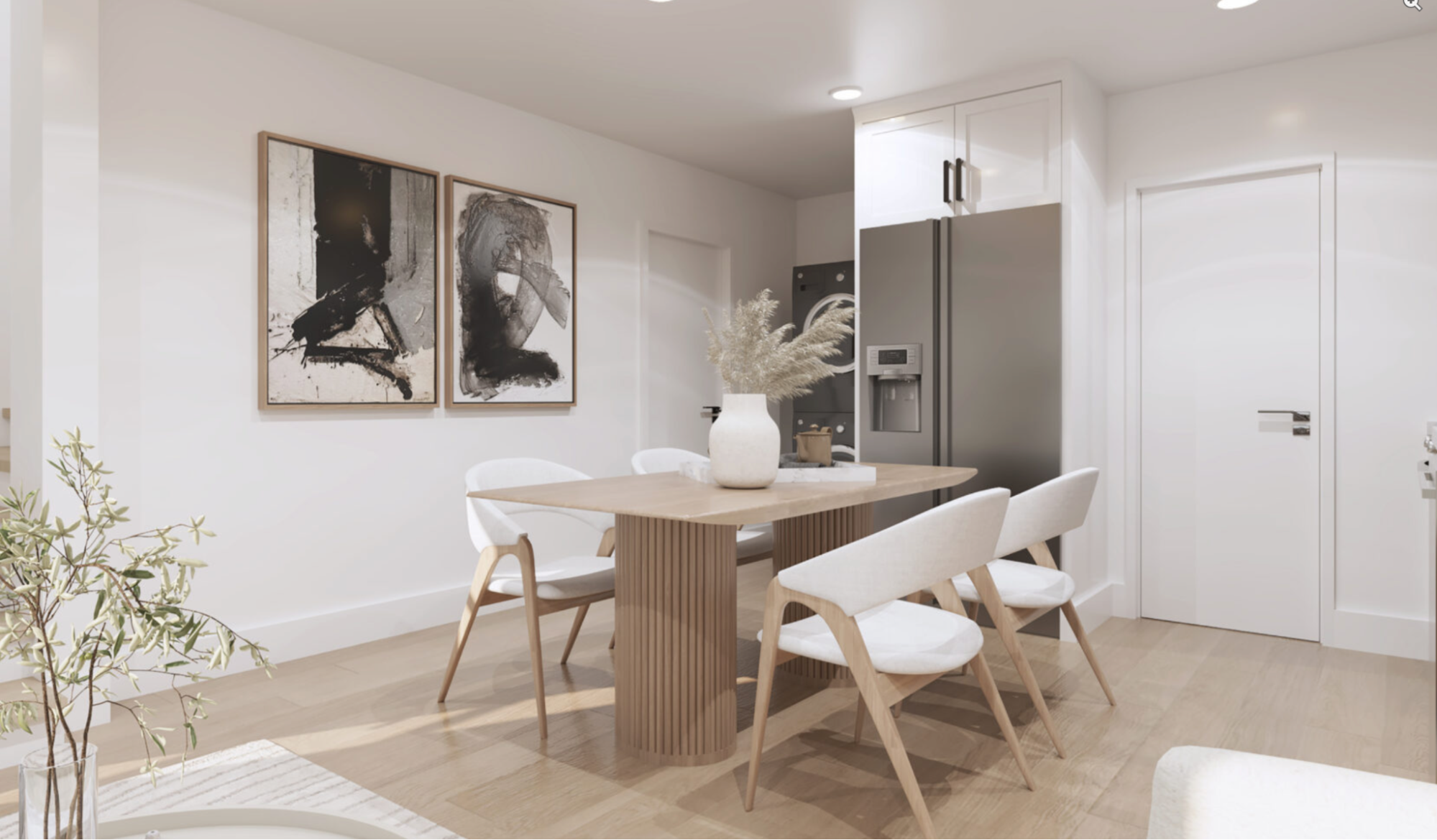
In high-demand California markets, rental rates vary by location, square footage, and layout. In many Bay Area cities, ADU rents range from $2,000 to $3,000 per month. In Southern California, monthly rents often range from $1,300 to $3,200. These rates make ADUs a strong option for supplemental income, especially when built with durable materials and flexible plans.
Return on investment (ROI) depends on factors such as construction costs, permits, financing, and long-term rental demand, but many homeowners see ADUs as a stable housing investment.
Multigenerational Living (In-Law Suites)
ADUs designed for extended families focus on comfort, safety, and accessibility. Ground-floor units with step-free entrances, wider doorways, and accessible bathrooms are common.
A typical in-law ADU example is a one-bedroom detached unit located close to the main house while still providing privacy. This arrangement allows parents to age in place while staying connected to family life, a growing need as California’s population continues to age.
Guest House ADUs
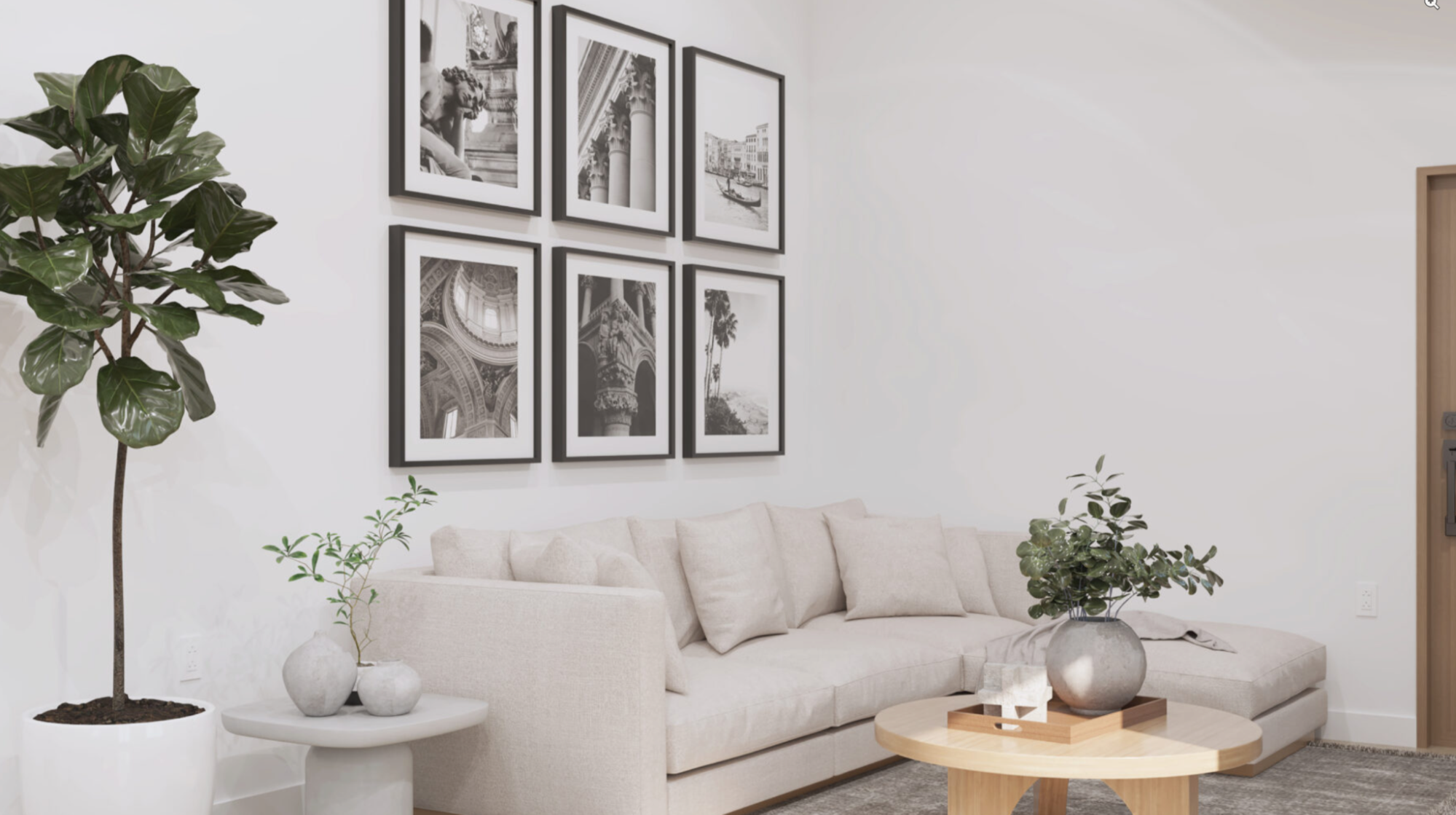
Guest house ADUs emphasize comfort and experience. Even smaller units can feel spacious when designed with natural light, open layouts, and indoor-outdoor flow.
These ADUs often serve dual purposes: a guest suite for visitors and a rental unit when not in use. Studio and one-bedroom plans are especially popular for this use case.
Home Office/Creative Studio ADUs
As remote work becomes more common, homeowners are using ADUs to create dedicated workspaces. A 495 sq ft studio configured as a home office provides separation from daily household activity while still being located on the same property.
Large windows, high ceilings, and flexible layouts make these ADUs adaptable. Over time, they can transition into rental units, guest houses, or living space for young adults.
ADU Floor Plan Options
Choosing the right ADU floor plan depends on budget, intended use, and available space. These examples show how different sizes support different needs.
Studio ADUs (400 – 500sq ft)
Studio ADUs prioritize efficiency. Open-concept layouts combine the living area and sleeping area, often with a Murphy bed, compact kitchen or kitchenette, and a full bathroom.
Apex Homes’ 495 sq ft studio ADU ranges from $148,500 to $168,500 and works well for single residents, rental use, or home offices.
1-Bedroom ADUs (500 – 700 sq ft)
One-bedroom ADUs offer a clear separation between living and sleeping spaces. These layouts appeal to long-term renters, aging parents, and young adults seeking independence.
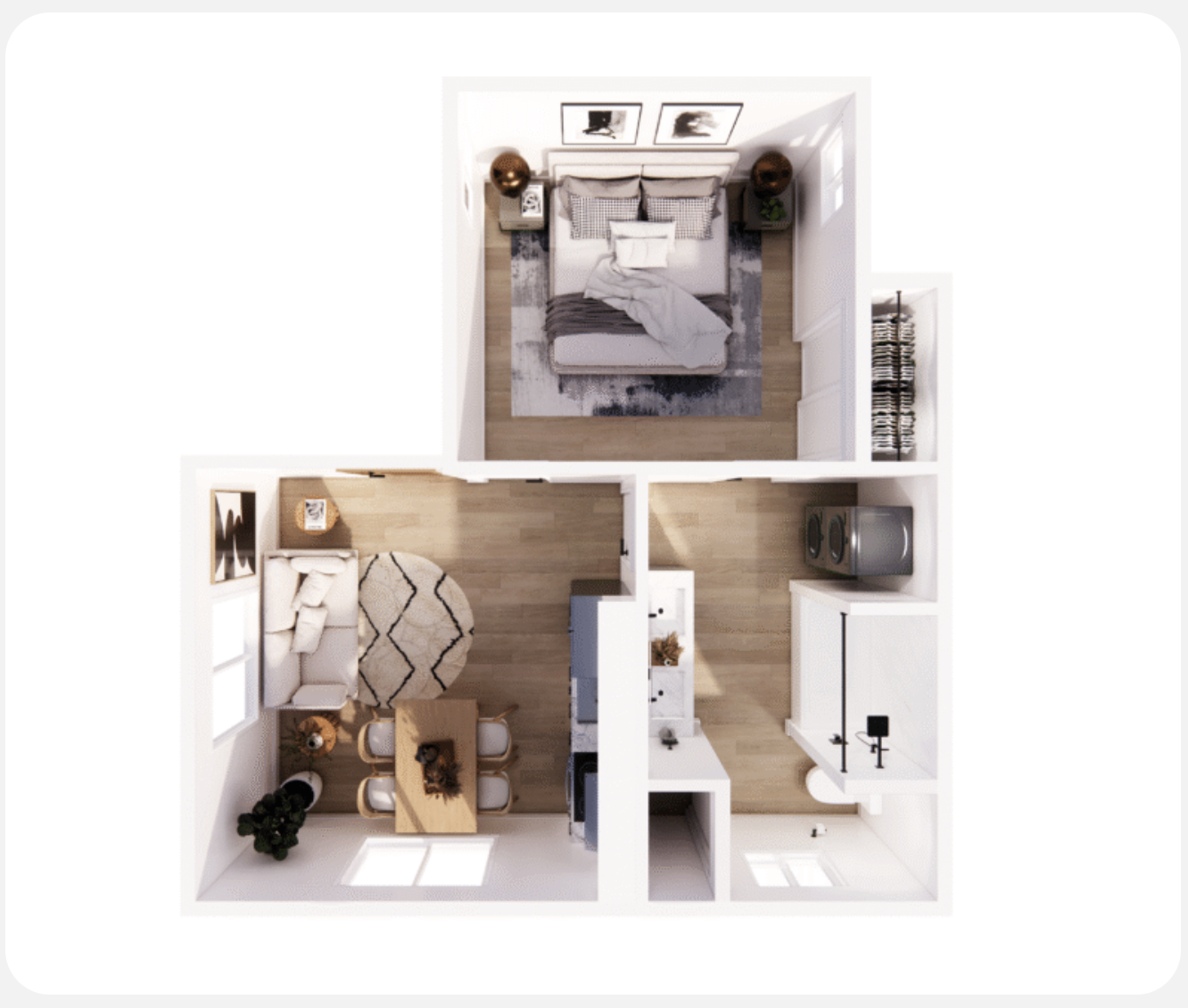
Most include one bedroom, one bathroom, a kitchenette or kitchen, and a comfortable living area. Layout variations depend on lot shape, entrance placement, and location on the property.
2-Bedroom ADUs (700 – 1,000 sq ft)
Two-bedroom ADUs offer maximum flexibility. They can house small families, roommates, or generate higher rental income.
Apex Homes’ 746–749 sq ft two-bedroom models range from $248,000 to $278,000 and are among the most versatile ADU plans available.
3-Bedroom ADUs
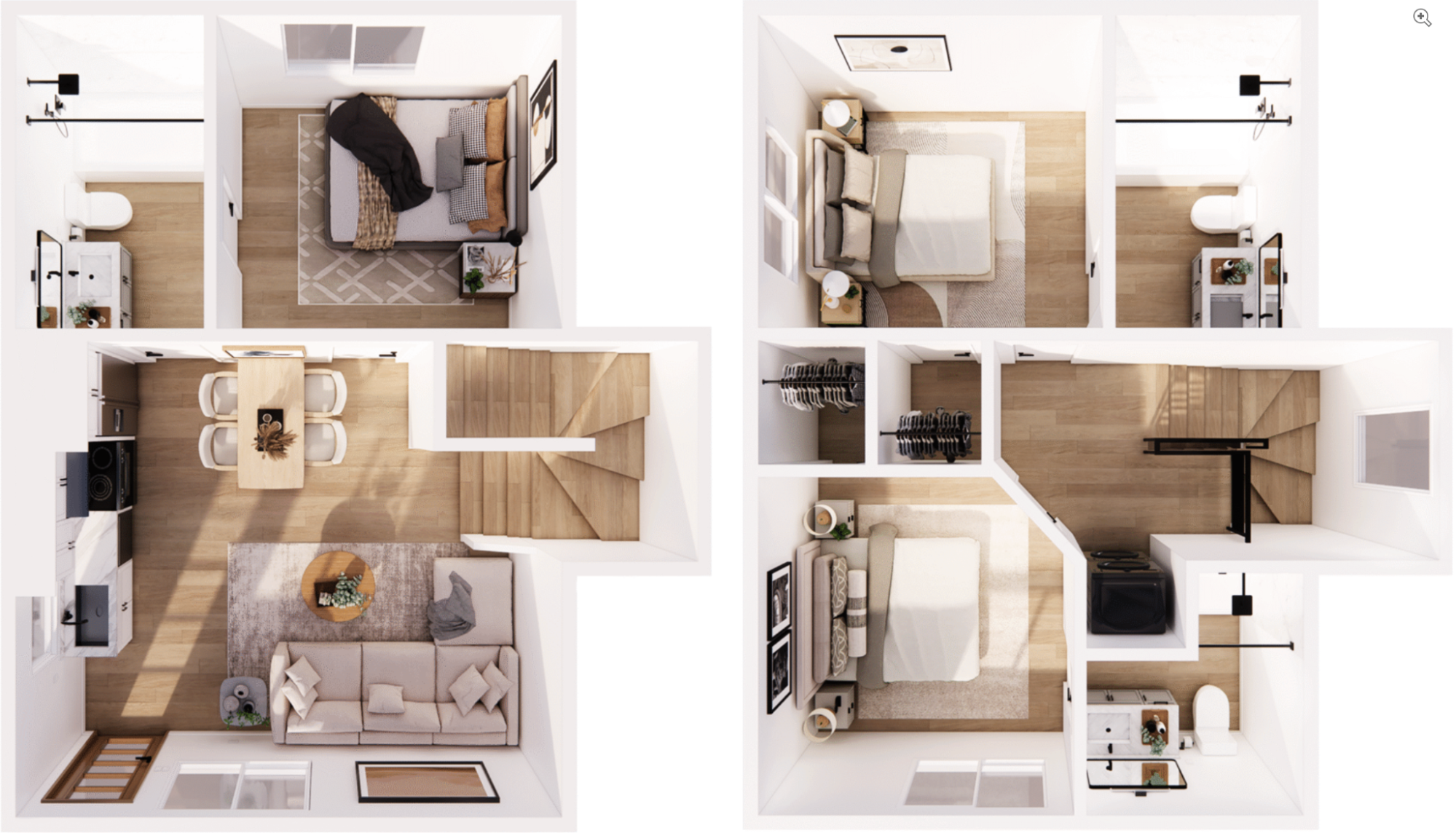
Three-bedroom ADUs are less common but possible on larger lots. These units require careful planning around zoning, permits, and utilities, but they offer family-sized living space and strong long-term rental potential.
What are Pre-Approved Plans?
California’s ADU laws allow certain designs to be pre-approved by local jurisdictions. Pre-approved ADU plans streamline the permitting process by reducing plan review time and minimizing revisions.
With pre-approved plans, homeowners benefit from faster approvals, more predictable timelines, and clearer cost expectations. Apex Homes’ pre-approved ADU plans remove uncertainty by combining proven architecture, transparent pricing, and a turnkey design-build process.
Make Your ADU Vision a Reality with Apex Homes
Real ADU examples show what’s possible — but building one successfully requires the right process and partner. Whether you’re converting a garage, building a detached unit, or creating housing for family or rental income, Apex Homes helps homeowners move from research to reality.
With pre-approved plans, clear costs, and end-to-end support, your ADU becomes more than extra space — it becomes a smart investment in your property and your future.
Contact Apex Homes today for a free estimate and start your ADU project with confidence.