
If you’re researching an accessory dwelling unit (ADU) in California, you’ve probably seen varying answers to the same question:How long does it take to build an ADU?
Some sites say 6 months; others say 18 months. But few explain why. That uncertainty is what stops many homeowners from moving forward.
The ADU construction timeline isn’t random. It follows a predictable sequence of phases. Once you understand the ADU building process and what actually slows ADU projects in California, the entire process becomes manageable instead of intimidating.
The biggest takeaway: most delays happen before the construction phase even starts. And the partner managing your project schedule often affects the timeline more than your property does.
Below is a realistic breakdown of the ADU construction process California homeowners experience, especially in the Bay Area.
The Four Main Phases of Building an ADU (And How Long Each Takes)
Every ADU construction project moves through the same four building phases. They occur mostly in sequence, so delays in the permitting phase push the entire construction timeline back.
Phase 1 – Design and Feasibility (2-8 Weeks)
Thisinitial planning phase determines whether an ADU development moves smoothly or stalls for months.
Typical tasks include:
- Site assessment and zoning regulations review
- Utility access verification
- Floor plans and structural calculations
- Setback and title verification
- Sewer connections and electrical capacity review
Certain site conditions extend this stage. Challenging topography, unclear property lines, easements, or a septic system can add weeks while engineers prepare documentation.
Homeowners often lose time here due to the traditional design process: multiple revisions between architect and owner. Each change restarts the review process before permit application documents are even submitted.
Phase 2 – Permitting and City Approvals (2-6 Months)
This is the most misunderstood part of the ADU building process.
Under California law, cities must respond to an ADU permit within 60 days of receiving a complete application. However, the clock pauses whenever corrections are required, and incomplete applications are common.
Typical real-world permitting timelines:
- Initial review: 3–6 weeks
- Plan check corrections: 2–8 weeks
- Additional review processes (fire, utilities, public works): 2–8 weeks
- Coastal review process (if applicable): 1–3 months
Homeowners Association (HOA) approvals and utility companies may run in parallel and frequently cause city delays.
Some Bay Area cities, includingMountain View, streamline approvals for pre-approved plans. For example, San Jose offers faster processing for standard models, while coastal jurisdictions like San Mateo county add environmental layers.
Experienced permitting teams matter because most permitting timelines are lost to plan revisions, not the city backlog. A builder familiar with both the city and its review process submits complete sets the first time.
Phase 3 – Site Prep and Foundation (2-6 Weeks)
Once the necessary permits are issued, the project finally reaches physical work.
Site preparation typically includes:
- Clearing and grading
- Excavation
- Foundation work
- Utility connections, and
- Plumbing line installations
Flat lots move quickly, while properties with slopes, existing structures, or limited access take longer because equipment placement becomes complex.
Utility upgrades also frequently appear here. For instance, older electrical panels or undersized sewer connections must be upgraded before inspection approval.
Phase 4 – Construction and Finishing (3-6 Months)
Now the visible construction phase begins.
The typical order is as follows:
- Framing
- Roofing and exterior finishes
- Electrical and plumbing systems
- Insulation and dry wall
- Interior finishes and fixtures
- Final inspections and issuance of certificate of occupancy
City inspections happen throughout. Failed inspections or scheduling delays affect the project schedule because each trade depends on the previous one finishing.
Material availability also affects timelines; windows and electrical equipment currently have some of the longest lead times in California construction.
During the finishing phase, homeowners can also plan for utility upgrades likesolar panels to maximize energy efficiency and long-term savings.
At the end of this building phase, the ADU becomes a livable space, whether for family members, as a guest house, or as a steady rental income.
Key Timeline Factors That Determine How Fast Your ADU Gets Built
Now that you know what happens when building an ADU, let’s talk about what controls speed. Some factors are fixed while others are entirely within your control.
ADU Type and Complexity
The type and complexity of your ADU strongly affect how long the project will take.
Detached new construction usually takes 10-18 months because it requires full site prep, foundation work, utility connections, and multiple inspection stages. Garage conversions and attached ADUs are faster, typically 6-10 months, since the foundation and main structure already exist.
Two-story or custom designs add time due to additional structural calculations, subcontractor coordination, and inspections. Larger units also require more scheduling for trades, from framing and roofing to plumbing and electrical systems, impacting the overall ADU construction timeline.
Your Jurisdiction
Where you build significantly impacts the ADU permitting timeline. Bay Area cities vary widely — San Jose often streamlines approvals for pre-approved plans, while other cities may have backlogs. Coastal zones like Monterey or San Mateo add environmental review layers, extending the permitting process.
Working with a builder familiar with local regulations and city-specific permit processes can prevent common delays and save months.
Pre-Approved Plans vs. Custom Designs
Choosing pre-approved plans over custom designs is one of the fastest ways to reduce your ADU timeline. Custom plans require multiple plan check cycles, each adding weeks.
Pre-approved plans, like those used by Apex Homes, are already aligned with local building codes and many Bay Area jurisdictions, cutting permitting time to as little as 60–90 days in cities likeCupertino.
Site Conditions
Site conditions affect foundation complexity and construction speed. Soil type, slope, or challenging topography can require extra grading or retaining walls. Properties near fault zones, flood plains, or coastal areas may face additional review.
Existing structures, easements, or mature trees may require design adjustments, adding time to the ADU design and permitting phases. Proper upfront assessment minimizes unexpected delays.
Common Causes of ADU Delays — And How Apex Homes Helps You Avoid Them
Even well-planned ADU projects can encounter delays. Understanding the most common causes helps homeowners take control of the timeline and avoid setbacks during the design, permitting, and construction phases.
Permitting Bottlenecks
The most frequent cause of delays is issues with the permitting process. Incomplete permit application documents, multiple plan revisions, or missing approvals from the city or utilities can reset the review clock, sometimes adding weeks or months.
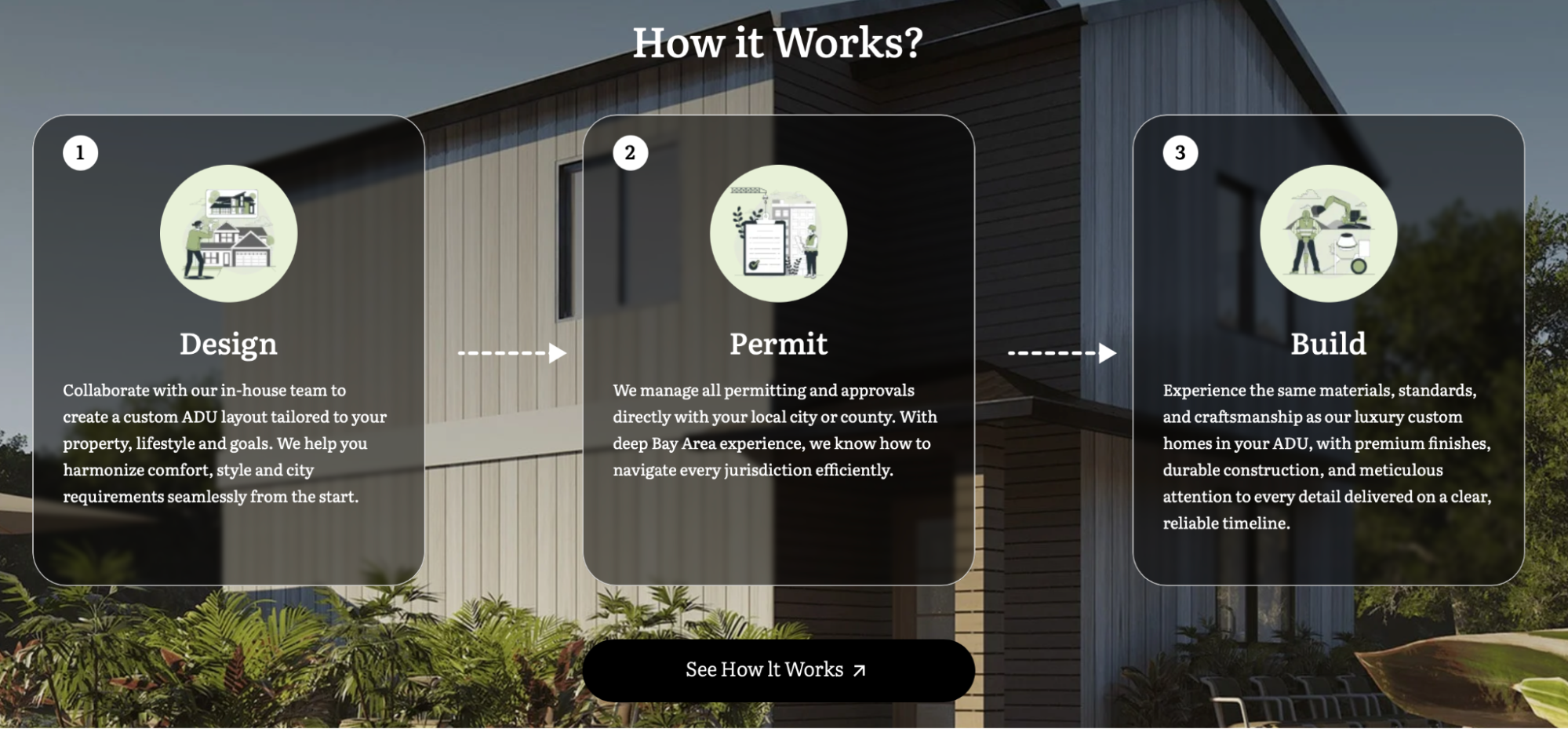
Avoiding this requires accurate, jurisdiction-ready plans and an experienced builder, like Apex Homes, who knows local zoning regulations and city-specific review processes.Pre-approved plans can significantly reduce corrections and accelerate the ADU permit timeline.
Utility Upgrade Surprises
Unexpected utility upgrades often extend the ADU construction timeline. Older electrical panels, undersized sewer lines, or additional right-of-way permits from utility companies can create weeks of waiting once construction begins.
Thorough site assessment during the initial planning phase identifies potential utility issues early, preventing delays in the construction phase and ensuring electrical and plumbing systems are ready for inspections.
Subcontracting Scheduling Cascades
ADU construction relies on tightly coordinated trades. A delayed foundation pushes back framing, which delays roofing, plumbing, and electrical work. City inspection queues further compound these scheduling gaps.
Delays are more common when multiple independent parties manage separate parts of the ADU building process. Projects tend to move more predictably when one team oversees the entire workflow:
- design phase
- structural calculations
- permitting process
- site prep, and
- construction
At Apex Homes, the trades are coordinated by an in-house team that helps prevent cascading delays and keeps each phase on track and aligned with the project schedule.
Homeowner Decision Delays
Design changes after permit submission are one of the most common self-inflicted delays. They often occur when the selected ADU design doesn’t match the homeowner’s intended use, leading to floor plan or finish adjustments mid-project.
By aligning needs with the right design plan early, Apex Homes helps avoid resubmissions, extra inspections, and timeline extensions.
Finalizing all decisions, including fixtures, appliances, and interior finishes, before breaking ground ensures the project moves steadily through the design, permitting, and construction phases without unnecessary pauses.
How Long Does It Really Take with Apex Homes?
Every ADU project is different, but most delays occur before the construction phase. Incomplete permit application documents, multiple plan revisions, or challenges with zoning regulations can extend the ADU construction timeline well beyond a year.
Apex Homes helps California homeowners streamline this process. With our pre-approved ADU plans tailored to Bay Area jurisdictions, the ADU permit timeline can be typically reduced to as little as 1.5-2 months.
Choosing an in-house team you can trust can help ensure that communication gaps and scheduling delays are minimized.
Meanwhile, AI-assisted planning tools assess:
- site conditions
- utility access, and
- project scope from the very first consultation
This helps prevent unexpected setbacks during the construction process.
Apex Homes’ standard pre-approved models often move faster than typical ADU construction timeline, with some projects completing in as little as 5-8 months.
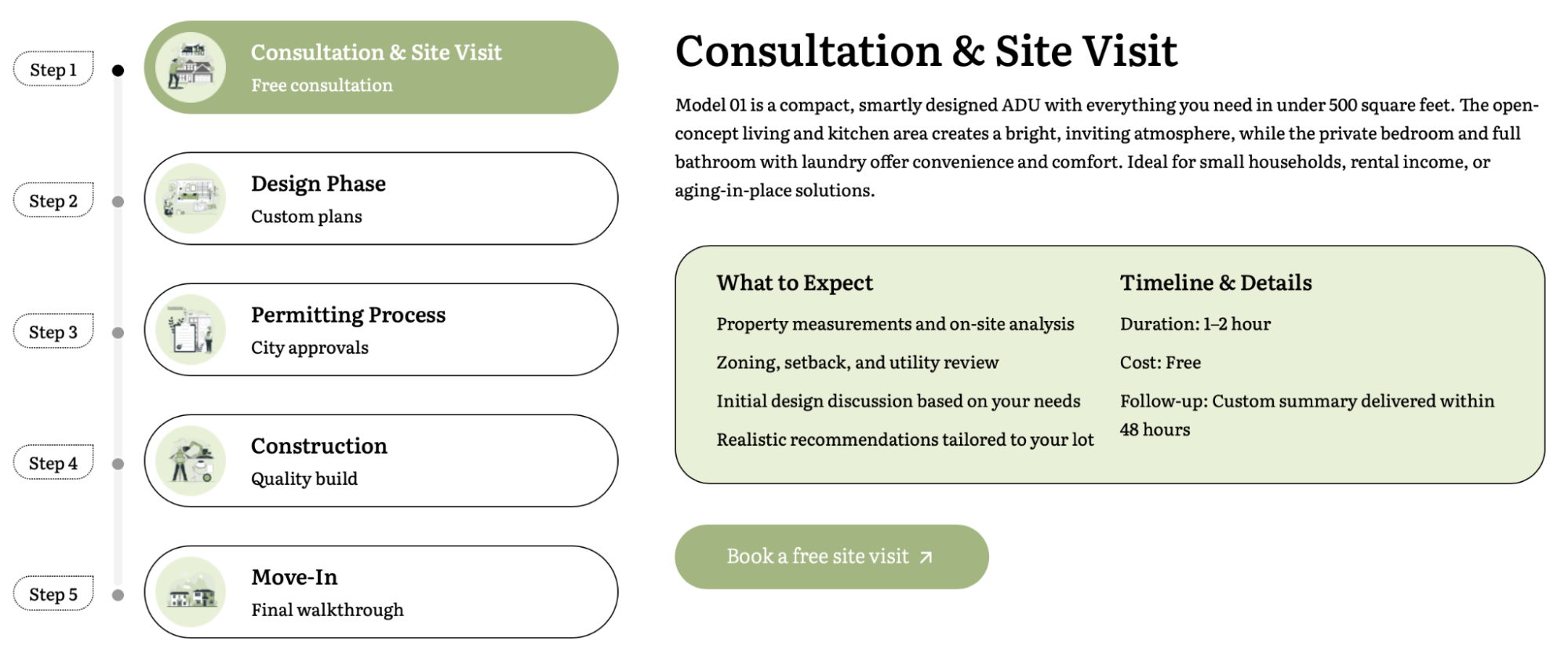
With Apex Homes, homeowners receive a property-specific ADU timeline during afree consultation, offering a realistic expectation for their project instead of a generic range, so they can plan every stage of the build with confidence.
Be Confident About Your ADU Timeline
There’s no single answer to how long does it take to build an ADU because the entire process isn’t just construction; it’s the design phase, permitting process, site preparation, and building phase working in sequence. When one step slows, the whole construction timeline shifts.
In the Bay Area, most delays come from plan revisions and approvals, not the physical ADU construction. That means the biggest variables are within your control: the builder you choose, the ADU plans you use, and how prepared your project is before submitting permits.
Starting with jurisdiction-ready plans and local permitting expertise significantly reduces review cycles and keeps each phase moving predictably instead of reactively. Instead of relying on generic ranges, get a timeline based on your property, zoning, regulations, and project scope.
Schedule a free consultation with Apex Homes today and receive a property-specific ADU construction timeline within 48 hours!