
Yes, most California homeowners can build at least one accessory dwelling unit (ADU) on their property.
Over the past several years, California has passed statewide laws aimed at:
- Increasing affordable housing
- Expanding housing options, and
- Making better use of existing residential land
As a result, adding an ADU on the same lot as your primary residence is now allowed in most situations than it was in the past.
However, being allowed to build an ADU under state law does not automatically mean every property can support one in the same way. Local zoning rules, physical site constraints, and the ADU permitting process all play a role in determining what is actually feasible.
Specifically, these factors influence:
- Whether you can build at all
- How large your ADU can be
- Whether it must be attached or detached, and
- How the new structure fits alongside your main house and existing structures
This article walks you through the top-level requirements California homeowners need to understand early, so you can confidently assess whether your property qualifies before moving into ADU design or construction.
State Law Favors ADU Development
California law strongly favors accessory dwelling unit development as a response to the state’s long-standing housing shortage.
For example, Senate Bill 9 (SB9) is a California law that allows qualifying properties to split a single-family lot and potentially build multiple units. While SB9 can increase housing density, it also involves stricter eligibility rules, owner-occupancy requirements, and long-term restrictions.
Since 2020, multiple updates to California ADU regulations have significantly reduced restrictions that once made ADU construction difficult, expensive, or outright impossible in many cities.
As of January 2026, state law allows most residential properties to add at least one ADU, often up to 800 square feet, even when local zoning rules would otherwise limit size, setbacks, or parking. These protections apply to both single-family and multifamily properties and are designed to ensure that cities cannot unreasonably block ADU approval.
State law also limits local requirements related to owner occupancy, parking space minimums, and utility connections. In many cases, a city must approve an ADU that meets objective standards within a fixed timeframe.
It is important to note that state law establishes a baseline, not a guarantee. Cities still control how these rules are applied to individual properties, which is why understanding local regulations is critical.
Step 1: Check Your Local Zoning and Regulations
Before reviewing designs, budgets, or construction timelines, homeowners should first confirm how local zoning applies to their property. While California law broadly allows ADUs, local zoning determines how those rights are implemented on a specific site.
This step helps identify early limitations, clarify what type of ADU is allowed, and avoid pursuing plans that won’t receive approval.
Why Local Rules Still Matter?
Cities and counties can enforce their own ordinances as long as they do not conflict with state law. These laws govern important details such as placement, height, design, compatibility, and how an ADU relates to the primary dwelling.
Differences between Bay Area and Southern California jurisdictions are common.
For example, San Jose allows ADUs citywide in residential zones, but setback requirements, height limits, and lot coverage rules can vary based on zoning designations, lot conditions, and whether a property is located within a special overlay such as a historic or hillside area.
Properties located in coastal zones, historic districts, or hillside areas may require additional review even when ADUs are permitted.
Understanding zoning overlays and local ordinances early prevents delays and costly redesigns later in the process.
Apex Homes provides complimentary feasibility studies to analyze zoning, setbacks, and site conditions.
Key Zoning Questions To Research
At a minimum, homeowners should confirm that their property is zoned for residential use and not subject to a limited exception. Most residential zones allow ADUs, but verification is essential.
You should also review local setback requirements. While California law allows reduced setbacks for ADUs, most cities still enforce four-foot side and rear setbacks, with front setback rules varying by configuration.
Homeowners associations can impose design-related rules, but they cannot prohibit ADUs outright under state law. Navigating these overlapping rules is often where experienced guidance becomes most valuable.
Apex Homes’ team tracks ADU zoning requirements across more than 50 Bay Area and Southern California cities, eliminating guesswork for homeowners.
Step 2: Understand Your Property’s Physical Requirements
Once zoning allows an ADU, the next question is whether your property can physically support one. Even when local laws permit development, physical site constraints can limit size, layout, or ADU type.
This step focuses on lot coverage, setbacks, height limits, and utility infrastructure.
Energy and Solar Requirements
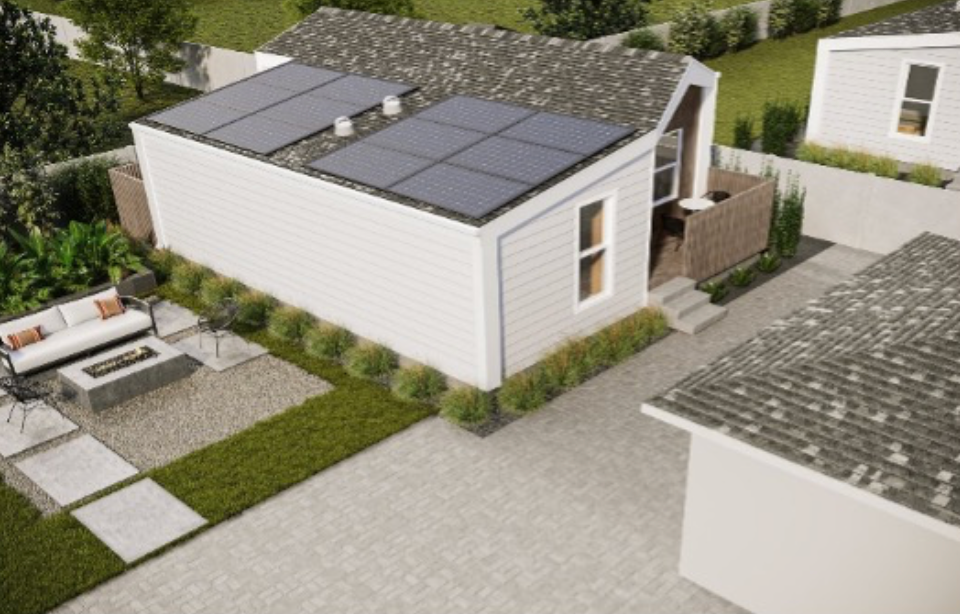
Energy compliance is another factor that can affect ADU feasibility in California. Most new ADUs must meet Title 24 energy efficiency standards, which may include solar panel requirements depending on the unit’s size, configuration, and local building code interpretation.
Detached ADUs and larger units are more likely to require solar, while site conditions such as roof space, tree coverage, and electrical capacity can influence system design. Reviewing these requirements early helps avoid delays during plan review or permitting.
Minimum Lot Size and Coverage
California ADU laws removed minimum lot size requirements for accessory dwelling units up to 800 sq ft, allowing many residential properties to qualify regardless of total land size. This change means smaller lots can still support an additional dwelling unit, provided other local requirements are met.
However, cities and counties may still enforce lot coverage limits, which control how much of a property can be developed. These limits typically range between 40 and 50 percent of the total site and include:
- The primary dwelling and any existing structures
- The proposed ADU, whether attached or a separate structure
- Required setbacks that reduce buildable square footage
To estimate buildable area, property owners must look at total lot size, subtract required setbacks, and account for the square footage of all existing buildings. The remaining area determines how large an ADU can realistically be approved under local zoning.
In dense Bay Area cities, where lots are smaller and existing structures often occupy more space, these limits frequently point homeowners toward attached ADUs or compact detached designs.
In many Southern California communities, larger lots and lower existing coverage can allow more flexibility in ADU size and placement.
Setback and Height Restrictions
ADU setback requirements are typically more flexible than those for primary dwellings. Most detached ADUs are allowed with four-foot side and rear setbacks, and in some cases five feet from property lines.
Height limits generally range from 16 to 25 feet depending on proximity to the main house and local zoning. These limits directly affect ceiling heights, second-story options, and total square footage.
Utility Infrastructure Considerations
Utility capacity is a key part of ADU approval. Your property must support additional water, sewer, and electrical demand. If existing systems are undersized, upgrades may be required before a building permit is issued.
Common issues include shared sewer laterals, electrical panels with insufficient capacity, or water meters that do not meet local standards. Identifying these constraints early helps homeowners plan budgets and timelines accurately.
Apex Homes coordinates utility assessments and required upgrades as part of a turnkey process, so homeowners don’t have to manage multiple agencies.
Step 3: Know Your ADU Type Options
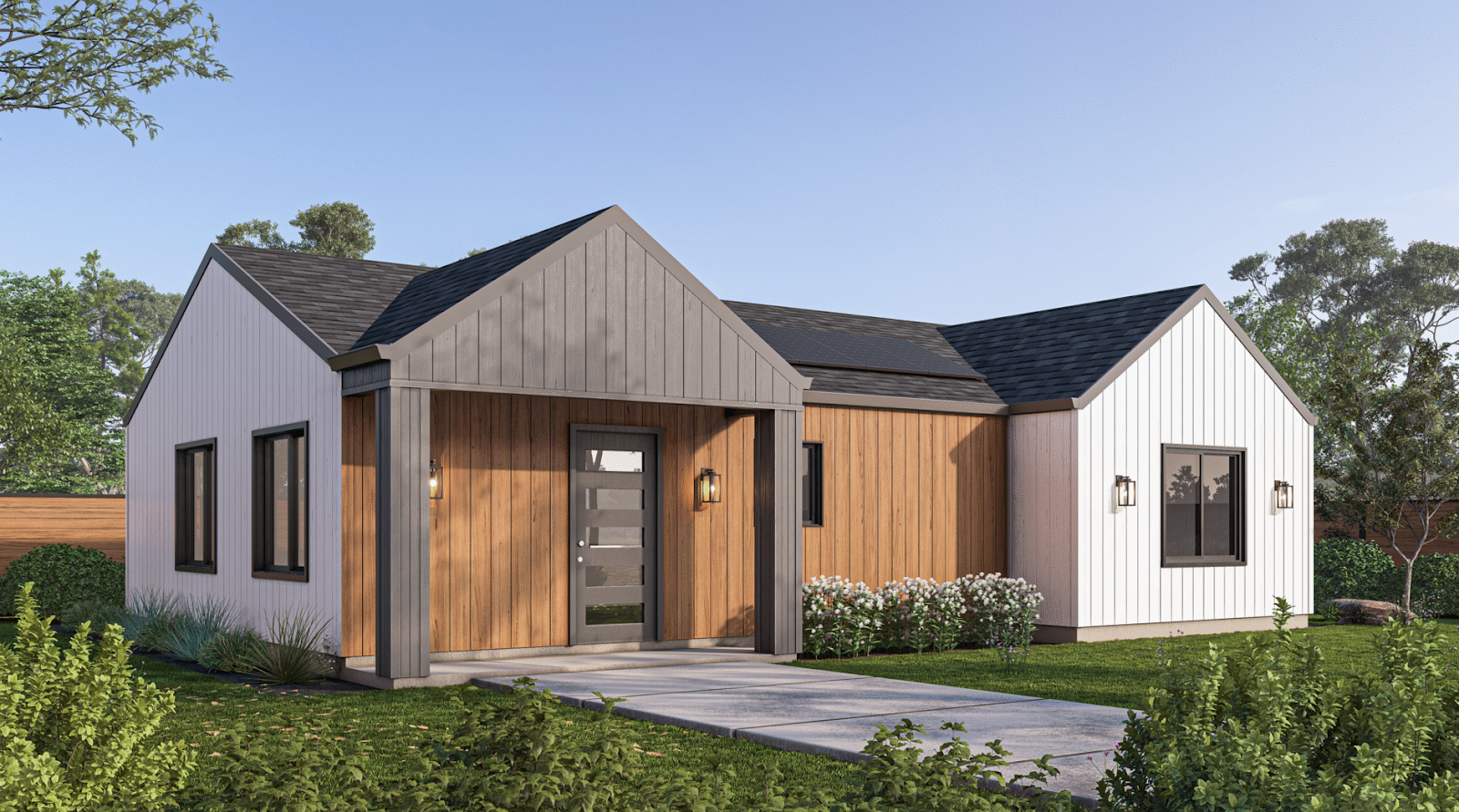
California allows several ADU configurations, and the right choice depends on your property layout, intended use, and long-term goals. Understanding these options helps homeowners choose a solution that aligns with both regulations and lifestyle needs.
Many homeowners also consider how an ADU affects property value and future flexibility. In many California markets, an ADU can increase value by adding usable living space or rental income potential, though results vary by location and unit type.
Detached ADUs (Most Common For New Constructions)
Detached ADUs are separate structures built on the same lot as the primary dwelling. They offer the most flexibility in layout, privacy, and rental income potential. Because they are separate structures, they require full utility connections and complete independent living facilities.
Detached ADUs are ideal for properties with adequate yard space and are commonly used as long-term rental units.
Attached ADUs and Garage Conversions
Attached ADUs share at least one wall with the main house. Garage conversions are a popular option and often benefit from waived parking requirements under state law.
These ADUs typically involve simpler utility connections and may reduce construction costs compared to detached units.
Junior ADUs (JADUs) — The 500 sq ft Option
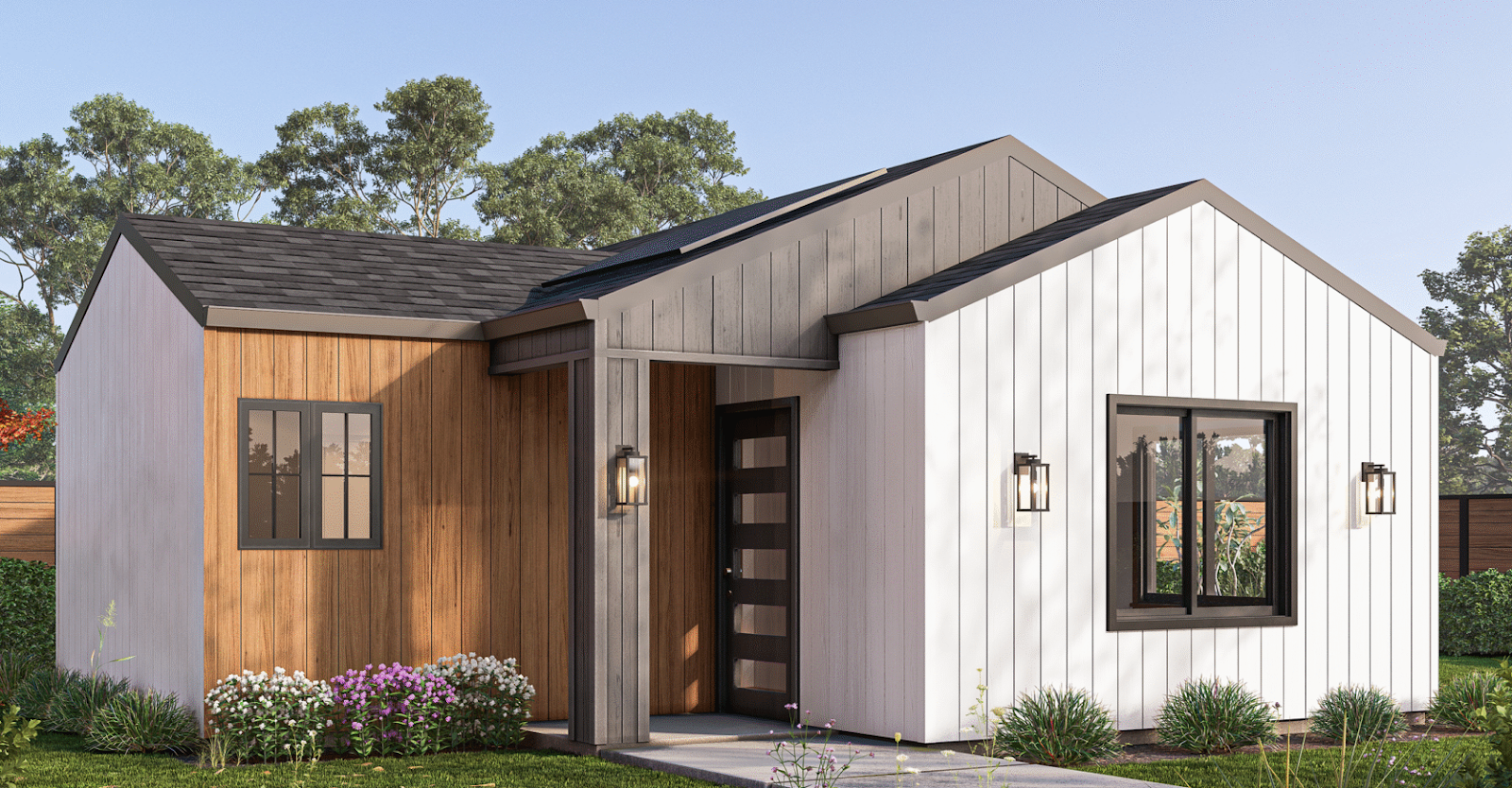
Junior ADUs are limited to 500 sq ft and must be created within the existing primary residence. They can share a bathroom with the main home and require owner occupancy in either the JADU or the primary residence.
JADUs are often the simplest and most affordable way to add living space for family members.
Step 4: Navigate the Permitting Process
Even when a property qualifies and a design is selected, ADU permits in California are often where projects slow down. Understanding the permitting process early helps homeowners plan realistically.
What Permits You’ll Actually Need
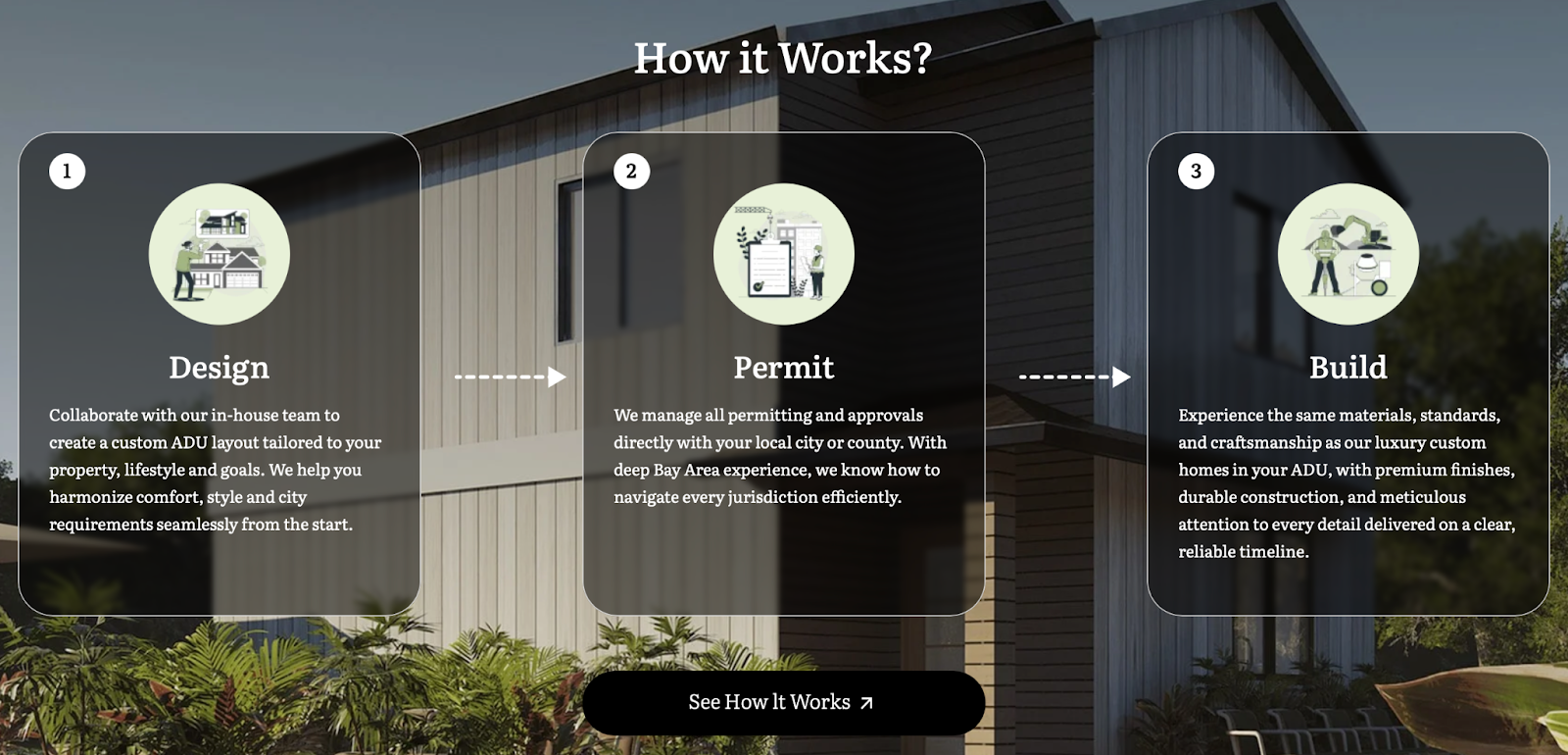
All ADUs require a building permit, along with electrical, plumbing, and mechanical permits. Utility connection permits may also be required depending on local infrastructure.
Approval timelines typically range from 60 to 180 days. Delays are most often caused by incomplete applications or noncompliance with objective standards.
Apex Homes’ in-house permit specialists manage the entire process from submission to approval.
The Pre-Approved Plan Advantage
Many California cities now accept pre-approved ADU plans, significantly reducing review timelines. Instead of waiting months, approvals can often be issued in a matter of weeks.
Apex Homes maintains a library of pre-approved designs accepted by multiple Bay Area jurisdictions, helping homeowners move from concept to construction faster.
Skip the permitting headaches. Apex Homes manages all permit applications and city communications, keeping your project on schedule.
Special Circumstances: Can You Build on Your Parents’ Property?
Building an ADU on parents’ property or another family member’s land is allowed under California law, but there are important considerations.
Building on Someone Else’s Property
The property owner must apply for permits, and ownership of the ADU remains tied to the land. Families should consider property tax impacts, rental income, and long-term occupancy plans before moving forward. Financing may also be more complex when you do not own the property.
Apex Homes helps families navigate these decisions and ensure compliance.
Find Out What You Can Build on Your Property Before You Commit
California’s ADU laws have created new opportunities for homeowners to add housing, support family members, and generate rental income. Still, what you’re allowed to build depends on how state regulations, local zoning, physical site conditions, and ADU permits in California intersect on your specific property.
Clarifying these requirements early helps avoid unnecessary delays, redesigns, and unexpected costs. Working with an experienced ADU builder like Apex Homes provides clarity from feasibility through construction.
FAQs
Can I build an ADU on my property in California?
In most cases, yes. California ADU regulations allow at least one accessory dwelling unit on most residential properties. Final eligibility depends on local zoning, setbacks, utility capacity, and compliance with building code requirements.
How many ADUs can I have on my property in California?
Most single-family properties can have one ADU and one junior ADU on the same lot. Multi-family properties may qualify for additional units based on the number of existing dwelling units and local development standards.
What is the $40,000 grant in California for ADUs?
California offers ADU grants of up to $40,000 through CalHFA to help cover predevelopment costs such as plans, permits, and site work. Funds are limited and available to eligible homeowners planning to rent the unit.