
Many California homeowners discover the same problem when planning an accessory dwelling unit (ADU): the zoning allows it, but the yard doesn’t. Setbacks shrink the buildable footprint, and once a single story layout is drawn, the backyard quickly disappears.
That’s where a 2 story ADU starts to make sense. Instead of spreading across the property, the ADU rises vertically.
However, building upward changes more than aesthetics. Height limits, structural engineering, privacy, and long-term use all influence the design, especially in California cities where regulations and neighborhood compatibility standards are strict.
This 2 story ADU guide explains:
- What a two story ADU actually is
- The different layout types available, and
- How to know if it fits your property before signing plans
What Is a Two Story ADU?
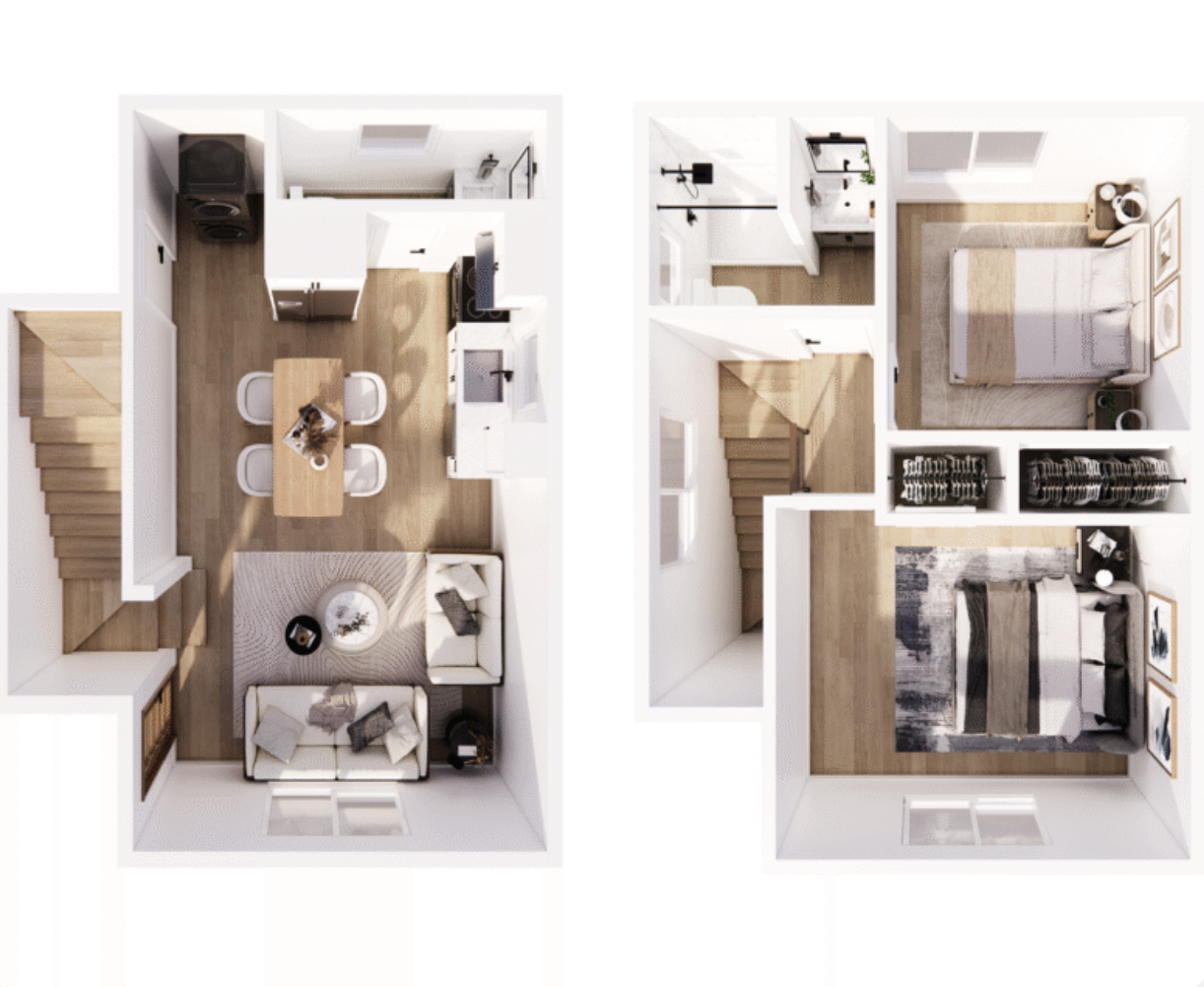
A 2 story ADU is an accessory dwelling unit built on the same property as the main house that includes two levels of livable space rather than a single floor.
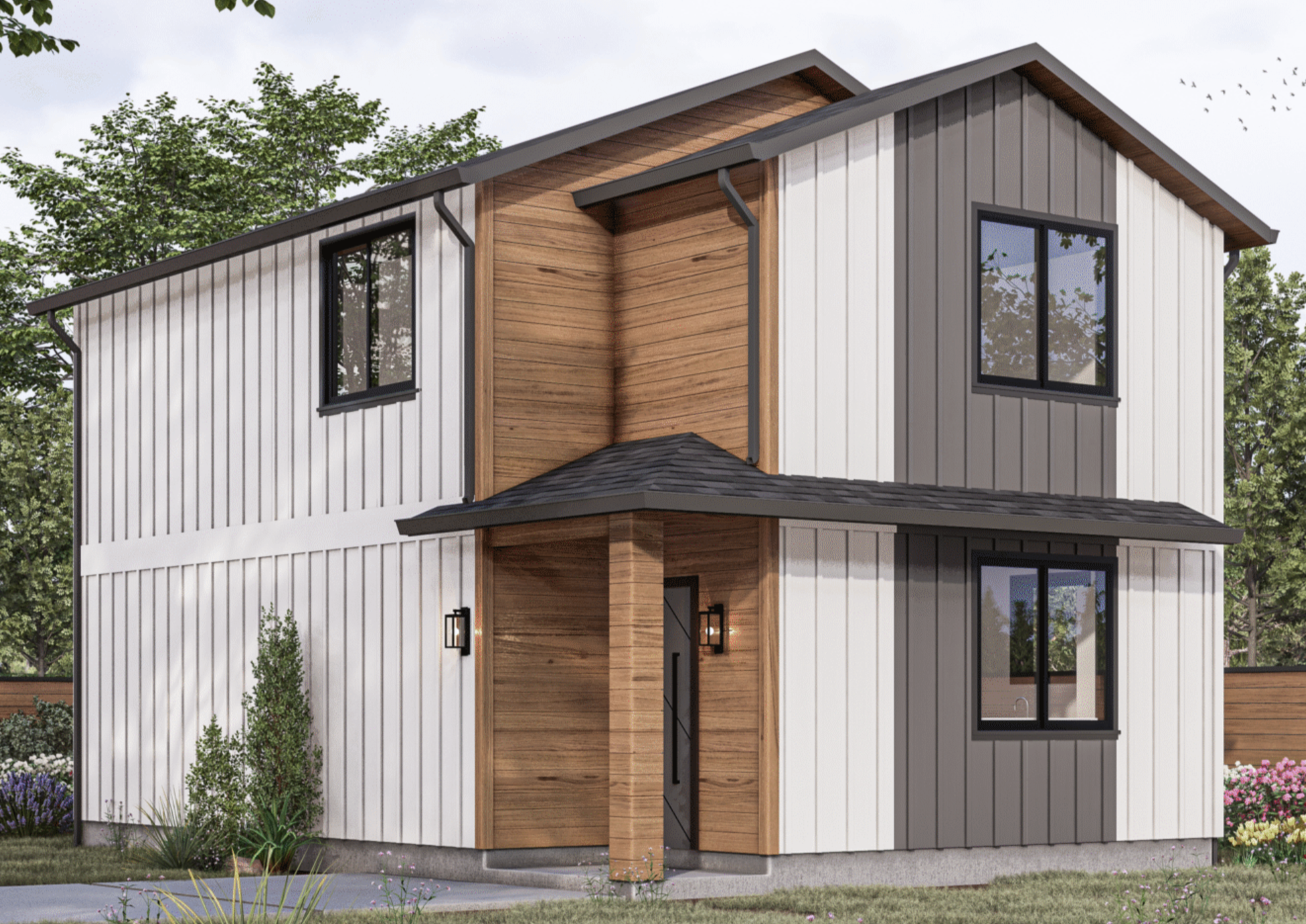
Like any California ADU, it must function as a complete residence with its own:
- Kitchen
- Bathroom
- Bedroom, and
- Separate entrance
Its biggest difference from a single story ADU is land efficiency. A single story unit uses the entire square footage on the ground, while a two story layout stacks it vertically, reducing the footprint by half.
California generally allows detached ADUs up to 1,200 square feet. For example, a 1,000 sq ft single story will utilize a 1,000 sq ft ground coverage. While a 1,000 sq ft two story will only utilize a 500 sq ft footprint. For properties with limited space, the difference determines whether the yard remains functional.
Types of 2 Story ADUs in California
A 2 story ADU plan isn’t a single design; it’s a category of layouts shaped by lot size, parking need, and intended use. Some prioritize family housing, others rental income, and some exist mainly to preserve outdoor space.
Understanding the different types of 2 story ADUs helps homeowners avoid designing the wrong unit for their property’s potential.
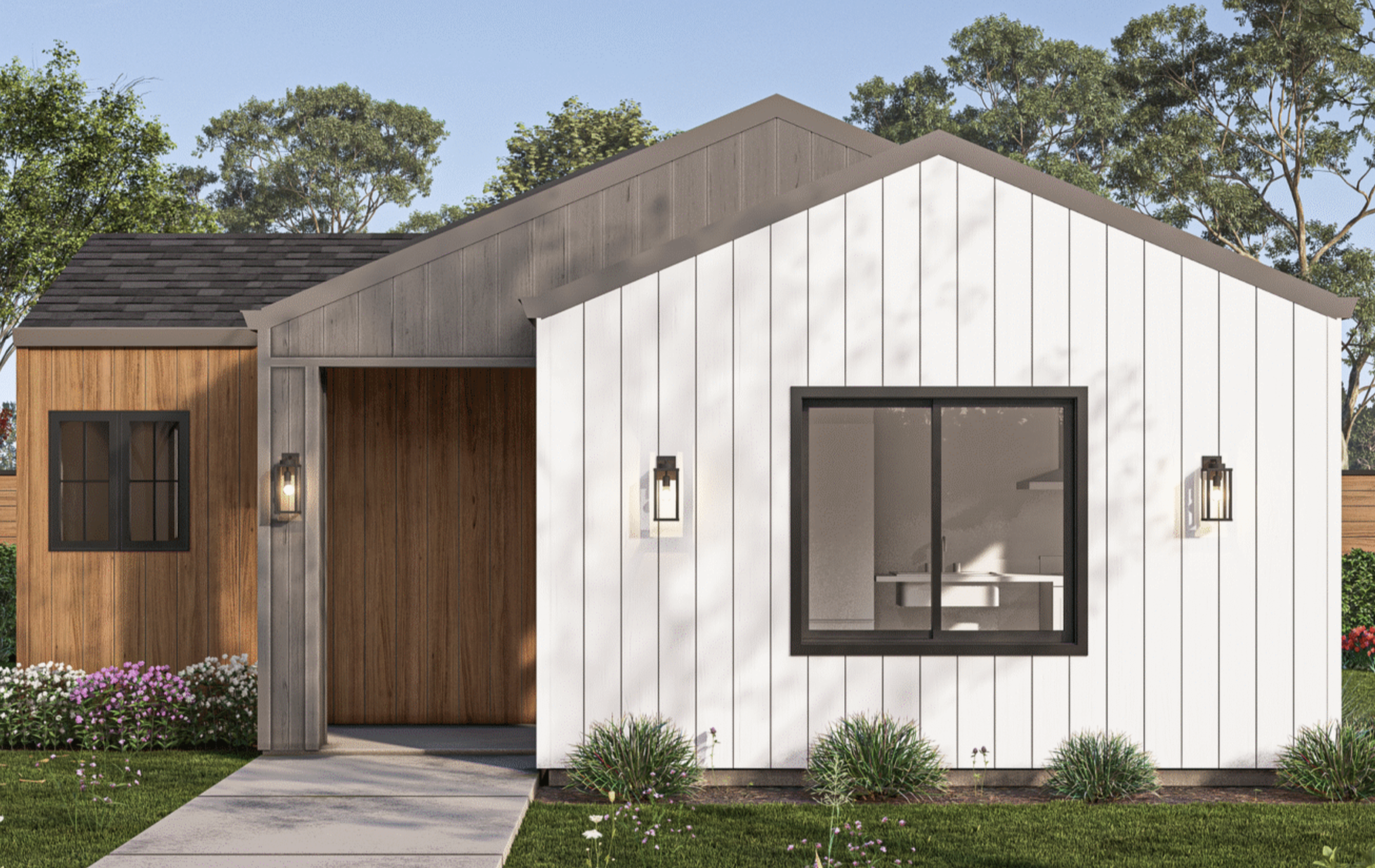
Standard Detached 2 Story ADU
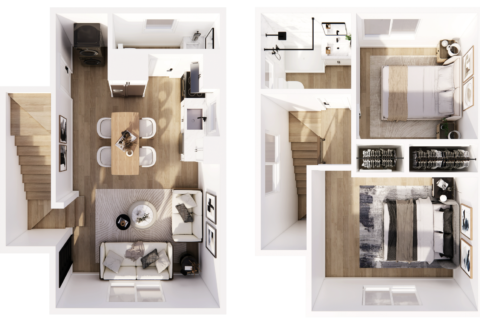
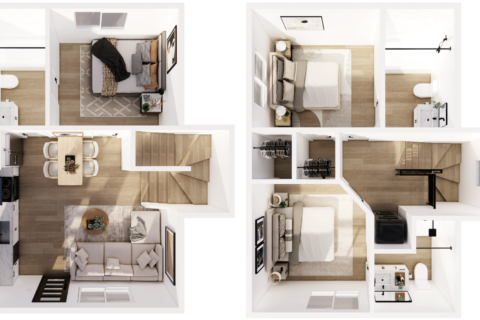
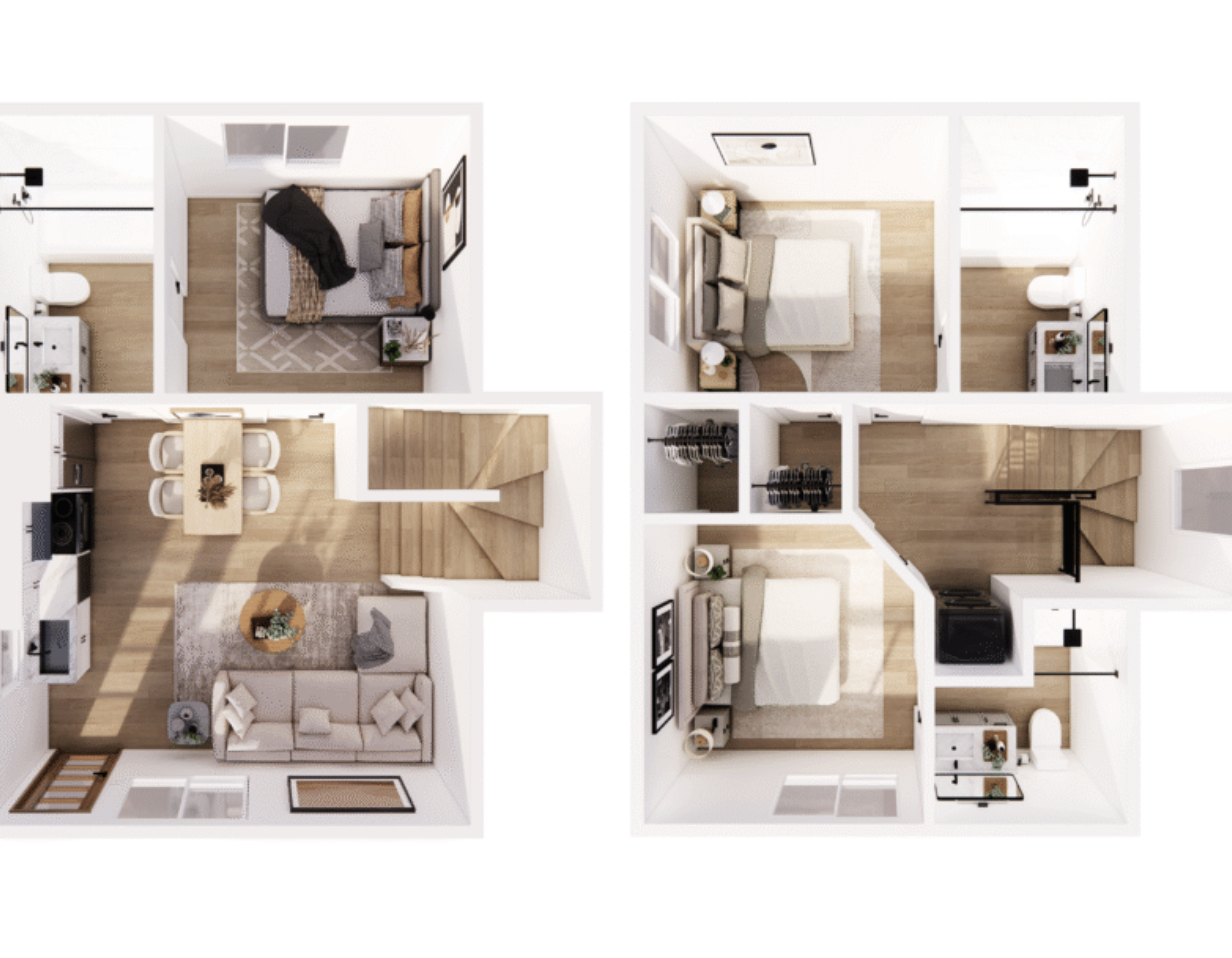
This is the most common detached 2 story ADU: a small standalone house behind the main residence. Its typical layout includes:
- First floor
- Living space
- Kitchen
- Dining area
- Bathroom
- Second floor
- Bedrooms
- Main bedroom suite
Separating the living and sleeping areas makes the space feel like a real home rather than a guest house.
A detached 2 story ADU is ideal for:
- Lots with moderate depth
- Families housing relatives
- Long-term rental use
- Maximizing square footage with minimal footprint
ADU Above a Garage (Carriage House)
A carriage house places the ADU above a garage, keeping the ground level for parking or storage.
The upper level may include:
- A studio apartment
- One bedroom
- Two bedrooms
Many homeowners opt for a carriage house as it:
- Preserves parking
- Keeps the yard open
- Has strong rental appeal
If you’re considering a carriage house, two structural options exist.
First, you can build above an existing garage. This would require structural reinforcement because older foundations rarely support a second floor.
The second option is to construct a new garage with an ADU above it. This offers more predictable engineering and often smoother permitting.
For rental-focused projects, this design often delivers one of the best returns per square foot.
Stacked/Two-Unit Design
Some cities allow two separate ADUs stacked vertically, essentially a duplex behind the main house. Each floor functions as its own dwelling unit with separate entrances.
The stacked design is usually best for:
- Investors maximizing income
- Multigenerational housing
- High-demand markets
This configuration significantly increases property value when local zoning permits it.
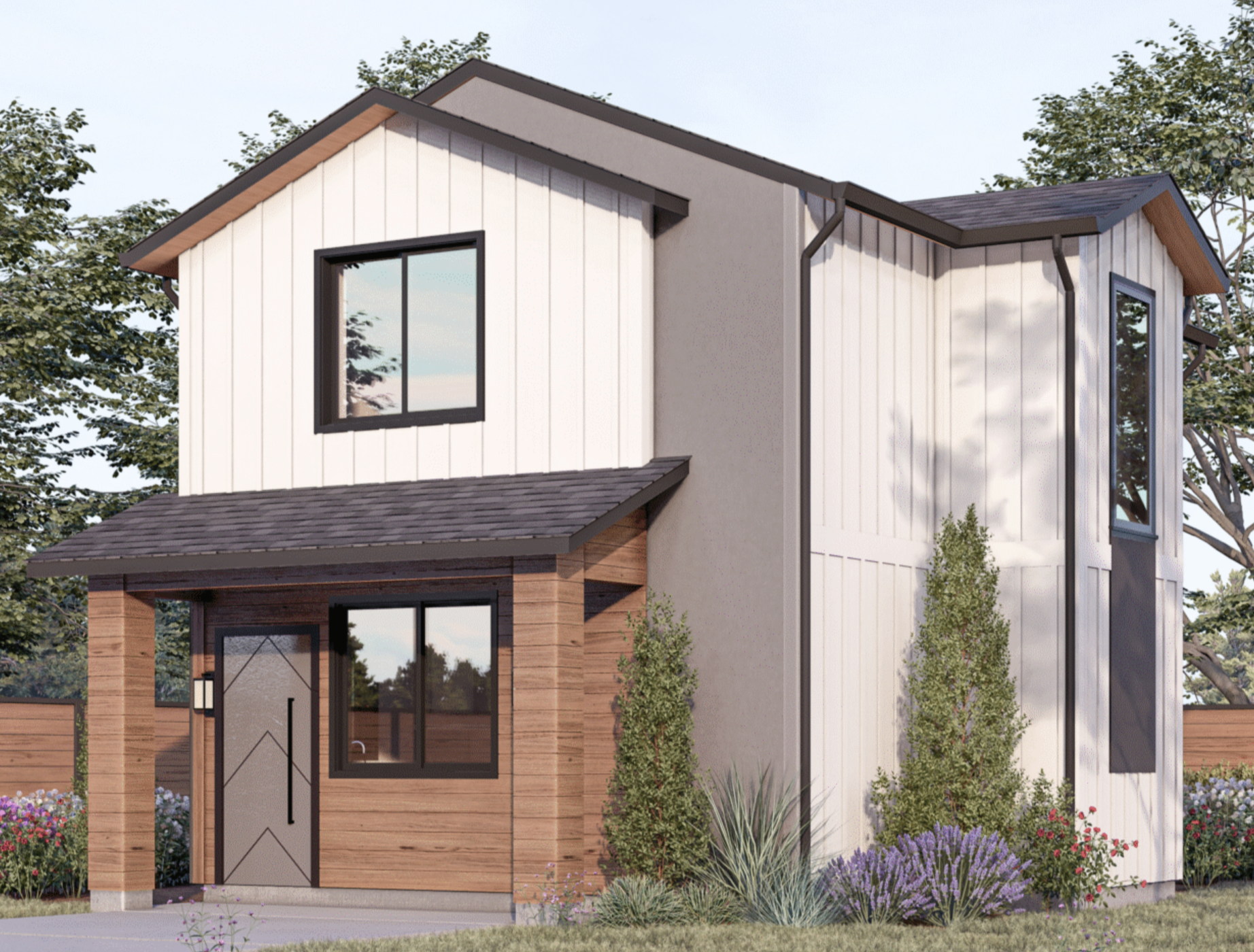
Reverse Layout ADUs
In a reverse layout, the living area sits upstairs while bedrooms remain on the ground floor.
This design prioritizes:
- Natural light
- Privacy
- Views
- Airflow
It works particularly well for hillside lots or scenic properties where upper-level windows and terraces improve livability.
Is A 2 Story ADU Right for Your Property?
Choosing between a single story and two story ADU isn’t about size; it’s about fit.
The right design should match the lot, long-term use, and budget.
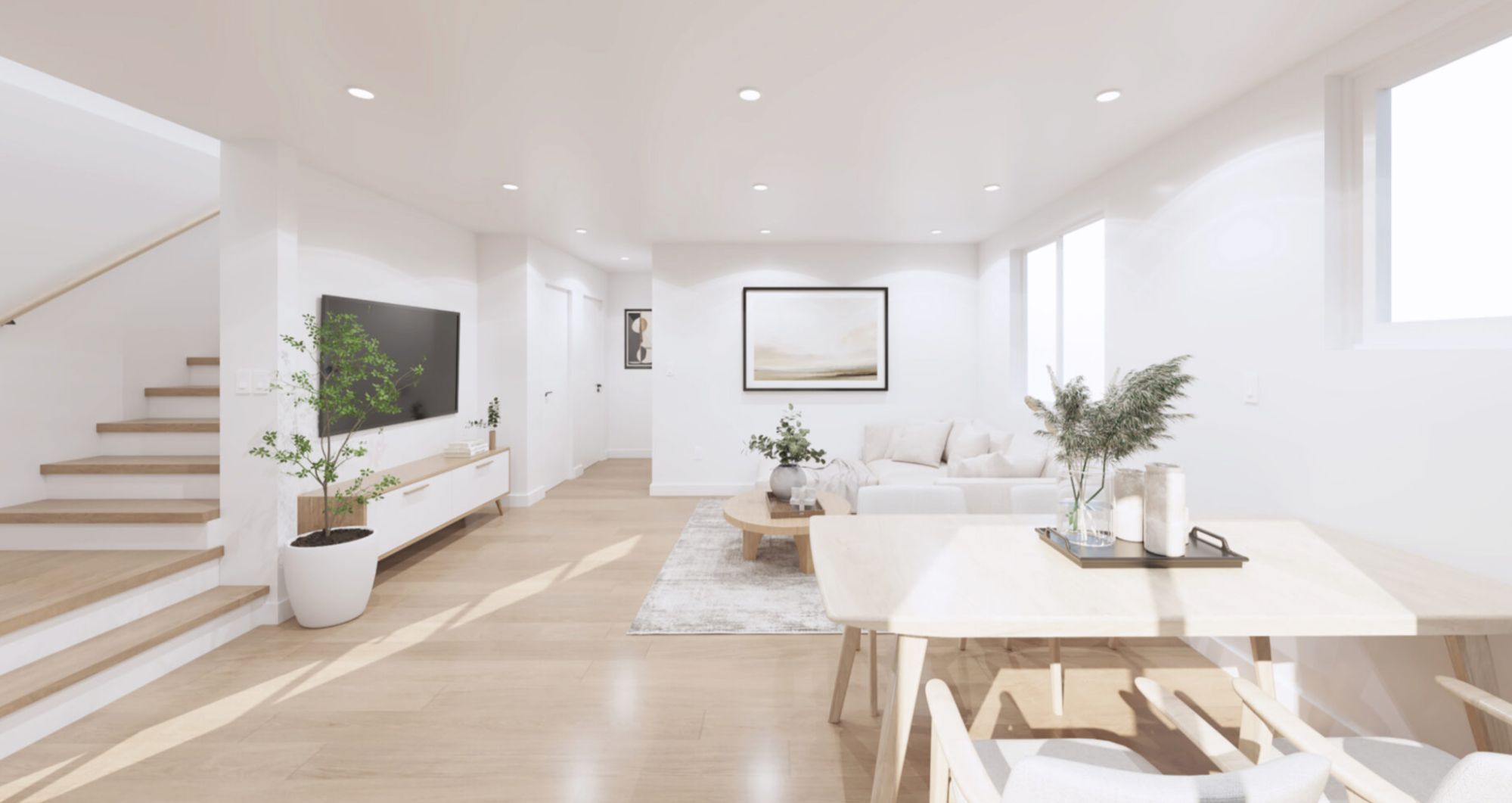
When a 2 Story ADU Makes More Sense Than a Single Story
- Limited footprint. Vertical construction preserves outdoor living space when setbacks restrict building width.
- Multiple bedrooms are needed. Stacked layouts allow two or three bedrooms within the 1,200 sq ft size cap.
- Preserving yard use. Patios, gardens, and landscaping remain usable.
- Rental income strategy. Two-bedroom units attract broader tenants and higher rent.
When a Single Story ADU May Be The Better Choice
- Accessibility needs. Stairs are difficult for aging family members.
- Large yard. If space allows horizontal expansion, construction is simpler.
- Tighter budget. Single story construction costs less and requires less structural engineering.
Not sure what fits your lot? Book a free site consultation with Apex Homes today!
California Regulations for 2 Story ADUs
California law now supports multi-story ADUs, but projects must meet statewide standards and local interpretation.
Most confusion comes from height measurement and local overlays, not whether they’re legal.
Height Limits — What California Law Actually Allows
California’s ADU law (SB 897) expanded height allowances to make two story units more realistic across typical residential lots.
Detached ADUs
State law guarantees at least 16 feet in height everywhere. In many situations — such as properties near transit corridors or multifamily zoning — that limit increases to 18 feet, which is often enough for a comfortable two story layout depending on roof design.
Attached ADUs
Because they connect to the main home, attached units can go taller — up to 25 feet or the height of the primary dwelling, whichever is lower. This flexibility helps homeowners align rooflines and maintain architectural consistency.
Some cities allow even taller structures through local ordinances or design standards. Height measurement methods also vary (grade-to-peak vs. roof plate), so verifying how your jurisdiction measures height is critical before finalizing ADU plans.
Setbacks, Lot Coverage, and Other Key Rules
Beyond height, state standards remove many traditional zoning barriers that once made backyard housing difficult.
California now requires cities to allow ADUs with 4-foot side and rear setbacks, regardless of lot size. There is also no minimum lot area requirement, meaning even smaller parcels can qualify.
ADUs must be permitted in single-family zones statewide, and HOAs cannot prohibit them — they may regulate appearance, but they cannot block construction outright.
Impact fees are also limited. Units under 750 sq ft are fully exempt, while larger ADUs only pay proportional fees based on square footage, not full single-family rates. This dramatically lowers development cost compared to building a new primary home.
Permitting a 2 Story ADU
Two story ADUs follow the same legal pathway as single story units but receive additional technical review because of structural complexity.
Cities typically require structural engineering calculations, stair code compliance verification, and fire separation details. In some neighborhoods, planners also review second-floor window placement to protect adjacent privacy.
Using pre-approved ADU plans can significantly shorten approval timelines by bypassing repeated design review.
Design Considerations for a 2 Story ADU
Designing a 2 story ADU isn’t just stacking two floors together. The layout has to feel comfortable inside a smaller footprint, while still respecting privacy between the unit and the main house.
Maximizing Space Efficiency
In a vertical ADU, layout matters more than square footage. Careful planning can make a 750–1,000 sq ft unit feel significantly larger than it is.
- Staircase placement is critical. An exterior stair preserves the interior living area, while an interior stair improves weather protection and accessibility. The right choice depends on who will use the space.
- Built-in storage on both levels (under stairs, hallway cabinetry, window benches) prevents the second floor from feeling cramped.
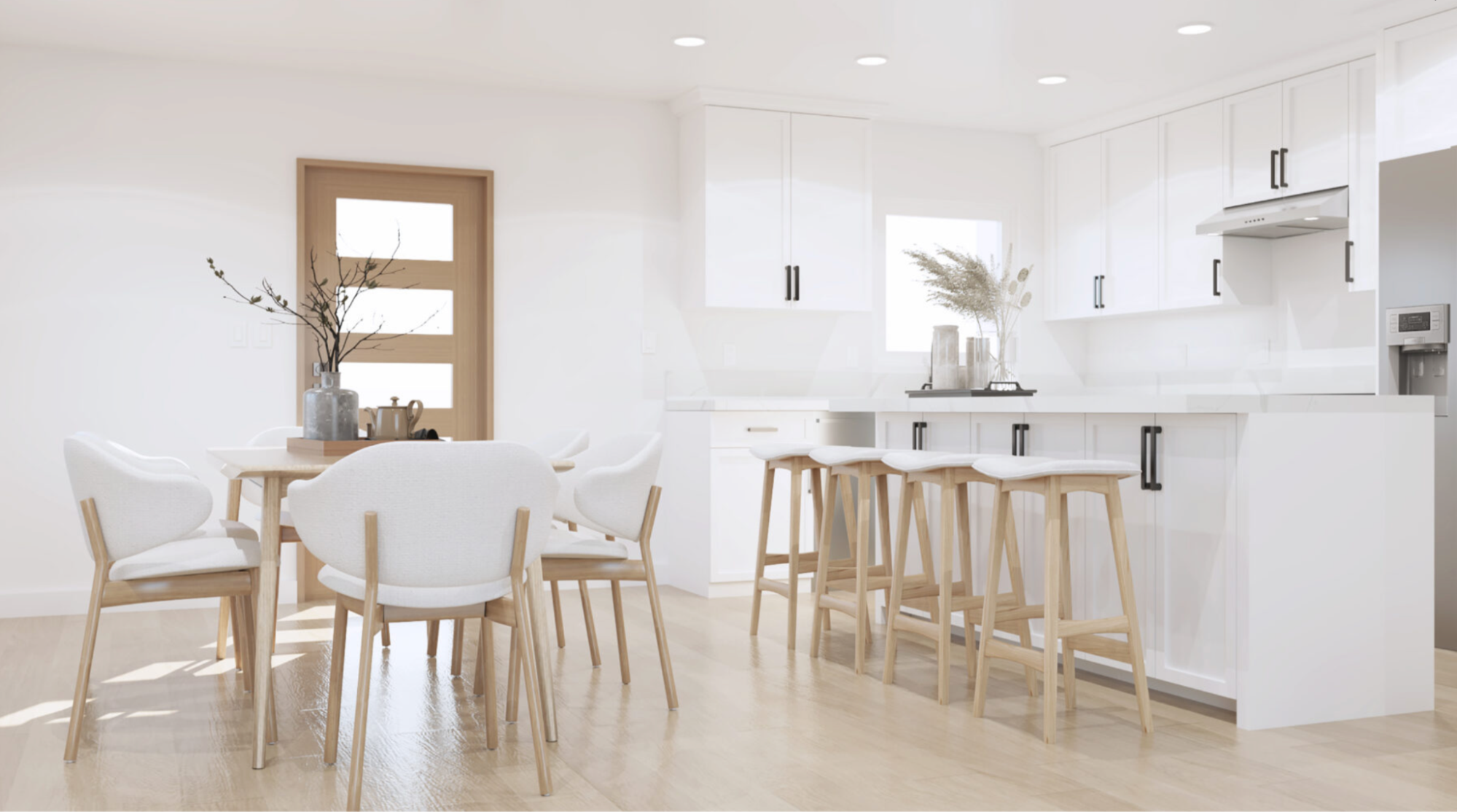
- Open-concept ground floors allow kitchen, dining, and living areas to share light and sightlines, making small footprints feel comfortable.
- High ceilings and clerestory windows bring in natural light while maintaining privacy from neighboring homes.
Privacy — For You and Your Tenants
Privacy is one of the biggest concerns homeowners have about building upward. Fortunately, thoughtful design solves most issues before construction even begins.
- Window placement can angle views toward the yard instead of directly into the primary residence.
- Separate entrances reduce overlap in daily routines.
- Landscaping buffers (trees, hedges, trellises) soften sightlines without walls.
- Fencing and screening elements create clear boundaries between households.
A well-designed 2 story ADU should feel independent, not like an extension of the main home.
Accessibility Planning
Even if accessibility isn’t needed today, planning for it now can prevent major renovation costs later.
- Rough-in framing for a future lift or chair system
- Wide doorways and no-step ground-floor entry
- Bathroom layout adaptable for a later stage
Future-proofing during construction costs very little. Retrofitting after completion can cost tens of thousands.
The Apex Homes Approach to 2 Story ADUs
Apex Homes specializes in vertical ADUs in both the Bay Area and Southern California, where lot size constraints often make upward expansion the only practical option.
Rather than starting every project from scratch, the company uses a library of pre-approved plans engineered to meet California building codes. This helps reduce review cycles and eliminates much of the uncertainty homeowners typically face during permitting.
Our process is designed to be fully managed:
- Design and planning
- Permits and city coordination
- Construction
- Solar integration
All communication with the city is handled by their in-house team, so homeowners don’t need to navigate zoning departments or plan check corrections themselves.
The goal isn’t just to build an ADU, it’s to make the process predictable.
Get a free site consultation, and we’ll tell you what’s possible for your lot.
Make a 2 Story ADU Work for Your Property
A 2 story ADU is one of the most efficient ways to add livable square footage and long-term value to a California property, especially on lots where expanding outward isn’t feasible.
Success comes from three things: knowing when vertical construction makes sense, understanding the regulations, and working with a team experienced in navigating both.
With pre-approved designs and a managed build process, Apex Homes helps turn what often feels complicated into a clear path from idea to finished home.