
If you’ve ever asked yourself, “What is SB9 California?”, you’re not alone.
Passed to address the state’s deepening housing crisis, Senate Bill 9 (SB9) — officially known as the California Housing Opportunity and More Efficiency (HOME) Act — opens up new possibilities for property owners in single-family residential zones.
In this article, we’ll explain how SB9 works, its requirements, and how it differs from accessory dwelling unit (ADU) laws. You’ll also learn whether SB9 is a fit for your property and how it could help increase housing supply, build equity, and make better use of your land.
What is SB9 in California?
Senate Bill 9 (SB9) is a landmark California Senate Bill that went into effect in January 2022. Signed by Governor Gavin Newsom, it aims to expand housing opportunities by allowing homeowners to build additional primary dwelling units or split their lots in qualifying areas.
Simply put, SB9 allows eligible homeowners to:
- Split a single-family lot into two parcels (an urban lot split).
- Build up to two primary dwelling units on each parcel, potentially creating up to four new units where previously only one was allowed.
By promoting urban infill development and more efficient land use, the California HOME Act helps increase residential density in established neighborhoods — an essential step towards solving the state’s housing crisis.
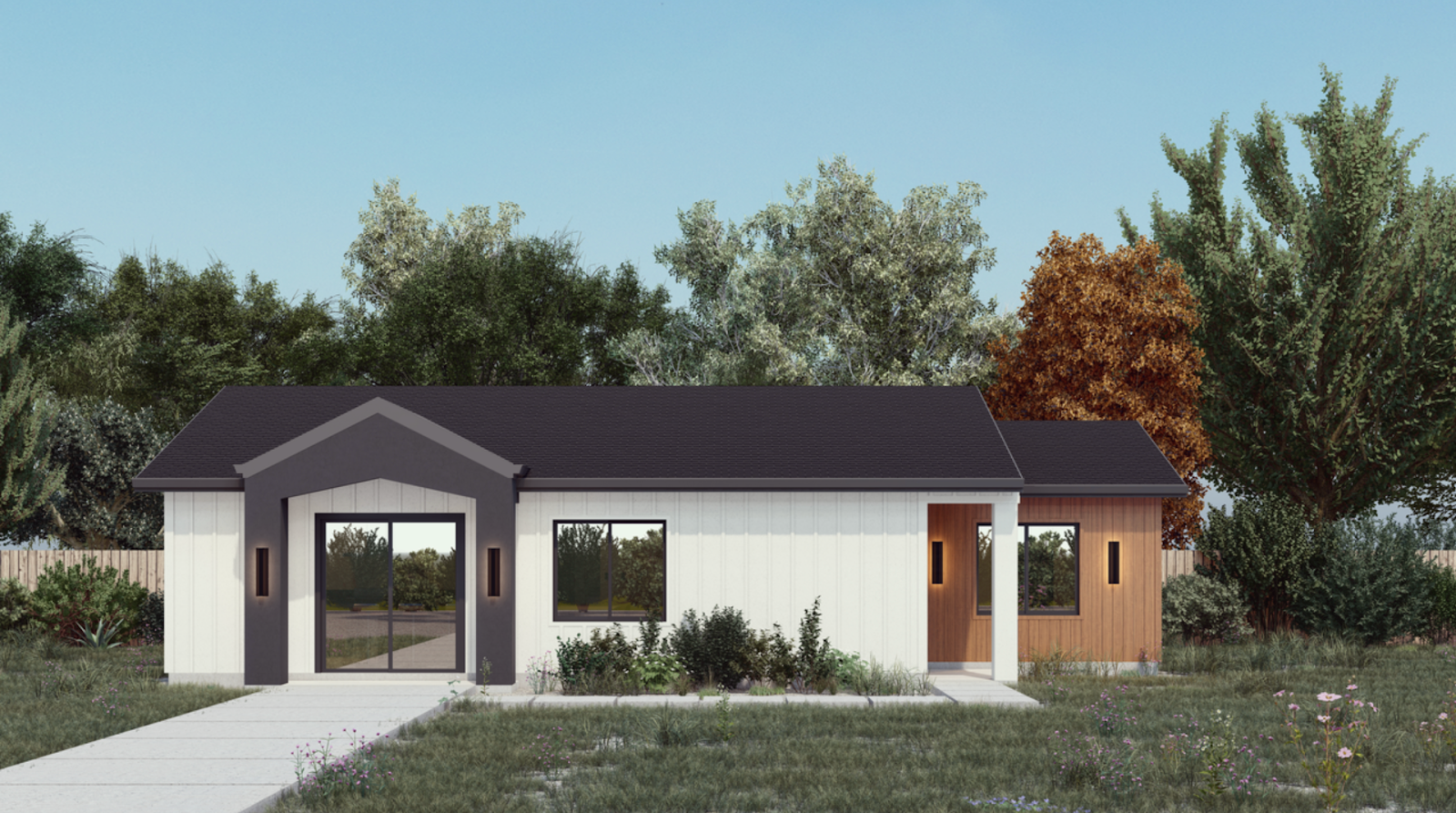
Understanding the Two Provisions of SB9
The state law includes two core provisions:
- Two-unit development provision; and
- Urban lot split provision
Both use ministerial approval, meaning local agencies must process applications that meet objective development standards without lengthy discretionary hearings. This gives homeowners a predictable, streamlined path to develop their property.
Two-Unit Development Provision
This provision allows a single-family residential lot to include up to two primary dwelling units, which can take several forms:
- Two detached single-family homes
- One new home built alongside an existing one
- A duplex configuration on the same parcel
In some cases, when combined with accessory dwelling units (ADUs) or junior ADUs (JADUs), a single property may contain up to four total homes, significantly boosting housing supply.
Urban Lot Split Provision
The urban lot split provision allows an eligible homeowner to subdivide one single-family lot into two separate parcels, each typically no smaller than 1,200 square feet.
This creates new opportunities for:
- Developing new homes per lot
- Selling one parcel while retaining the other
- Supporting multigenerational living with separate, independent homes
SB9 Eligibility Requirements
To qualify for an urban lot split or a two-unit development project under SB9, properties must meet several location, zoning, and use criteria.
Property Location Requirements
Your property must satisfy the following key conditions:
- Single-Family Residential Zone. The lot must be in a single-family residential zone, typically ranging from Residential 1 (RD-1) through Residential 10 (RD-10).
- Urban Area. Located within an urbanized area or urban cluster, as defined by the U.S. Census Bureau.
- Permitted Use. The lot must allow single-family dwelling use under local zoning standards; SB9 does not apply to parcels zoned for multi-family or commercial use.
- Transit-Oriented Location. Parcels near a major transit stop or within a high-quality transit corridor are especially well-suited, aligning with California’s focus on transit-rich housing development.
Because SB9 regulations can vary by California city or county, property owners should always review local ordinances and zoning standards before planning an urban lot split or two-unit development.
Local governments may adopt objective design standards, minimum lot sizes, or setback requirements that comply with state law and reflect local conditions, provided they don’t effectively preclude the two-unit or lot-split developments permitted under SB9.
For example, in Cupertino, local rules allow new primary dwelling units of up to 800 square feet, roughly half the size of the median single-family home in California, which is about 1,700 square feet.
Property Restrictions and Exclusions
Not all parcels qualify for SB9 housing development. The law excludes:
- Lots within historic districts, listed on the State Historic Resources Inventory, or designated as a country landmark or history property.
- Parcels located on farmland, wetlands, protected species habitat, conservation lands, or under conversation easements.
- Lots in very high fire hazard severity zones, hazardous waste sites, earthquake fault zones, or flood-prone areas, unless specific additional requirements are met.
- Properties that have already undergone an SB9 lot split, or adjacent parcels owned by the same individual that were previously subdivided under SB9.
Demolition and Tenant Protections
SB9 includes strong tenant and affordability protections to prevent displacement:
- Homeowners cannot demolish or alter housing that has been rented within the last three years or is subject to rent control or deed-restricted affordable housing.
- Housing with an Ellis Act eviction in the last 15 years is also protected.
- In many jurisdictions, demolition of more than 25% of exterior walls triggers additional scrutiny.
- Newly created SB9 units cannot be used for short-term rentals (less than 30 days).
Owner-Occupancy Requirement
For urban lot splits, the state law requires the owner to occupy one of the units as their primary residence for at least three years after approval.
This ensures that SB9 supports homeownership, neighborhood stability, and responsible residential density, rather than speculative or corporate-driven development.
Key Differences Between SB9 and ADU Laws

Both Senate Bill 9 (SB9) and accessory dwelling unit (ADU) laws were created to increase California’s housing supply, but they serve different purposes.
SB9 allows homeowners to split their lot and build two primary dwelling units, while ADU laws make it easier to add detached or attached ADUs on an existing lot.
Here’s a side-by-side comparison:
| FEATURE | SB9 (HOME Act) | ADU / JADU Laws |
| Type of Development | Allows up to two primary dwelling units per parcel, or a lot split creating two separate properties | Creates secondary or accessory units attached to or detached from the main home |
| Lot Split Capability | Yes; supports urban lot splits to create two independent parcels | No; must stay on the same lot |
| Size Limits | Determined by local zoning; typically allows larger homes if standards are met | Up to 1,200 square feet (ADU) or 500 square feet (JADU) |
| Impact Fees | Subject to local impact and utility fees | Often exempt if the unit is under 750 square feet |
| Approval Process | Ministerial approval when meeting objective design standards | Also ministerial; many cities offer pre-approved ADU plans |
| Owner Occupancy Requirement | Required for urban lot splits; owner must occupy one unit for at least three years after approval | Not required (except for JADUs, which still require occupancy) |
| Potential Number of Units | Up to four total (two per parcel after a lot split) | Up to two units total (one ADU + one JADU) |
When to Choose SB9 Over ADUs
SB9 may offer greater long-term value for homeowners who want to maximize property potential. Consider pursuing an SB9 project if you:
- Have a larger lot (corner or alley access helps) that can support urban lot split.
- Plan to sell one parcel after a lot split to generate income or fund new construction.
- Want to create multiple full-size homes for multigenerational living or resale.
- Are comfortable managing parcel map fees, infrastructure costs, and other subdivision requirements.
With partners like Apex Homes, which provides standardized housing designs meeting both local and state development standards, SB9 housing development becomes more predictable, efficient, and cost-effective.
When ADUs May Be Better Option
Accessory dwelling units (ADUs) remain an excellent option for homeowners seeking a simpler, lower-cost path to add housing units. Choose an ADU project if you:
- Have a lot is too small for subdivision or lacks the required street frontage.
- Want to avoid higher impact fees, especially if your ADU is under 750 square feet.
- Prefer a faster, easier approval process — many California cities, including Los Angeles, San Diego and San Jose, now offer pre-approved ADU plans, fee waivers, and expedited permitting.
ADUs are especially useful for rental income, aging-in-place, or creating in-law suites, allowing homeowners to increase housing supply without the added complexity of a lot split.
Next Steps for Homeowners Considering SB9
SB9 is designed to reduce homeownership barriers in California by allowing lot splits and two-unit developments in single-family residential zones. It provides a practical path for supporting affordable housing opportunities across California.
Partnering with Apex Homes ensures your SB9 projects meet all necessary requirements, including objective design and development standards.
Our standardized housing solutions simplify planning, permitting, and construction, helping property owners bring new homes to the market faster and more efficiently.
Schedule a free consultation now to:
- Explore your lot’s eligibility
- Design your SB9 home; and
- Unlock new housing development possibilities in California.